Open post

Nuclear Futures for a Better Tomorrow

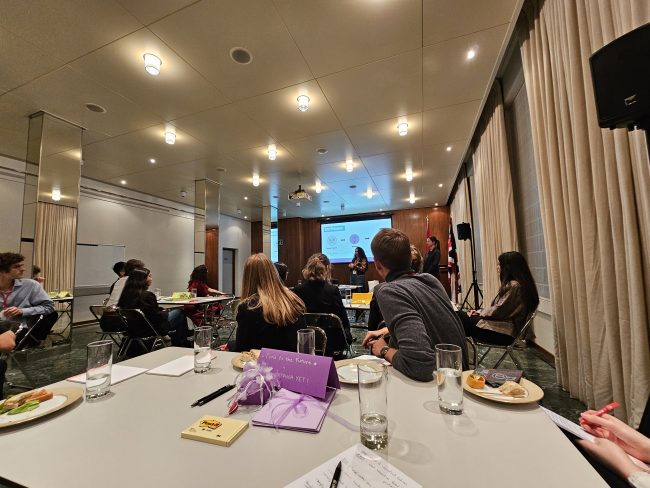
London Youth Foresight Workshop took place on Monday 03/11 and was focused on the nuclear future by exploring 4 different scenarios.

The event was hosted by the Swiss Embassy in London and organised by the School of International Futures (SOIF) and the Next Generation Foresight Practitioners (NGFP).

SOIF is a global non-profit transforming futures for current and next generations and NGFP is a network of over 900 people from all over the world who are using futures and foresight to create positive impact and systemic transformation globally.

The 4 scenarios were Growth: Nuclear Renaissance 2050, Collapse: Nuclear Chaos 2050, Discipline: Nuclear Control 2050, Transformation: Beyond the Nuclear – Regenerative Futures 2050. All thought provoking topics and future scenarios that enabled the ~24 participants to consider & discuss what the nuclear future could look like.
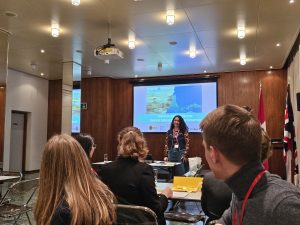
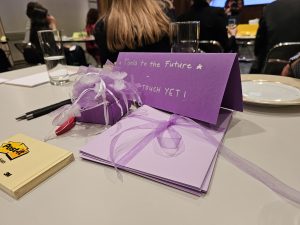
The drivers and trends to consider included, but were not limited to private sector involvement, international collaboration, public education & awareness, intergenerational partnerships, economic interests, technical advancements and the environment.

We were focused within the growth scenario where we explored a future in which nuclear energy gains renewed importance due to increasing energy demands, technological progress and private investments.

Nuclear infrastructure is massively expanded, modular reactors are rapidly developed, and artificial intelligence manages monitoring, safety, and efficiency. National interests and fragmented international cooperation lead to regulatory gaps, while geopolitical tensions and an arms race shape global order.

Public concern about risks and the environmental impacts coexists with the acceptance of nuclear energy; the shortage of skilled workers is addressed through education and knowledge management.

Energy supply, technological innovation, and safety are closely interconnected, yet the system remains vulnerable. A world that grows and renews itself technologically but stays fragile.

We are left contemplating the future we will end up in and found this a really thought-provoking, and interesting workshop to be involved with.

Front Page – School of International Futures
Home – NGFP

Open post

Westinghouse, Brookfield & Cameco Partnership

Westinghouse, Brookfield & Cameco Announce $80 Billion Strategic Partnership with U.S. Government

Westinghouse Electric Company, Brookfield Asset Management, and Cameco have entered a landmark strategic partnership with the U.S. Government to deploy $80 billion worth of new nuclear reactors across the United States. This initiative, aligned with the May 2025 Executive Orders, positions nuclear energy as a cornerstone of America’s energy sovereignty, AI infrastructure, and national security.

At the heart of this deployment is Westinghouse’s AP1000® reactor technology, known for its passive safety systems, modular construction, and minimal land footprint per MWe. Each two-unit AP1000 project is expected to create or sustain 45,000 engineering and manufacturing jobs across 43 states, with national deployment projected to generate over 100,000 construction jobs.

Technical & Strategic Highlights

  • AI Integration: The reactors will power data centers and compute infrastructure, supporting America’s leadership in artificial intelligence.
  • Supply Chain Revitalization: The partnership aims to reinvigorate the U.S. nuclear industrial base and expand global exports of Westinghouse technology.
  • Global Reach: AP1000 reactors are already operational or under construction in Poland, Ukraine, and Bulgaria, reinforcing Westinghouse’s global footprint.

Recruitment & Thought Leadership Implications

This partnership signals a nuclear renaissance, creating unprecedented opportunities for engineers, project managers, AI specialists, and supply chain professionals. It also reaffirms the importance of cross-sector collaboration—between energy, technology, and government—to meet future energy demands.

For professionals and graduates considering careers in nuclear, this is a pivotal moment. The scale and ambition of this initiative will require next-generation talent across disciplines—from reactor design and AI integration to regulatory affairs and infrastructure development.

For original release visit; https://westinghousenuclear.com/strategic-partnership/

Picture: Westinghouse

Open post

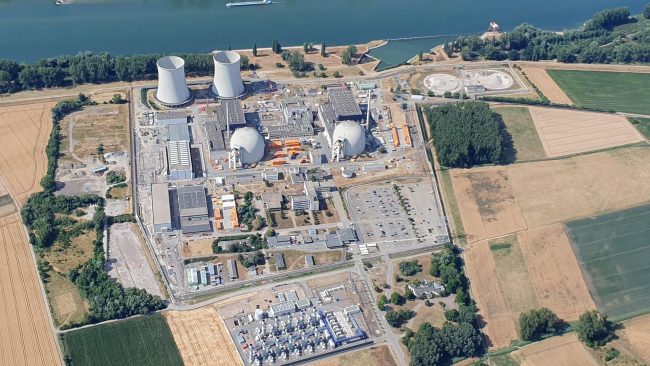
RWE Nuclear and Focused Energy Fusion at Biblis

RWE Nuclear and Darmstadt-based fusion tech company Focused Energy have signed a Memorandum of Understanding to collaborate on a pioneering pilot project at the Biblis decommissioning site. The initiative will explore the use of Laser Driven Radiation Sources (LDRS)—a cutting-edge imaging technology derived from laser fusion research—for potential applications in nuclear decommissioning.

The project aims to demonstrate how LDRS can enable non-destructive material testing with higher resolution and deeper penetration than conventional methods. RWE will provide infrastructure, including the repurposing of a former emergency feed building, and supply non-radioactive test materials. The collaboration is supported by the Hessian Ministry for the Environment.

This partnership not only advances fusion-related innovation but also reinforces Germany’s role in foundational nuclear research.

Visit; https://www.rwe.com/presse/rwe-nuclear/2024-07-01-rwe-nuclear-und-focused-energy-unterzeichnen-absichtserklrung/

Picture: RWE

Open post

Nuclear Institute & APM: An Audience with Adrian Bull

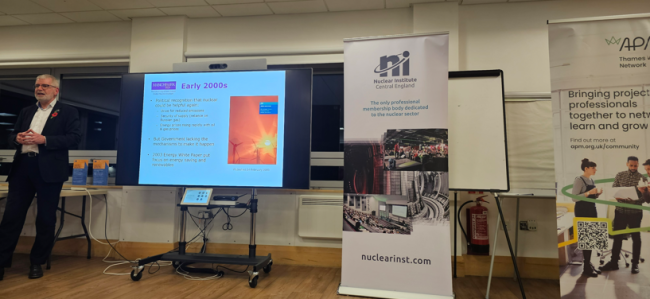
Last night we had the pleasure of joining ~30 other nuclear industry professionals hearing from Adrian Bull who is due to take over the NI Presidency position in January 2026.

Adrian’s background with the Dalton Nuclear Institute, Westinghouse, the BNFL and NNL, mean that Adrian was well-placed to take us on a journey through nuclear.

We were given an interesting insight to the nuclear sector through the ages beginning with the post-war resurgence and technical advancement, through to the present day focusing on nuclear new build, the GDF and SMRs.

A summary of topics:

The 1970’s was a time when the reputation of the nuclear industry was not great mainly due to the Windscale and Three-Mile Island disasters.

During the 1980’s Britain had an enlarged nuclear fleet and the nuclear baseload helped the nation; however, in April 1986 the Chernobyl accident happened. Plans for a fleet of 10 PWRs were thwarted and instead only one was built, Sizewell B.

In the 1990’s, “Dash for Gas” was the was the focus as the electricity supply sector was broken up and privatised. Several Magnox sites were closed while SZB came online in 1995.

Throughout the early 2000’s the government lacked the mechanisms to make nuclear happen and by 2008 there was policy support, but no direct funding route for the sector.

The industry was not without its bad press and, unfortunately, in 2011 the Fukushima disaster happened. While this happened there were different financing models which allowed Hinkley Point C to progress.

The fracking of gas was the main concern for the public and by the 2020’s Sizewell C and SMRs don’t have significant public opposition. Energy security and affordability have become the important topics compared to net zero. The Russian invasion of Ukraine caused high volatility and the GDF siting process sparked local concerns.

In conclusion, it was apparent that the nuclear industry needs to work harder and smarter in the way we communicate. What is the message? What voice do we need to speak in at a given time? What channel do we utilise to spread this message? Who are the audience we are talking to? And, perhaps a good starting point, what outcome are we trying to achieve?

Adrian gave us lots to think about and there were some thoughtful questions during the Q&A at the end of the presentation.

Open post

Sellafield £4.6 billion high hazard framework

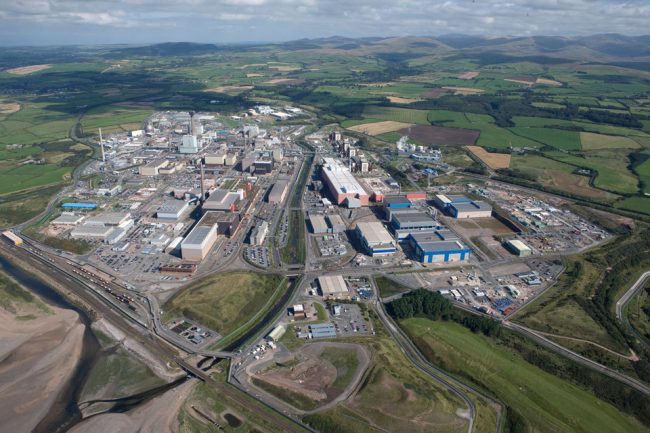
Sellafield has awarded a new £4.6 billion high hazard risk reduction framework contract to Amentum (remediation and hazardous waste retrieval), Atkins Realis and Altrad (decommissioning and nuclear waste management.), through the Decommissioning and Nuclear Waste Partnership (DNWP).

The Decommissioning Alliance (TDA) is joint venture involving Amentum, AtkinsRéalis & Westinghouse, handling pond retrievals.

The framework agreement will focus on the retrieval, storage and treatment of waste materials from the oldest facilities on the site and will be in place for 15-years.

All the companies involved with develop a sustainability plan to enhance collaboration with local priorities, ROI and delivering impact.

James Riddick, Sellafield Ltd chief supply chain officer, said:

“Cleaning up the legacy of historic operations on our site is at the heart of our mission. It is important that we achieve this safely, efficiently, and sustainably – our supply chain, and this partnership plays a key role in that.

We’re pleased to welcome our new partners. Their specialist capabilities and teams, working alongside our skilled Sellafield workforce, will help us deliver our mission and drive progress both on site and across our wider community.

Just as importantly, these partners share our values and our commitment to creating lasting social value for the communities we serve.”

Check out the original release; https://www.gov.uk/government/news/sellafield-ltd-awards-high-hazard-risk-reduction-framework-contract

Picture: gov.uk

Making an impact: Volunteering in Nuclear with the NI

Discover how you can make a difference by volunteering both within the NI and externally. Whether you’re looking to give back to the industry, your community, or enhance your own skills, there are plenty of opportunities to get involved.

Join this session to learn more about the roles available, the benefits of volunteering, and how you can take the next step.

Speakers:

  • Jordan Hall, YGN Vice Chair
  • Steve Walters, NI Central England branch, and Megan Dean, NI Western branch
  • Helen Hulme, STEM Ambassador
  • Adrian Bull – NI Mentor (and President Elect)
  • Nancy Bellingan – NI Mentor and Mentee

https://events.teams.microsoft.com/event/f0d0b72a-a272-497e-ab82-4fec37ab0127@3c7ef2b6-ed63-4b9f-b68a-e8b9bcdc3971

Open post

Sellafield & RAICo facility simulator

Virtual Innovation Enhances Nuclear Waste Handling Safety at Sellafield

A cutting-edge simulation project is transforming how nuclear waste is managed at one of the UK’s most hazardous legacy facilities—Sellafield’s Pile Fuel Cladding Silo (PFCS). Originally built in the 1950s, the PFCS is now being decommissioned, with robotic systems playing a vital role in safely handling radioactive waste.

To reduce risk and downtime during upgrades to these robotic systems, RAICo and Sellafield Ltd developed a virtual replica of the facility using advanced 3D scanning, CAD modelling, and RAICo’s RHOVR simulation platform. This digital twin allows engineers to test software and hardware changes in a photorealistic environment before applying them in the real facility.

The result? Fewer human entries into hazardous zones, reduced downtime, and safer, more efficient upgrades to robotic systems. The simulator is already in use at Sellafield’s Engineering Centre of Excellence and could soon be adapted for other waste-handling operations across the site.

This project is a powerful example of how robotics, simulation, and cross-sector collaboration are accelerating innovation in nuclear decommissioning—while keeping people safe and building the digital skills needed for the future.

https://raico.org/a-simulation-of-a-nuclear-facility-makes-it-safer-to-upgrade-waste-handling-robots/

Picture from: RAICo

Open post

Palisades receives new fuel for restart

The Palisades Nuclear Power Plant in Michigan has reached a key step toward restarting operations by receiving 68 newly manufactured fuel assemblies. This fuel delivery follows extensive planning and regulatory coordination, made possible by the plant’s recent reclassification from decommissioned to operational status by the U.S. Nuclear Regulatory Commission.

Produced by a trusted domestic supplier, the fuel underwent thorough inspection before being securely stored in the Spent Fuel Pool Building, awaiting future installation in the reactor core. Alongside this, major restoration efforts continue across the facility, including the reassembly of the Main Turbine Generator and installation of the final refurbished Primary Coolant Pump motor—both essential for reactor function.

Additional work includes chemical cleaning of the Steam Generators’ secondary systems, following earlier tube refurbishments, to ensure long-term performance. These milestones are part of a broader effort involving over 1,800 workers, supported by government and industry partners, to bring the plant back online and contribute to meeting growing energy demands.

Read the original release: https://holtecinternational.com/2025/10/20/hh-40-22/


Picture courtesy of: Holtec

Open post

Finland is “the most prepared” for fusion

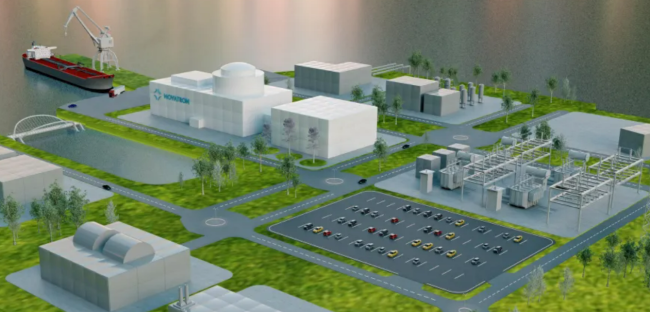
Nordic Fusion Prospects: VTT Report Highlights Best Locations for Pilot Reactor.

A new report by VTT Technical Research Centre of Finland, commissioned by Novatron Fusion Group (NFG), identifies the most promising Nordic locations for a pilot fusion reactor. As fusion energy edges closer to commercial viability, the study evaluates Denmark, Finland, Norway, and Sweden for their readiness to host such a facility.

Key Findings:

  • Finland leads in regulatory preparedness, with reforms to its Nuclear Energy Act expected by 2027.
  • Top candidate regions include:
    • Helsinki metropolitan area (Finland)
    • Stockholm–Nyköping corridor (Sweden)
    • Copenhagen–Malmö region (Denmark/Sweden)
  • Ideal sites are near industrial zones with strong transport links and proximity to research hubs.

The report emphasizes the importance of cross-border collaboration, legislative clarity, and strategic planning to accelerate fusion deployment. NFG’s magnetic mirror reactor concept aims to deliver cost-effective, clean energy, with pilot construction targeted for the 2030s.

Energy company St1 has invested €13 million in NFG, reinforcing the region’s commitment to fossil-free energy innovation.

“Fusion breakthroughs are no longer theoretical,” said Finland’s Climate Minister Sari Multala. “The Nordics are ready to lead.”

Read the full report here.


Picture from: VTT

Open post

Cotswold School Career Fair

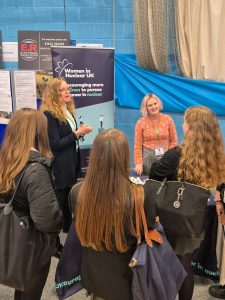
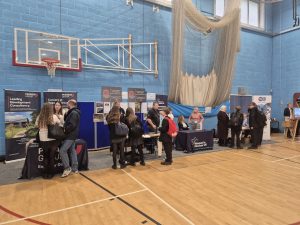
We were in attendance 22.10.25 for the Cotswold School Career Fair with Women in Nuclear (WiN) Central England branch to talk about nuclear careers.

The day offered us the chance to talk with secondary school students in order to spark their interest in careers in STEM.

Many of the students we spoke to were interested to know what they could do with a science, maths or engineering education and what the future career possibilities looked like.

A big focus for us is a broad engineering background as this enables the learner to have a diverse perspective, a transferable skill set and strong foundations to move into a multitude of job functions.

Something to bear in mind for the nuclear sector is the unknown job roles of tomorrow as there are many opportunities ahead of us that are still developing.

So, whether you’re interested in the environment & sustainability, business management, engineering, science, or community engagement, there are a plethora of job functions, careers and opportunities that will suit all individuals.

Posts navigation

1 2 3 4 5 6
Scroll to top