Making an impact: Volunteering in Nuclear with the NI

Discover how you can make a difference by volunteering both within the NI and externally. Whether you’re looking to give back to the industry, your community, or enhance your own skills, there are plenty of opportunities to get involved.

Join this session to learn more about the roles available, the benefits of volunteering, and how you can take the next step.

Speakers:

  • Jordan Hall, YGN Vice Chair
  • Steve Walters, NI Central England branch, and Megan Dean, NI Western branch
  • Helen Hulme, STEM Ambassador
  • Adrian Bull – NI Mentor (and President Elect)
  • Nancy Bellingan – NI Mentor and Mentee

https://events.teams.microsoft.com/event/f0d0b72a-a272-497e-ab82-4fec37ab0127@3c7ef2b6-ed63-4b9f-b68a-e8b9bcdc3971

Open post

Sellafield & RAICo facility simulator

Virtual Innovation Enhances Nuclear Waste Handling Safety at Sellafield

A cutting-edge simulation project is transforming how nuclear waste is managed at one of the UK’s most hazardous legacy facilities—Sellafield’s Pile Fuel Cladding Silo (PFCS). Originally built in the 1950s, the PFCS is now being decommissioned, with robotic systems playing a vital role in safely handling radioactive waste.

To reduce risk and downtime during upgrades to these robotic systems, RAICo and Sellafield Ltd developed a virtual replica of the facility using advanced 3D scanning, CAD modelling, and RAICo’s RHOVR simulation platform. This digital twin allows engineers to test software and hardware changes in a photorealistic environment before applying them in the real facility.

The result? Fewer human entries into hazardous zones, reduced downtime, and safer, more efficient upgrades to robotic systems. The simulator is already in use at Sellafield’s Engineering Centre of Excellence and could soon be adapted for other waste-handling operations across the site.

This project is a powerful example of how robotics, simulation, and cross-sector collaboration are accelerating innovation in nuclear decommissioning—while keeping people safe and building the digital skills needed for the future.

https://raico.org/a-simulation-of-a-nuclear-facility-makes-it-safer-to-upgrade-waste-handling-robots/

Picture from: RAICo

Open post

Palisades receives new fuel for restart

The Palisades Nuclear Power Plant in Michigan has reached a key step toward restarting operations by receiving 68 newly manufactured fuel assemblies. This fuel delivery follows extensive planning and regulatory coordination, made possible by the plant’s recent reclassification from decommissioned to operational status by the U.S. Nuclear Regulatory Commission.

Produced by a trusted domestic supplier, the fuel underwent thorough inspection before being securely stored in the Spent Fuel Pool Building, awaiting future installation in the reactor core. Alongside this, major restoration efforts continue across the facility, including the reassembly of the Main Turbine Generator and installation of the final refurbished Primary Coolant Pump motor—both essential for reactor function.

Additional work includes chemical cleaning of the Steam Generators’ secondary systems, following earlier tube refurbishments, to ensure long-term performance. These milestones are part of a broader effort involving over 1,800 workers, supported by government and industry partners, to bring the plant back online and contribute to meeting growing energy demands.

Read the original release: https://holtecinternational.com/2025/10/20/hh-40-22/


Picture courtesy of: Holtec

Open post

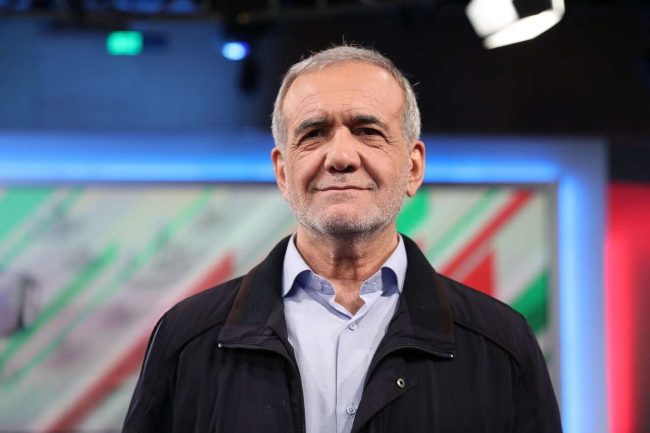
Finland is “the most prepared” for fusion

Nordic Fusion Prospects: VTT Report Highlights Best Locations for Pilot Reactor.

A new report by VTT Technical Research Centre of Finland, commissioned by Novatron Fusion Group (NFG), identifies the most promising Nordic locations for a pilot fusion reactor. As fusion energy edges closer to commercial viability, the study evaluates Denmark, Finland, Norway, and Sweden for their readiness to host such a facility.

Key Findings:

  • Finland leads in regulatory preparedness, with reforms to its Nuclear Energy Act expected by 2027.
  • Top candidate regions include:
    • Helsinki metropolitan area (Finland)
    • Stockholm–Nyköping corridor (Sweden)
    • Copenhagen–Malmö region (Denmark/Sweden)
  • Ideal sites are near industrial zones with strong transport links and proximity to research hubs.

The report emphasizes the importance of cross-border collaboration, legislative clarity, and strategic planning to accelerate fusion deployment. NFG’s magnetic mirror reactor concept aims to deliver cost-effective, clean energy, with pilot construction targeted for the 2030s.

Energy company St1 has invested €13 million in NFG, reinforcing the region’s commitment to fossil-free energy innovation.

“Fusion breakthroughs are no longer theoretical,” said Finland’s Climate Minister Sari Multala. “The Nordics are ready to lead.”

Read the full report here.


Picture from: VTT

Open post

Cotswold School Career Fair

We were in attendance 22.10.25 for the Cotswold School Career Fair with Women in Nuclear (WiN) Central England branch to talk about nuclear careers.

The day offered us the chance to talk with secondary school students in order to spark their interest in careers in STEM.

Many of the students we spoke to were interested to know what they could do with a science, maths or engineering education and what the future career possibilities looked like.

A big focus for us is a broad engineering background as this enables the learner to have a diverse perspective, a transferable skill set and strong foundations to move into a multitude of job functions.

Something to bear in mind for the nuclear sector is the unknown job roles of tomorrow as there are many opportunities ahead of us that are still developing.

So, whether you’re interested in the environment & sustainability, business management, engineering, science, or community engagement, there are a plethora of job functions, careers and opportunities that will suit all individuals.

Open post

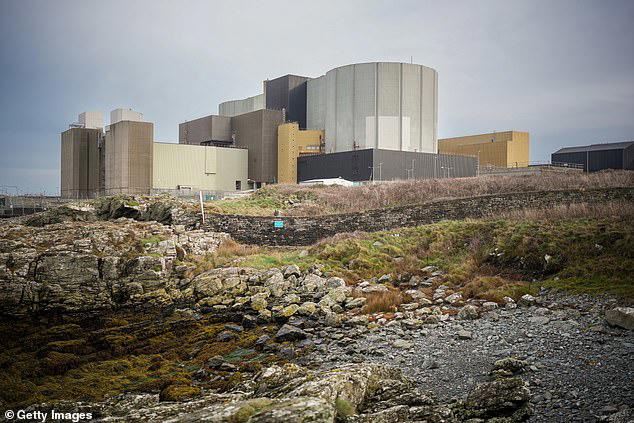
Solidifying Hanford waste in glass

The Hanford site, based in Benton County, Washington, has started up its low-level waste facility where a crucial element of the plant is solidifying the Hanford tank waste in glass.

The Hanford waste treatment plant is designed to safely process 56 million gallons of radioactive waste that is stored in its tanks.

This site was initially used for plutonium production during WWII and the Cold War, and it is now critical that the site addresses its environmental legacy through the plants primary mission to safely treat and stabalise radioactive & chemical waste through a process called vitrification. The waste gets mixed with glass-forming materials and heated to ~2,100 degrees Fahrenheit to create a stable glass form.

“The Hanford Waste Treatment and Immobilization Plant represents a monumental effort in environmental remediation, aiming to mitigate the risks associated with decades of nuclear waste storage. With ongoing advancements and successful operational milestones, the plays a crucial role in the long-term cleanup and safety of the Hanford Site and surrounding communities”

https://www.hanfordvitplant.com/newsroom/the-hanford-site-begins-solidifying-tank-waste-in-glass

Picture from: Hanford Vit Plant

Open post

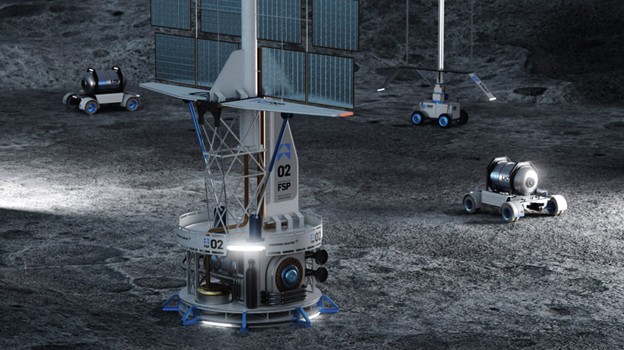
Aalo-Urenco fuel deal

Low-enriched uranium is a must have for Aalo’s, ‘Aalo-X experimental reactor’. Commercially sourced nuclear fuel for a next generation power plant is not something a business in the West has done before.

One of the major fuel enrichment companies in the world, Urenco, operates plants in Europe (Germany, the Netherlands, and the UK), and the U.S. This deal allows Aalo to dodge supply slow down & demand and will help build pace. As an example, SMR developers are having to compete for DOE allocated HALEU (high-assay low-enriched uranium) due to limited domestic production.

Aalo has grand ambitions to build and “deploy hundreds of Aalo pods to power data centers with clean, reliable energy… This strategy lets us focus on scaling reactor manufacturing rather than diverting capital into complex, time-intensive fuel fabrication plants.”

Read more: https://www.aalo.com/post/fuel-duel-with-urenco

Picture: Aalo

Workshop: Nuclear Futures for a Better Tomorrow

We invite you to join us for an innovative, cross-disciplinary workshop on Nuclear Futures, where we will explore four distinct scenarios of how nuclear technologies, policies, and perceptions might evolve in the years ahead.

This is not your typical expert roundtable. We aim to break down silos and bring together people from diverse fields — including scientists, policymakers, creatives, industry leaders, civil society, activists, students, and more — to collaborate on thinking about what’s next for nuclear futures.

What to expect in the workshop

  • Work in an interactive format with people from diverse backgrounds
  • Explore four scenarios of possible nuclear futures
  • Identify risks and opportunities in each scenario
  • Help shape policy recommendations that can support decision-makers in addressing nuclear challenges

Who can apply?

This workshop is for young visionaries eager to explore and shape nuclear futures. We bring together a diverse group of participants to generate fresh ideas, unexpected connections, and balanced perspectives. Places are limited, and selection ensures a rich mix of voices and experiences.

We especially encourage applications from individuals who are often underrepresented in nuclear policy debates.

Once accepted, participation is considered binding, as groups are composed based on profiles. If something unavoidable comes up, please notify us at least 48 hours in advance so your spot can be offered to someone on the waiting list.

Who are we?

We are part of foraus – Swiss Forum on Foreign Policy, a platform enabling young people to actively engage in foreign policy debates and develop political ideas. Through our Nuclear Futures project, we are part of Next Generation Foresight Practitioners (NGFP), an initiative of the School of International Futures (SOIF). SOIF is an international school for futures studies, empowering individuals and organizations to think strategically about the future and make forward-looking decisions. With this project, we aim to empower young people to participate actively in tomorrow’s discussions, contribute their perspectives, and collaboratively develop innovative ideas for the future of nuclear technologies and policies.

✨ Sign up now and help shape nuclear futures with us!


https://www.eventbrite.ch/e/london-youth-foresight-workshop-nuclear-futures-for-a-better-tomorrow-tickets-1778633212819?aff=oddtdtcreator

YGN: The Global Nuclear Fuel Cycle

A 40-minute webinar session, followed by a short Q&A session.
Speaker: Jamie Fairchild, NEA Uranium and Nuclear Fuel Analyst.

Event time: 12:30-13:30

The Global Nuclear Fuel Cycle – Covering:

  • the processing of raw material into fuel
  • the global distribution of these resources and services
  • challenges associated with supporting the current reactor fleet
  • the future deployment of conventional large scale and small modular reactors

Speaker Bio

Jamie has more than 20 years of experience in the uranium exploration, mining, and nuclear energy sectors. Prior to joining the Agency, he was responsible for managing Canada’s uranium and nuclear fuel portfolio for Natural Resources Canada. During that time, Jamie led Canada’s multi-lateral nuclear fuel collaboration efforts and represented Canada as their delegate to the joint NEA/IAEA Uranium Group, including as Vice-Chair. Jamie has also served as Chair of the Bureau for the IAEA’s Convention on Supplementary Compensation for Nuclear Damage during which time he led efforts to operationalise the treaty.

https://nuclearinst.com/Events/ygn-the-global-nuclear-fuel-cycle-opportunities-and-challenges/16163?OccId=22078

Posts navigation

1 2 3 4
Scroll to top