Open post

Rebuilding Iran’s Nuclear Programme

The plan for Iran is to build eight new nuclear units in cooperation with Russia and supported by China. Iranian President Masoud Pezeskhian has talked about Iran’s need to produce medical technology, healthcare, and radiopharmaceutical products.

Pezeshkian said: “For our country, embracing advanced technologies and entering global competition is vital. Arrogant powers seek to deprive independent nations, including Iran, of access to modern technologies, keeping them dependent while they produce and sell medicines at exorbitant prices.

“Our products’ quality, effectiveness and affordability will make Iran a leader in this field,” he said, adding that the assassinations targeting Iranian scientists stem from the concern of major powers over Iran’s scientific and technological independence.

The International Atomic Energy Agency (IAEA) are barred from entering Iran and are also not allowed to monitor nuclear sites with cameras.

Iranian foreign minister Seyed Abbas Araqchi said,

“We have no desire to hold direct negotiations with Washington, but an agreement can be achieved through indirect negotiations,” he stated.

He emphasised the peaceful intent of Iran’s nuclear activities, but insisted that uranium enrichment will continue, arguing that external pressure or conflict would not force Tehran to abandon its nuclear advancements. “What could not be achieved by war cannot be achieved through politics.”

US President Donald Trump previously warned that if Iran’s facilities resume operations, he could order new strikes. “If Tehran does not pursue peace – future strikes will be far more extensive,” he said.

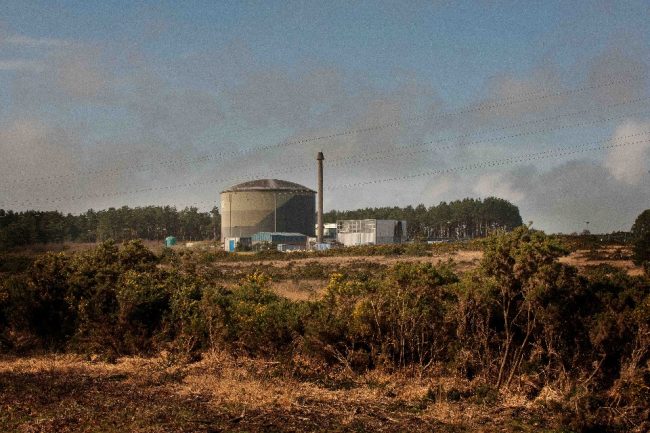
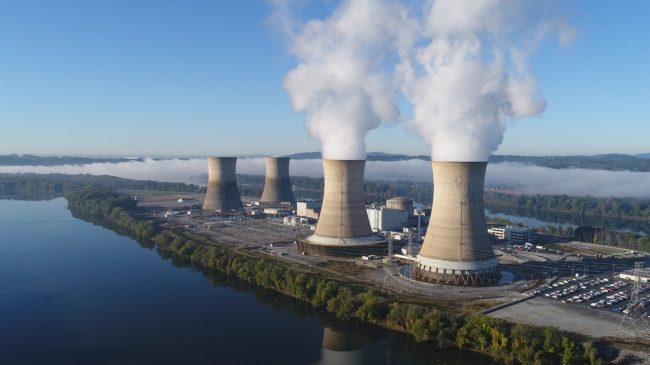
Picture: Mehr News Agency, CC BY 4.0, via Wikimedia Commons

Open post

U.S. Disappointed with Rolls-Royce Build in Wales

As news of the first British site for Rolls-Royce SMR was announced, plenty of people celebrated while the U.S. was left disappointed by the decision.

We posted yesterday about this news, and although we want a strong bond between the UK and the U.S., British nuclear needs to plant its foot on home ground. We see no reason why other sites cannot be found elsewhere for future new builds; however, the site at Anglesey was something Westinghouse had their sights on.

The U.S. are interested in larger-scale nuclear projects, and utilising Westinghouse is seen as a faster, cheaper and already approved way to get cleaner, more affordable energy to the UK.

The AP300 leverages proven AP1000 tech for regulatory ease, offers simplified design for lower cost and faster construction with proven passive safety systems (gravity-fed cooling, natural circulation).

While everyone has their wants and needs over energy management and the nuclear future in Britian, we would do well to keep U.S.-UK relations strong, but really, only time will tell what’s next.

One thing’s for sure; a focus on skills and talent is going to be crucial. Britain has many nuclear and energy related infrastructure projects on-going and, in the future plans, the competition for top talent is rife and it’s only going to increase.

For those wanting to truly get ahead, we must address the skills gap at mid-career and look to succession plan up to the executive level. The sharing of expert knowledge and experience is crucial while transitioning talent into civil nuclear and energy. If we are to meet demand, we have to take our recruitment strategies seriously.

Picture: Getty Images

Open post

Sizewell C Financial Closure

SZC becomes the first power plant to be funded by the UK’s Regulated Asset Based (RAB) model and is a debt raised financing of £5 billion.

Due to the company’s robust financial structure and being able to replicate the process at Hinkley Point C, the project was able to prove it could reduce cost & timelines hence gaining strong credit ratings from multiple agencies.

Once the site is operational it could create savings of £2 billion per year, leading to cheaper prices for consumers and utilising a low-carbon electricity system.

The project should lead to over 10,000 skilled, British job opportunities with thousands more within the supply chain and creating ~ 1,500 apprenticeships.

Importantly, SZC will supply 6 million homes with home-grown clean energy for 60 years+. The British economy is set to see a huge boost and an increase in energy security.

Sizewell C’s Joint-Managing Directors, Julia Pyke and Nigel Cann, said:

“Sizewell C is a transformative project for Britain’s energy future, delivering reliable low-carbon power, tens of thousands of jobs, and a major boost to the UK economy.”

“In Sizewell C the UK has pioneered a model for financing new build nuclear which works for both consumers and private investors and has attracted considerable interest from other countries with nuclear power development plans.”

Full story here; https://www.sizewellc.com/news-views/sizewell-c-reaches-financial-close-with-5-billion-export-credit-backed-debt-raise-and-strong-investment-grade-credit-rating/

Picture: SZC

Open post

Nuclear Component Manufacturing MoU Signed

BWX Technologies and Rolls-Royce SMR announce MoU signing for the manufacture of key nuclear components.

BWXT is in a powerful global position when it comes to enabling advanced nuclear developers to fulfil their growing demands. The Canadian subsidiary has been producing steam generators for over 60-years and has already supplied 315 steam generators around the world.

Each RR SMR reactor uses 3 steam generators to generate 470 MWe while utilising its pressurised water system. This MoU could include supporting the global roll out of Rolls-Royce’s SMR technology worldwide.

Collaboration is key when it comes to advanced technology and the nuclear industry. The power of a strong manufacturing partnership cannot be understated and with the increased focus on clean, reliable energy, this announcement could prove to be a pivotal move for both companies.

Official release; https://www.bwxt.com/bwxt-and-rolls-royce-smr-sign-agreements-advancing-key-nuclear-component-manufacturing/

Picture: BWXT

Open post

UKAEA – Fusion of Talent

Fusion of Talent: Celebrating Women in Computing

On 4th November 2025, UKAEA hosted Fusion of Talent at Culham Campus—a one-day event spotlighting the diverse roles and contributions of women and underrepresented genders in computing. The programme featured:

  • Keynote by Alison Kennedy on diversity’s impact in computing.
  • Inspiring talks from early-career professionals.
  • A poster session showcasing research and experiences.
  • A panel discussion tackling barriers and opportunities for inclusivity.

The event fostered networking, collaboration, and open dialogue on how diversity drives innovation in sectors like high-performance computing and nuclear safety. It welcomed allies and advocates from academia, industry, and government, reinforcing the message: representation matters for the future of tech and energy.

UK Atomic Energy Authority – GOV.UK

Open post

Nuclear Futures for a Better Tomorrow

London Youth Foresight Workshop took place on Monday 03/11 and was focused on the nuclear future by exploring 4 different scenarios.

The event was hosted by the Swiss Embassy in London and organised by the School of International Futures (SOIF) and the Next Generation Foresight Practitioners (NGFP).

SOIF is a global non-profit transforming futures for current and next generations and NGFP is a network of over 900 people from all over the world who are using futures and foresight to create positive impact and systemic transformation globally.

The 4 scenarios were Growth: Nuclear Renaissance 2050, Collapse: Nuclear Chaos 2050, Discipline: Nuclear Control 2050, Transformation: Beyond the Nuclear – Regenerative Futures 2050. All thought provoking topics and future scenarios that enabled the ~24 participants to consider & discuss what the nuclear future could look like.

The drivers and trends to consider included, but were not limited to private sector involvement, international collaboration, public education & awareness, intergenerational partnerships, economic interests, technical advancements and the environment.

We were focused within the growth scenario where we explored a future in which nuclear energy gains renewed importance due to increasing energy demands, technological progress and private investments.

Nuclear infrastructure is massively expanded, modular reactors are rapidly developed, and artificial intelligence manages monitoring, safety, and efficiency. National interests and fragmented international cooperation lead to regulatory gaps, while geopolitical tensions and an arms race shape global order.

Public concern about risks and the environmental impacts coexists with the acceptance of nuclear energy; the shortage of skilled workers is addressed through education and knowledge management.

Energy supply, technological innovation, and safety are closely interconnected, yet the system remains vulnerable. A world that grows and renews itself technologically but stays fragile.

We are left contemplating the future we will end up in and found this a really thought-provoking, and interesting workshop to be involved with.

Front Page – School of International Futures
Home – NGFP

Open post

Westinghouse, Brookfield & Cameco Partnership

Westinghouse, Brookfield & Cameco Announce $80 Billion Strategic Partnership with U.S. Government

Westinghouse Electric Company, Brookfield Asset Management, and Cameco have entered a landmark strategic partnership with the U.S. Government to deploy $80 billion worth of new nuclear reactors across the United States. This initiative, aligned with the May 2025 Executive Orders, positions nuclear energy as a cornerstone of America’s energy sovereignty, AI infrastructure, and national security.

At the heart of this deployment is Westinghouse’s AP1000® reactor technology, known for its passive safety systems, modular construction, and minimal land footprint per MWe. Each two-unit AP1000 project is expected to create or sustain 45,000 engineering and manufacturing jobs across 43 states, with national deployment projected to generate over 100,000 construction jobs.

Technical & Strategic Highlights

  • AI Integration: The reactors will power data centers and compute infrastructure, supporting America’s leadership in artificial intelligence.
  • Supply Chain Revitalization: The partnership aims to reinvigorate the U.S. nuclear industrial base and expand global exports of Westinghouse technology.
  • Global Reach: AP1000 reactors are already operational or under construction in Poland, Ukraine, and Bulgaria, reinforcing Westinghouse’s global footprint.

Recruitment & Thought Leadership Implications

This partnership signals a nuclear renaissance, creating unprecedented opportunities for engineers, project managers, AI specialists, and supply chain professionals. It also reaffirms the importance of cross-sector collaboration—between energy, technology, and government—to meet future energy demands.

For professionals and graduates considering careers in nuclear, this is a pivotal moment. The scale and ambition of this initiative will require next-generation talent across disciplines—from reactor design and AI integration to regulatory affairs and infrastructure development.

For original release visit; https://westinghousenuclear.com/strategic-partnership/

Picture: Westinghouse

Open post

RWE Nuclear and Focused Energy Fusion at Biblis

RWE Nuclear and Darmstadt-based fusion tech company Focused Energy have signed a Memorandum of Understanding to collaborate on a pioneering pilot project at the Biblis decommissioning site. The initiative will explore the use of Laser Driven Radiation Sources (LDRS)—a cutting-edge imaging technology derived from laser fusion research—for potential applications in nuclear decommissioning.

The project aims to demonstrate how LDRS can enable non-destructive material testing with higher resolution and deeper penetration than conventional methods. RWE will provide infrastructure, including the repurposing of a former emergency feed building, and supply non-radioactive test materials. The collaboration is supported by the Hessian Ministry for the Environment.

This partnership not only advances fusion-related innovation but also reinforces Germany’s role in foundational nuclear research.

Visit; https://www.rwe.com/presse/rwe-nuclear/2024-07-01-rwe-nuclear-und-focused-energy-unterzeichnen-absichtserklrung/

Picture: RWE

Open post

Nuclear Institute & APM: An Audience with Adrian Bull

Last night we had the pleasure of joining ~30 other nuclear industry professionals hearing from Adrian Bull who is due to take over the NI Presidency position in January 2026.

Adrian’s background with the Dalton Nuclear Institute, Westinghouse, the BNFL and NNL, mean that Adrian was well-placed to take us on a journey through nuclear.

We were given an interesting insight to the nuclear sector through the ages beginning with the post-war resurgence and technical advancement, through to the present day focusing on nuclear new build, the GDF and SMRs.

A summary of topics:

The 1970’s was a time when the reputation of the nuclear industry was not great mainly due to the Windscale and Three-Mile Island disasters.

During the 1980’s Britain had an enlarged nuclear fleet and the nuclear baseload helped the nation; however, in April 1986 the Chernobyl accident happened. Plans for a fleet of 10 PWRs were thwarted and instead only one was built, Sizewell B.

In the 1990’s, “Dash for Gas” was the was the focus as the electricity supply sector was broken up and privatised. Several Magnox sites were closed while SZB came online in 1995.

Throughout the early 2000’s the government lacked the mechanisms to make nuclear happen and by 2008 there was policy support, but no direct funding route for the sector.

The industry was not without its bad press and, unfortunately, in 2011 the Fukushima disaster happened. While this happened there were different financing models which allowed Hinkley Point C to progress.

The fracking of gas was the main concern for the public and by the 2020’s Sizewell C and SMRs don’t have significant public opposition. Energy security and affordability have become the important topics compared to net zero. The Russian invasion of Ukraine caused high volatility and the GDF siting process sparked local concerns.

In conclusion, it was apparent that the nuclear industry needs to work harder and smarter in the way we communicate. What is the message? What voice do we need to speak in at a given time? What channel do we utilise to spread this message? Who are the audience we are talking to? And, perhaps a good starting point, what outcome are we trying to achieve?

Adrian gave us lots to think about and there were some thoughtful questions during the Q&A at the end of the presentation.

Open post

Sellafield £4.6 billion high hazard framework

Sellafield has awarded a new £4.6 billion high hazard risk reduction framework contract to Amentum (remediation and hazardous waste retrieval), Atkins Realis and Altrad (decommissioning and nuclear waste management.), through the Decommissioning and Nuclear Waste Partnership (DNWP).

The Decommissioning Alliance (TDA) is joint venture involving Amentum, AtkinsRéalis & Westinghouse, handling pond retrievals.

The framework agreement will focus on the retrieval, storage and treatment of waste materials from the oldest facilities on the site and will be in place for 15-years.

All the companies involved with develop a sustainability plan to enhance collaboration with local priorities, ROI and delivering impact.

James Riddick, Sellafield Ltd chief supply chain officer, said:

“Cleaning up the legacy of historic operations on our site is at the heart of our mission. It is important that we achieve this safely, efficiently, and sustainably – our supply chain, and this partnership plays a key role in that.

We’re pleased to welcome our new partners. Their specialist capabilities and teams, working alongside our skilled Sellafield workforce, will help us deliver our mission and drive progress both on site and across our wider community.

Just as importantly, these partners share our values and our commitment to creating lasting social value for the communities we serve.”

Check out the original release; https://www.gov.uk/government/news/sellafield-ltd-awards-high-hazard-risk-reduction-framework-contract

Picture: gov.uk

Posts navigation

1 2 3 4
Scroll to top