Open post
Nuclear Careers

Hiring for Tomorrow, Today: Nuclear & Energy Infrastructure

Our aim at Nuclear Careers is to work with a broad mix of clients such as engineering consultants, construction managers, civil contractors, defence organisations, and manufacturers. The common thread is that these businesses, whether SME or larger companies, all have links to nuclear & energy infrastructure.

Why is this our focus? We have a passion that major projects can succeed and in no point in time has infrastructure mattered more than it has today, with nuclear and energy – and success starts with skills & talent.

Britain is riding a wave of financing and funding right now, so while the times are good, recruitment tends to take a back seat. We know that hiring has and is going on; however, there have also been many layoffs, halted projects and companies pivoting focus. Unemployment is high, and the ever-growing skills gap has not been addressed.

2026 will see an increased demand for mid-career to executive level hires within engineering and project delivery roles, but if some businesses aren’t careful, the top talent will go elsewhere.

Gone are the days when you can solely rely on brand, “if you build it, they will come…”, and with global mobility being more of the norm nowadays, we aren’t just in competition nationally for good candidates.

Hiring top talent needs to start today, not yesterday, not last week, but now. Yes, there is an element of risk, the unknown, and uncertainty, but another thing is for sure, we must hire more candidates into the sector if we are going to achieve all our grand plans.

Having an idea is one thing, implementing it is another, and having the right people to support the delivery is crucial.

At Nuclear Careers we understand hiring and we have the talent network – we’ve been talking to business leaders throughout the UK and beyond, so we know what matters.

We’re excited to build the future with our clients, whether it’s a small local business or a larger national or even international organisation, powering nuclear and energy is the goal.

Open post

UK Government Nuclear Taskforce Findings

The UK’s nuclear regulatory regime is highly effective at ensuring safety and is regarded as world-leading in many respects, particularly its goal-based approach, regulatory expertise, transparency, stakeholder engagement, and active international collaboration.

However, primary challenges include the following areas: 1. unnecessary slowness, inefficiency, and cost, 2. risk management & proportionality, 3. complexity of regulatory & planning landscape, 4. enabling delivery in the planning regime, 5. capacity, capability & culture, 6. international harmonisation, 7. insufficient understanding of the cost of delays.

  1. Feedback highlights systemic delays, bureaucratic overlap, and escalating costs that rarely provide meaningful safety or environmental benefits
  2. Interpretation of the ALARP (“As Low as Reasonably Practicable”) principle fosters a risk-averse culture and excessive conservatism. Similar issues exist in environmental assessments
  3. The multiplicity of regulators and overlapping obligations create costly duplication, inconsistent interpretations, and unpredictable outcomes.
  4. The current NSIP planning regime and related regulations are outdated, particularly in their treatment of emerging technologies like SMRs and AMRs. They lack flexibility and fleet-mode efficiency.
  5. There is a shortfall of SQEP (Suitably Qualified and Experienced Personnel), along with ageing workforce, over-reliance on consultants, salary challenges, and risk-averse organisational cultures
  6. Lack of alignment with international regulatory frameworks causes unnecessary costs and duplicative approval processes. The Taskforce plans to explore opportunities for recognition of overseas approvals.
  7. Regulatory decisions often overlook the significant financial and opportunity costs of delayed projects, leading to an imbalance between safety measures and project viability.

Next Steps and Priorities.

Strategic Government Direction – Ministers should provide clear strategic guidance to regulators and operators to ensure delivery is safe, efficient, and cost effective.

Consultation & Evidence Gathering – The Taskforce is holding engagement sessions and workshops to gather input on potential policy adjustments.

International Benchmarking – A detailed comparison with overseas systems will help identify where harmonisation could yield benefits.

Economic Impact Analysis – The costs and benefits of changes will be quantified to support the case for reform.

The interim report acknowledges a strong foundation in the UK’s nuclear regulation but calls for a once-in-a-generation reset across six core reform areas aimed at delivering faster, more cost effective, and scalable nuclear projects without compromising safety.

To view the full report; https://www.gov.uk/government/publications/nuclear-regulatory-taskforce/nuclear-regulatory-taskforce-interim-report

24/11/25 release; https://www.gov.uk/government/news/taskforce-calls-for-radical-reset-of-nuclear-regulation-in-uk

Picture: gov.uk

Open post

Urenco-EDF Fuel Deal Signed

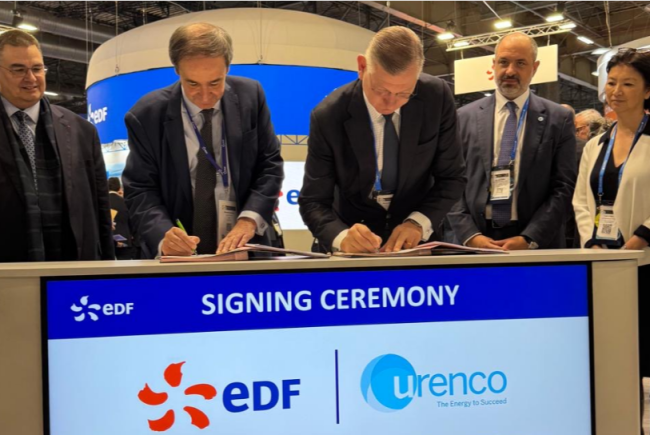
The supply of uranium enrichment services to the UK and France has been agreed between Urenco and EDF during the World Nuclear Exhibition in Paris.

This will support EDF’s fleet into the 2040’s and is a multi-billion-euro agreement. Urenco are a trusted global partner for fuel supply.

Urenco CEO, Boris Schucht said, “This deal represents an enormous step forward for energy security in Europe at a time when it has never been so important in the geopolitical landscape… I am grateful to our long-term partner EDF for once again placing their trust in Urenco.”

What does this mean for the UK?

  1. Long-term security of fuel supply; into the 2040’s over a sustained period which is vital for reliability and resilience.
  2. Minimising reliance on imports; the UK can reduce its dependence on overseas sources, and again, aligning with national energy and supply chain security goals.
  3. A boost for UK enrichment capacity and jobs; enhanced support for Capenhurst with ~1,000 skilled jobs at Urenco’s site, plus strengthening UK domestic infrastructure by reinforcing the nations capabilities.
  4. Continued commitment to low-carbon and green policies; ensuring nuclear remains the backbone of the UK’s clean energy strategy and underpinning the UK’s efforts to decarbonise its nuclear fuel cycle.
  5. Integration with nuclear new builds; Sizewell C will follow a coordinated contract strategy to use the same enriched uranium for its initial years while also deepening industrial links between Urenco, EDF, and DfT.
  6. Economic and strategic independence; a promotion of domestic fabrication (via Framatome UK) for local content and growth, raising value-capture to around 90% (as sited from SZC). Securing uranium enrichment as a pillar of UK energy autonomy and lessening the nations exposure to geopolitical risks.
  7. Lastly, this deal reinforces a Europe-wide focus on shared energy security amid global uncertainty.

Original release; https://www.urenco.com/news/global/2025/urenco-and-edf-sign-fuel-deal-at-world-nuclear-exhibition

Picture: Urenco

Open post

Enriched Lithium: Advanced Nuclear & Fusion Energy

The Hidden Key.

Enriched lithium is a fundamental element for next-generation nuclear energy—integral to both fusion fuel cycles and advanced reactor cooling. Advancing lithium isotope separation technologies and building secure supply chains are critical to unlocking the full potential of fusion and modern fission infrastructures.

The Enrichment Challenge

Historically, lithium isotope separation relied on COLEX (column exchange), a mercury-based process now banned for environmental reasons. Today, the industry is pivoting to cleaner, scalable methods:

  • AVLIS (Atomic Vapor Laser Isotope Separation): Laser-based enrichment with high precision.
  • Electrochemical Separation: Mercury-free, using advanced materials like zeta-V₂O₅ for isotope selectivity.

Companies like Hexium are investing in these technologies to secure supply chains for future nuclear and fusion projects.

Why Lithium Matters in Next-Generation Energy

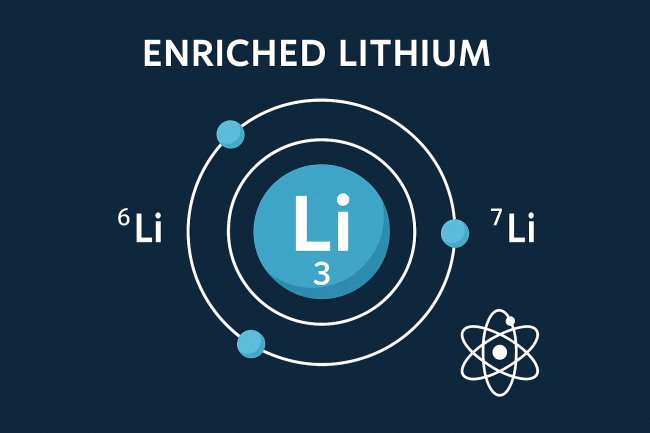
As the world accelerates toward clean energy solutions, enriched lithium is emerging as a critical enabler for both advanced nuclear reactors and fusion power plants. Its unique isotopes—Lithium-6 (Li-6) and Lithium-7 (Li-7)—play distinct roles in fuelling innovation and ensuring operational safety.

Lithium-6: Powering Fusion Through Tritium Breeding

Fusion energy promises limitless, carbon-free power, but it hinges on one scarce resource: tritium. Tritium doesn’t occur naturally in significant quantities, so fusion reactors must breed it internally. This is where Li-6 steps in:

  • Tritium Production: Li-6 reacts with high-energy neutrons inside breeder blankets to produce tritium and helium.
  • Essential for Self-Sufficiency: Without Li-6, fusion plants cannot sustain their fuel cycle.
  • Scale of Demand: A single demonstration fusion plant may require 10–100 tonnes of enriched Li-6, while commercial-scale reactors could need hundreds of tonnes.

Lithium-7: Supporting Advanced Fission Reactors

Li-7 is equally vital for advanced fission technologies, particularly Molten Salt Reactors (MSRs) and Pressurized Water Reactors (PWRs):

  • Coolant Chemistry: Li-7 maintains stable pH in reactor coolants, preventing corrosion and ensuring safety.
  • Molten Salt Reactors: Li-7-enriched salts act as heat transfer media and neutron moderators, enabling high-efficiency designs.

New career pathways are opening up in the nuclear industry. We are passionate that industry and educational institutions collaborate more to ensure people know about emerging careers while we are also working towards meeting future demands.

Open post

Future Talent: Women in Construction

Unlocking an Overlooked Talent Pool: Women in Construction & What Nuclear Can Learn 💡

As the construction sector accelerates efforts to diversify its workforce, the nuclear industry stands to benefit from similar strategies. Two recent initiatives highlight ways to systematically empower women in traditionally male-dominated fields—and their lessons are directly transferable to nuclear careers.

1. Women in Construction: The Power Within Training

Founded by Michaela Wain, Enas Fleming, and James Fleming, this UK initiative offers leadership and mindset development tailored for women entering and advancing in construction.

  • Leadership training through Motivational Intelligence (MQ): The program equips women with communication, resilience, and self-belief skills—key for navigating workplace biases.
  • Holistic development community: A supportive space combining free webinars, eBooks, and workshops creates a network of peers and mentors.
  • Proven impact: Participants are rising into leadership roles, leading cultural initiatives, and being promoted faster than industry averages.

2. Industry Push to Retain Women Apprentices

Data from the Construction & Industry Training Board reveals a 65% surge in women starting apprenticeships over five years; completion rates have more than doubled, from ~340 to 930 annually.

  • Despite this progress, women still occupy just 1% of site-based roles—underscoring the need for retention strategies.
  • Major drivers of early exits include lack of support, poor workplace culture, and few visible role models.
  • Programs blending technical skills with emotional resilience training, and creating mentorship structures, have shown measurable success: more women complete apprenticeships and take leadership roles.

Sources: [women-in-c…tion.co.uk], [waterpower…gazine.com]

What Nuclear Can Learn & Implement

🛠️ 1. Combine Technical Training with Mindset Development

  • Like construction, early-career nuclear roles (e.g., apprenticeships, engineering cadets) benefit when enriched with MQ-style workshops on communication and confidence.

👥 2. Build Supportive Communities

  • Create mentorship networks and peer groups, promoting belonging and shared guidance. Nuclear apprentices or junior staff mentoring each other and collaborating with senior women builds long-term retention.

🚀 3. Champion and Showcase Leadership Role Models

  • Promote successful women in nuclear operations, engineering, regulation, and leadership, amplifying diverse voices to inspire incoming talent—especially at site or operational levels.

⚖️ 4. Embed Equity in Culture

  • Tackle structural barriers: ensure equitable pay, flexible working, inclusive culture training, and safe grievance channels. This makes commitment to diversity more than just a tick box.

📈 5. Track Impact through Data

  • Monitor hires, retention, progression, and workplace satisfaction by gender. Use results to refine programs and demonstrate ROI—mirroring the proof-backed benefits construction is seeing.
Open post

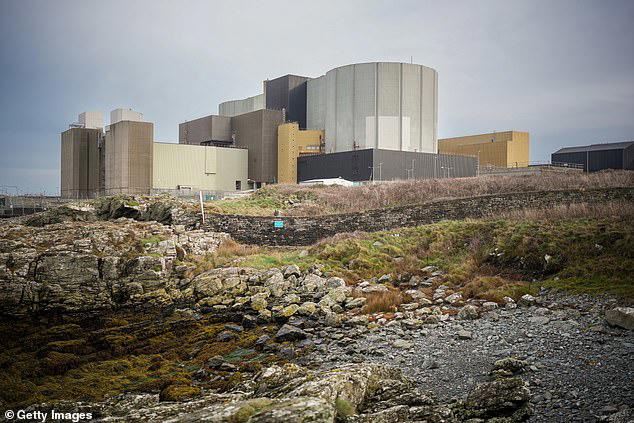
U.S. Disappointed with Rolls-Royce Build in Wales

As news of the first British site for Rolls-Royce SMR was announced, plenty of people celebrated while the U.S. was left disappointed by the decision.

We posted yesterday about this news, and although we want a strong bond between the UK and the U.S., British nuclear needs to plant its foot on home ground. We see no reason why other sites cannot be found elsewhere for future new builds; however, the site at Anglesey was something Westinghouse had their sights on.

The U.S. are interested in larger-scale nuclear projects, and utilising Westinghouse is seen as a faster, cheaper and already approved way to get cleaner, more affordable energy to the UK.

The AP300 leverages proven AP1000 tech for regulatory ease, offers simplified design for lower cost and faster construction with proven passive safety systems (gravity-fed cooling, natural circulation).

While everyone has their wants and needs over energy management and the nuclear future in Britian, we would do well to keep U.S.-UK relations strong, but really, only time will tell what’s next.

One thing’s for sure; a focus on skills and talent is going to be crucial. Britain has many nuclear and energy related infrastructure projects on-going and, in the future plans, the competition for top talent is rife and it’s only going to increase.

For those wanting to truly get ahead, we must address the skills gap at mid-career and look to succession plan up to the executive level. The sharing of expert knowledge and experience is crucial while transitioning talent into civil nuclear and energy. If we are to meet demand, we have to take our recruitment strategies seriously.

Picture: Getty Images

Open post

Women in Nuclear: Speed Mentoring & Networking

Women in Nuclear (WiN) Central England Branch held a networking and speed mentoring event at UKAEA on the Culham Campus, Oxford, last night (06/11/25).

There were five mentors representing UK Atomic Energy Authority (UKAEA), Nuclear Waste Servies (NWS), Atomic Weapons Establishment (AWE) and Collaborative Environmental Advisors (CEA) with six mentees who all had the chance to talk to all mentors.

Speed mentoring is a great way to introduce both mentor & mentee to each other in short, timed sessions of ~15/20 minutes. Mentees are able to gain insight from each mentor in order to foster quick relationships as opposed to the longer-term commitment of a traditional mentor.

This concept is also valuable for the mentor who gains skills and a development opportunity by talking to different professionals and offering important support.

The evening offered diverse perspectives, a focused learning opportunity, the ability to network during, before and after sessions, and allows a more informal setting than some traditional methods.

Please reach out if you are interested to hear how you can join your local branch of WiN for free! We encourage men and women to join as we want to foster collaboration and allyship in the industry.

Open post

Nuclear Futures for a Better Tomorrow

London Youth Foresight Workshop took place on Monday 03/11 and was focused on the nuclear future by exploring 4 different scenarios.

The event was hosted by the Swiss Embassy in London and organised by the School of International Futures (SOIF) and the Next Generation Foresight Practitioners (NGFP).

SOIF is a global non-profit transforming futures for current and next generations and NGFP is a network of over 900 people from all over the world who are using futures and foresight to create positive impact and systemic transformation globally.

The 4 scenarios were Growth: Nuclear Renaissance 2050, Collapse: Nuclear Chaos 2050, Discipline: Nuclear Control 2050, Transformation: Beyond the Nuclear – Regenerative Futures 2050. All thought provoking topics and future scenarios that enabled the ~24 participants to consider & discuss what the nuclear future could look like.

The drivers and trends to consider included, but were not limited to private sector involvement, international collaboration, public education & awareness, intergenerational partnerships, economic interests, technical advancements and the environment.

We were focused within the growth scenario where we explored a future in which nuclear energy gains renewed importance due to increasing energy demands, technological progress and private investments.

Nuclear infrastructure is massively expanded, modular reactors are rapidly developed, and artificial intelligence manages monitoring, safety, and efficiency. National interests and fragmented international cooperation lead to regulatory gaps, while geopolitical tensions and an arms race shape global order.

Public concern about risks and the environmental impacts coexists with the acceptance of nuclear energy; the shortage of skilled workers is addressed through education and knowledge management.

Energy supply, technological innovation, and safety are closely interconnected, yet the system remains vulnerable. A world that grows and renews itself technologically but stays fragile.

We are left contemplating the future we will end up in and found this a really thought-provoking, and interesting workshop to be involved with.

Front Page – School of International Futures
Home – NGFP

Open post

Nuclear Institute & APM: An Audience with Adrian Bull

Last night we had the pleasure of joining ~30 other nuclear industry professionals hearing from Adrian Bull who is due to take over the NI Presidency position in January 2026.

Adrian’s background with the Dalton Nuclear Institute, Westinghouse, the BNFL and NNL, mean that Adrian was well-placed to take us on a journey through nuclear.

We were given an interesting insight to the nuclear sector through the ages beginning with the post-war resurgence and technical advancement, through to the present day focusing on nuclear new build, the GDF and SMRs.

A summary of topics:

The 1970’s was a time when the reputation of the nuclear industry was not great mainly due to the Windscale and Three-Mile Island disasters.

During the 1980’s Britain had an enlarged nuclear fleet and the nuclear baseload helped the nation; however, in April 1986 the Chernobyl accident happened. Plans for a fleet of 10 PWRs were thwarted and instead only one was built, Sizewell B.

In the 1990’s, “Dash for Gas” was the was the focus as the electricity supply sector was broken up and privatised. Several Magnox sites were closed while SZB came online in 1995.

Throughout the early 2000’s the government lacked the mechanisms to make nuclear happen and by 2008 there was policy support, but no direct funding route for the sector.

The industry was not without its bad press and, unfortunately, in 2011 the Fukushima disaster happened. While this happened there were different financing models which allowed Hinkley Point C to progress.

The fracking of gas was the main concern for the public and by the 2020’s Sizewell C and SMRs don’t have significant public opposition. Energy security and affordability have become the important topics compared to net zero. The Russian invasion of Ukraine caused high volatility and the GDF siting process sparked local concerns.

In conclusion, it was apparent that the nuclear industry needs to work harder and smarter in the way we communicate. What is the message? What voice do we need to speak in at a given time? What channel do we utilise to spread this message? Who are the audience we are talking to? And, perhaps a good starting point, what outcome are we trying to achieve?

Adrian gave us lots to think about and there were some thoughtful questions during the Q&A at the end of the presentation.

Open post

Cotswold School Career Fair

We were in attendance 22.10.25 for the Cotswold School Career Fair with Women in Nuclear (WiN) Central England branch to talk about nuclear careers.

The day offered us the chance to talk with secondary school students in order to spark their interest in careers in STEM.

Many of the students we spoke to were interested to know what they could do with a science, maths or engineering education and what the future career possibilities looked like.

A big focus for us is a broad engineering background as this enables the learner to have a diverse perspective, a transferable skill set and strong foundations to move into a multitude of job functions.

Something to bear in mind for the nuclear sector is the unknown job roles of tomorrow as there are many opportunities ahead of us that are still developing.

So, whether you’re interested in the environment & sustainability, business management, engineering, science, or community engagement, there are a plethora of job functions, careers and opportunities that will suit all individuals.

Posts navigation

1 2
Scroll to top