In a decisive move to reignite Sweden’s nuclear ambitions, Videberg Kraft AB, backed by state-owned Vattenfall and a coalition of leading industrial players through Industrikraft, is leading the charge for a new era of Small Modular Reactors (SMRs) on the country’s west coast.
On December 23, Videberg Kraft formally submitted its application to the Swedish government, seeking state-backed financing and risk-sharing support under Sweden’s newly established nuclear aid framework.
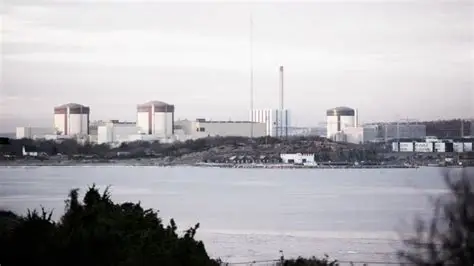
This marks the first such application under groundbreaking legislation, enacted in August 2025, which enables state loans and two-way Contracts for Difference to de-risk next-generation nuclear projects within the EU regulatory paradigm. The proposed site is the Värö Peninsula at Ringhals, once home to four reactors, two of which are now slated for renewal with SMRs capable of delivering around 1,500 MW.
Industrial heavyweight commitment is shaping the project’s financing structure. Industrikraft, a consortium including Saab, Volvo, Alfa Laval, ABB, Hitachi Energy, and others, is acquiring a 20 % stake in Videberg Kraft, signalling robust private-sector investment and portfolio diversification away from fossil-intensive power. This strategic alignment not only strengthens risk-sharing but also reflects a shared imperative; clean, stable energy underpinning electrification of heavy industries like steel, chemicals, and transport.
Currently, the project team is evaluating two cutting-edge SMR technologies, GE Vernova/Hitachi’s BWRX‑300 and Rolls‑Royce’s modular design. A final choice between five BWRX‑300 or three Rolls‑Royce units is expected in 2026, with deployment following through in phases targeting a total of 1,500 MW and perhaps even more, with potential for an additional 1,000 MW in subsequent stages.
State involvement is a game-changer. The support model not only offers low-cost loans but also income stabilisation through two-way Contracts for Difference, a mechanism essential for securing investor confidence and compliance with EU state-aid rules. Already in dialogue with the European Commission, Sweden aims to replicate precedents set by Poland’s approved state-backed nuclear scheme.
Through this bold application, Sweden is sending a loud signal; nuclear power remains central to its vision of a 100 % fossil-free energy system. As Prime Minister Ulf Kristersson put it, “New fossil-free electricity production is critical for the electrification of Sweden’s transport and industry”. The move also reignites a conversation that once favoured a total nuclear phase-out, parliament reversed that decision in 2010, and now eight reactors remain in operation.
Videberg Kraft’s state aid application is more than a paper filing, it’s a strategic gambit to reshape Sweden’s electric grid, drive industrial decarbonisation, and leapfrog into modular nuclear innovation.
As negotiations with the Swedish government and the European Commission progress, the world will be watching whether this blend of public guarantee and private ambition delivers the next generation of clean, reliable power.
Sources: world-energy.org, oilprice.com, world-nuclear-news.org
Picture: XINHUA