Open post

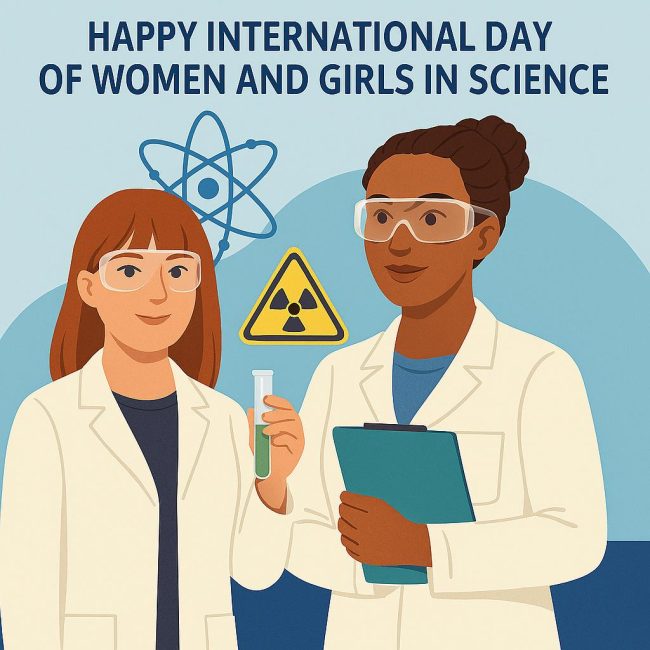
International Day of Women & Girls in Science

Why It Matters to the Nuclear Workforce

Observed every year on 11 February, the International Day of Women and Girls in Science (IDWGIS) was proclaimed by the UN General Assembly in December 2015 (Resolution A/RES/70/212) and first celebrated in 2016.

In 2026, this marks the 11th observance, with UNESCO’s theme “From vision to impact: Redefining STEM by closing the gender gap.”

Why this day exists

The Day recognises that science and gender equality must advance together to tackle global challenges, yet women remain under‑represented, about one in three researchers worldwide, and face persistent barriers from education through to leadership.

UNESCO’s latest snapshots also show women make up roughly 35% of STEM graduates globally, and only around one in ten STEM leaders is a woman, highlighting the long road from classroom to C‑suite.

The state of play: Key facts (global)

  • Share of women among researchers: ~31.7% (2021 global estimate); using the most recent comparable country set (2018–2021), ~33.7%.
  • STEM graduates: ~35% are women; progress has been slow over the last decade.

These figures matter for energy security, climate transition and health, areas where nuclear science and technology are pivotal.

Zooming in on nuclear: Representation & momentum

  • Workforce representation: Across OECD‑NEA countries, women constitute about a quarter of the nuclear workforce and are particularly under‑represented in STEM and upper management/executive roles.
  • Global headline: The IAEA reiterates that women account for “only a fifth” of the worldwide nuclear workforce and is scaling programmes to close the gap.

Talent pipeline initiatives are making a difference:

  • IAEA Marie Skłodowska‑Curie Fellowship Programme (MSCFP), launched in 2020, had 560 fellows by end‑2023, offering Master’s scholarships plus internships to help graduates move into nuclear roles.
  • By Sept 2025, cumulative support had grown to ~760 women from 129 countries, signalling accelerating uptake.
  • The IAEA Lise Meitner Programme (LMP), started in 2023, provides multi‑week visiting professional experiences to early‑ and mid‑career women at host laboratories and facilities worldwide.
  • The IAEA’s “Nuclear Needs Women” campaign consolidates these efforts and underscores the climate, health and food‑security case for inclusion. UK pipeline signals (relevant to employers and educators)
  • A‑level physics, a key gateway into nuclear, saw girls make up ~23.3% of entrants in 2024. Participation is rising, but parity remains distant.
  • The UK industry community has set bold targets; for example, Women in Nuclear UK continues to advocate actions aligned to the sector goal of 40% women in nuclear by 2030.

Why the observance matters for the nuclear sector

  1. Skills & capacity: Advanced reactor deployment, decommissioning, isotope supply chains and nuclear medicine all depend on a larger, more diverse skills base; under‑representation is a lost innovation opportunity.
  2. Safety & performance: Diverse teams improve decision‑making and risk awareness, core to nuclear safety, security and safeguards.
  3. Net zero & societal impact: Inclusion directly supports energy transition, cancer care and food security, where nuclear technologies deliver measurable benefits.

Practical actions for organisations (that work)

1) Build the early‑career pipeline intentionally

  • Partner with schools and colleges to demystify physics and nuclear pathways; amplify female role models and offer site visits, job‑shadowing and technical tasters.
  • Promote sponsored Master’s routes and internships (e.g., signpost candidates to the IAEA MSCFP and create matching in‑house placements).

2) Recruit for breadth, assess for potential

  • Use skills‑based hiring and structured interviews; audit job adverts for gender‑coded language; ensure mixed‑gender panels in technical assessments. Evidence from NEA’s international dataset links inclusive practices to better retention and leadership progression.

3) Retain and advance

  • Establish sponsorship (not just mentorship), transparent promotion criteria and rotational assignments that give women P&L and operations exposure, stepping stones to executive roles where gaps are widest.
  • Support flexible work and return‑to‑practice programmes to reduce mid‑career attrition.

4) Measure what matters

  • Track representation by function and level, pay equity, promotion velocity and attrition; publish progress. (UK public bodies such as the NDA group now disclose gender metrics across entities—useful templates for broader industry reporting.)

How long has the Day been celebrated?

  • Proclaimed: 22 December 2015 by UNGA (A/RES/70/212).
  • First observance: 11 February 2016; marked annually on 11 February ever since.
  • 2026 theme: “From vision to impact: Redefining STEM by closing the gender gap.”

For Nuclear‑Careers.com readers: how to engage this week

  • Host a spotlight webinar featuring women across reactor operations, decommissioning, fuel cycle, radiopharmacy and safeguards—tie to UNESCO’s 2026 theme with concrete case studies. [unesco.org]
  • Publish your metrics and a 12‑month action plan—intern to exec—aligned with the NEA’s evidence‑based recommendations. [oecd-nea.org]
  • Create an “MSCFP‑ready” employer pack (mentors, placements, visa support) to attract Fellows and LMP participants into your teams. [iaea.org]
  • Amplify UK pipeline partners (e.g., IOP, WISE, IET) and commit to sustained outreach where physics participation gaps are widest. [iop.org], [wisecampaign.org.uk], [theiet.org]

Further reading & resources

  • UN General Assembly Resolution A/RES/70/212 (2015)—establishing IDWGIS. [digitallib…ary.un.org]
  • UNESCO: International Day of Women and Girls in Science (2026 theme & context). [unesco.org]
  • UN list of International Days (confirms 11 February observance). [un.org]
  • UNESCO Institute for Statistics: Gender Gap in Science, Status & Trends (2024/2025 updates). [unesdoc.unesco.org], [zenodo.org]
  • OECD‑NEA: Gender Balance in the Nuclear Sector (international dataset & recommendations). [oecd-nea.org]
  • IAEA: Together for More Women in Nuclear (MSCFP and LMP). [iaea.org], [iaea.org]
  • Women in Nuclear UK (Strategy 2021–2026)—industry mobilisation towards 2030 goals. [winuk.org.uk]
  • Institute of Physics (A‑level physics participation data, 2024). [iop.org]

Bottom line

IDWGIS isn’t just a date on the calendar. For the nuclear community, it’s a checkpoint on workforce health; are we widening our talent pool, accelerating women’s progression into technical leadership, and showcasing the impact of diverse teams on nuclear safety, performance and innovation? The data, and the opportunity, say we can, and must, do more.
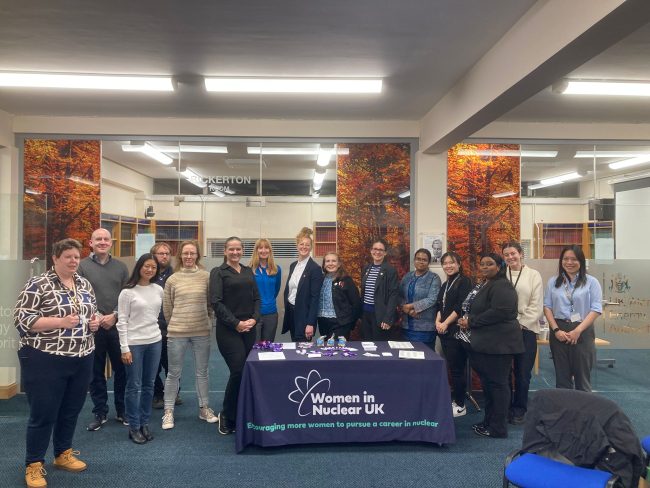
An Audience With Change-Makers: Navigating Careers Through Transferable Skills

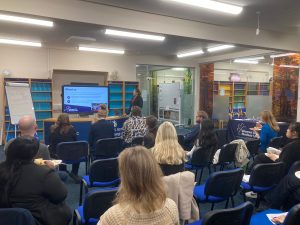
The event will focus on professionals who have utilised their experience and skills to transfer from other industries into the nuclear sector. Transferable skills are crucial in all areas of the nuclear industry including construction, defence, engineering, waste management and project delivery.

A joint event with the Nuclear Institute & Women in Nuclear Central England Branches.

The link to register will be here soon!

For now, mark this date in your diary and check back early February to register your attendance.

Open post

Happy New Year 2026!

As we enter the new year, we see this as the perfect time to plan, foster ideas and relationships while leaning into creativity.

Winter is also a time for reflection and ensuring we can all build on work that has already been undertaken.

2025 was, on the whole, a strong year for the nuclear sector. Public opinion was up, nuclear energy infrastructure was visible on a global scale, and there seems to be renewed interest and support for the future of nuclear power in the UK and beyond.

Below we’ve given brief insight to different areas of the nuclear sector in the UK and globally including defence, engineering, construction and waste management. Please reach out to take these conversations further, to continue networking, and to share your expertise.

Defence

The UK Nuclear Defence sector has seen the modernisation of Trident by continuing its investment in the Dreadnought-class submarines, which will replace the Vanguard fleet as part of the Trident nuclear deterrent program. Construction milestones were met, keeping the program on track for the early 2030s.

AUKUS and Strategic Partnerships saw a deepened collaboration, focusing on nuclear-powered submarine technology and advanced defence capabilities.

Where Policies were concerned the UK reaffirmed its commitment to maintaining a “minimum credible deterrent,” while supporting NATO’s nuclear posture amid heightened global tensions.

On the global stage nuclear defence trends included U.S. and NATO advancing the modernisation of its nuclear triad, including new ICBMs (Sentinel program) and B-21 bombers. NATO emphasised nuclear deterrence as part of its strategic concept.

Russia: Continued development of novel nuclear delivery systems (e.g., hypersonic weapons, Poseidon underwater drones) amid geopolitical strains.

China: Expanded its nuclear arsenal significantly, moving toward a larger and more diversified deterrent, including silo-based ICBMs and submarine-launched systems.

Arms Control Challenges: The collapse of major treaties like New START renewal talks and growing concerns over arms race dynamics marked 2025 as a year of uncertainty for global nuclear governance.

Engineering & Construction

Last year wasn’t just about policy or energy targets; it was a year defined by engineering ambition and construction milestones that will shape the industry for decades to come.

Hinkley Point C continued to dominate headlines as one of the most complex civil engineering projects in Europe. The site saw major progress, from reactor building completion to the installation of critical components. These achievements weren’t without challenges such as cost pressures and supply chain constraints testing resilience, but the project remains central to Britain’s low-carbon energy future.

Meanwhile, Sizewell C moved from planning into tangible action. Preparatory works accelerated, and engineering contracts expanded to support modular construction techniques, signalling a shift toward efficiency and innovation.

But infrastructure isn’t just about concrete and steel, it’s about people. 2025 highlighted the growing need for skilled engineers, project managers, and technical specialists. Apprenticeships and nuclear-specific training programs gained momentum, ensuring the next generation is ready to deliver on these ambitious projects, yet mid-career to executive level we certainly have an important skills gap to address.

Globally, the story was just as compelling. In the United States, Vogtle Units 3 and 4 marked a historic milestone as the first new reactors in decades entered operation. These projects showcased advanced modular assembly techniques, setting a precedent for future builds.

Across Asia, China continued its rapid expansion, leveraging standardised designs to deploy multiple reactors simultaneously, a feat that underscores the importance of engineering precision and scalability.

India and South Korea also pushed forward with new projects, reinforcing nuclear’s role in energy security.

Innovation was another defining theme. Small Modular Reactors (SMRs) moved from concept to reality, with pilot projects in Canada, the US, and the UK edging closer to licensing and early-stage construction. These designs promise flexibility, faster deployment, and a new era of nuclear engineering that could transform how we think about energy infrastructure.

Waste Management

When we talk about nuclear energy, the conversation often gravitates toward power generation, innovation, and carbon reduction. But behind every reactor and infrastructure project lies a critical responsibility, managing nuclear waste safely and sustainably. In 2025, this area saw significant progress and some pressing challenges that will define the future of the industry.

Across the UK, the focus remained on advancing the Geological Disposal Facility (GDF) program, a cornerstone of long-term waste strategy. Community engagement deepened, with several regions actively participating in site evaluations. This wasn’t just about engineering; it was about building trust and transparency. The year highlighted how technical excellence and social responsibility must go hand in hand when dealing with high-level waste.

Operationally, the UK continued to make strides in interim storage solutions, ensuring that spent fuel and radioactive materials are managed securely while permanent disposal options evolve. Engineering innovation played a key role here, with improved containment systems and digital monitoring technologies enhancing safety standards.

Globally, the narrative was equally dynamic. Finland’s Onkalo repository moved closer to becoming the world’s first operational deep geological facility, a milestone that sets a precedent for others. Sweden and France advanced their own disposal programs, while the United States renewed efforts to resolve long-standing challenges around permanent storage. Meanwhile, countries like Canada and Japan invested heavily in research on advanced waste treatment and recycling technologies, aiming to reduce volumes and recover valuable materials.

One of the most exciting developments was the growing interest in partitioning and transmutation techniques that could dramatically reduce the long-term radiotoxicity of waste. While still in the research phase, these innovations signal a future where waste management is not just about containment but transformation.

For professionals in the nuclear sector, these trends underscore a vital truth, waste management is no longer a back-office function. It’s a front-line discipline requiring expertise in engineering, environmental science, policy, and stakeholder engagement. Careers in this space are expanding, offering opportunities to shape solutions that will safeguard generations to come.

In Conclusion

As we move into 2026, the challenge is clear, how do we accelerate progress while maintaining public confidence and technical rigor? The answer lies in collaboration between governments, industry, and communities, and in the talent that drives innovation forward. If 2025 was a year of groundwork, 2026 must be a year of action.

Remember to contact us to expand on these topics and to discuss how Nuclear Careers can help with your hiring needs in 2026.

Open post

Women in Nuclear: Speed Mentoring & Networking

Women in Nuclear (WiN) Central England Branch held a networking and speed mentoring event at UKAEA on the Culham Campus, Oxford, last night (06/11/25).

There were five mentors representing UK Atomic Energy Authority (UKAEA), Nuclear Waste Servies (NWS), Atomic Weapons Establishment (AWE) and Collaborative Environmental Advisors (CEA) with six mentees who all had the chance to talk to all mentors.

Speed mentoring is a great way to introduce both mentor & mentee to each other in short, timed sessions of ~15/20 minutes. Mentees are able to gain insight from each mentor in order to foster quick relationships as opposed to the longer-term commitment of a traditional mentor.

This concept is also valuable for the mentor who gains skills and a development opportunity by talking to different professionals and offering important support.

The evening offered diverse perspectives, a focused learning opportunity, the ability to network during, before and after sessions, and allows a more informal setting than some traditional methods.

Please reach out if you are interested to hear how you can join your local branch of WiN for free! We encourage men and women to join as we want to foster collaboration and allyship in the industry.

Open post

UKAEA – Fusion of Talent

Fusion of Talent: Celebrating Women in Computing

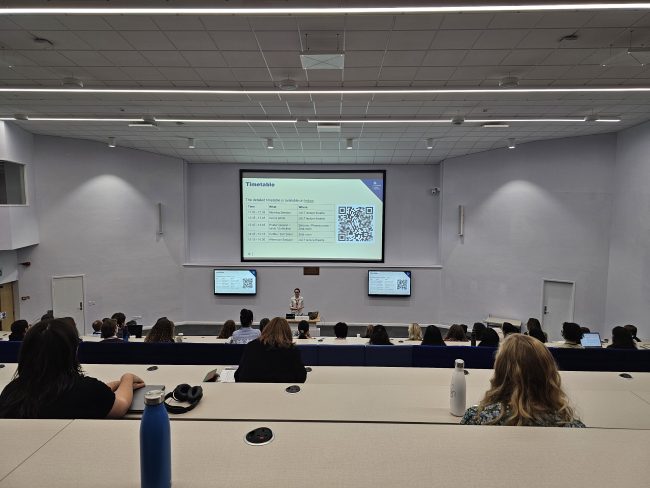
On 4th November 2025, UKAEA hosted Fusion of Talent at Culham Campus—a one-day event spotlighting the diverse roles and contributions of women and underrepresented genders in computing. The programme featured:

  • Keynote by Alison Kennedy on diversity’s impact in computing.
  • Inspiring talks from early-career professionals.
  • A poster session showcasing research and experiences.
  • A panel discussion tackling barriers and opportunities for inclusivity.

The event fostered networking, collaboration, and open dialogue on how diversity drives innovation in sectors like high-performance computing and nuclear safety. It welcomed allies and advocates from academia, industry, and government, reinforcing the message: representation matters for the future of tech and energy.

UK Atomic Energy Authority – GOV.UK

Open post

Cotswold School Career Fair

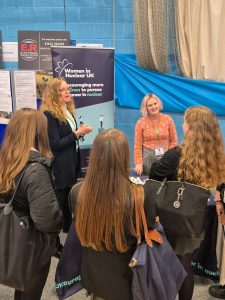
We were in attendance 22.10.25 for the Cotswold School Career Fair with Women in Nuclear (WiN) Central England branch to talk about nuclear careers.

The day offered us the chance to talk with secondary school students in order to spark their interest in careers in STEM.

Many of the students we spoke to were interested to know what they could do with a science, maths or engineering education and what the future career possibilities looked like.

A big focus for us is a broad engineering background as this enables the learner to have a diverse perspective, a transferable skill set and strong foundations to move into a multitude of job functions.

Something to bear in mind for the nuclear sector is the unknown job roles of tomorrow as there are many opportunities ahead of us that are still developing.

So, whether you’re interested in the environment & sustainability, business management, engineering, science, or community engagement, there are a plethora of job functions, careers and opportunities that will suit all individuals.

Scroll to top