Open post

A New Era for Nuclear

Why the IEA Says the Future is Powered by Atomic Ambition.

The global energy system is changing faster than at any point in modern history. According to the International Energy Agency’s latest analyses, electricity demand is rising at extraordinary speed, driven by industrial electrification, the expansion of electric mobility, rapid growth in air‑conditioning, and the surging energy needs of data centres and artificial intelligence. In this “Age of Electricity,” nuclear energy is emerging not just as a complement to renewables, but as a central pillar of a secure, resilient, and low‑carbon power system.

What is striking across the IEA reports is the consistency of their message; nuclear energy is not only growing – it is accelerating, and its importance is becoming strategically undeniable.

A Record‑Setting Decade Ahead

Global nuclear generation set a new record in 2025 and is on track to rise steadily through 2030. This momentum is powered by reactor restarts in Japan, stronger output in France, and significant new capacity in China, India, Korea and other emerging economies. China alone is expected to deliver around 40% of the global nuclear increase this decade.

By 2030, nuclear and renewables together are expected to supply half of the world’s electricity, up from 42% today, an extraordinary transformation in less than a decade.

And this growth isn’t just a statistical uptick. Nuclear’s average annual expansion is projected at 2.8%, more than double its growth rate in the first half of the 2020s. This marks the strongest surge in nuclear output in decades, signalling a structural shift in how governments and markets view the technology.

Why the World Needs More Nuclear—Fast

Electricity demand is expected to grow 2.5 to 3.5 times faster than total energy demand this decade as digital infrastructure, electric vehicles, and heavy industry rely increasingly on clean electrons. Data centres alone are emerging as a major new dedicated market for nuclear power.

This demand explosion underscores a wider truth; the global power system is being stretched to its limits. More than 2,500 GW of clean energy and load‑related projects are currently stuck in grid connection queues worldwide. The IEA stresses that to meet global needs, grid investment must grow by 50% by 2030. Nuclear’s round‑the‑clock, dispatchable output makes it uniquely suited to anchor this increasingly complex system, offering stability when weather‑dependent renewables fluctuate.

This grid‑flexibility challenge also presents an immense opportunity. As the IEA notes, with the right reforms, enhanced interconnection, advanced controls, and enabling regulation, over 1,600 GW of stalled projects could be brought online in the near term. Nuclear’s stable output, combined with its ability to pair with district heat, hydrogen production, and industrial processes, positions it as a cornerstone of this reliability revolution.

Small Modular Reactors: Catalyst for the New Nuclear Era

One of the most exciting narratives emerging from the IEA’s The Path to a New Era for Nuclear Energy is the accelerating progress of small modular reactors (SMRs). These advanced designs promise lower capital costs, shorter construction timelines, and applications tailored for industries, remote regions, and the rapidly expanding data‑centre economy. The first commercial SMRs are set to enter operation around 2030, and investor interest continues to rise across multiple markets.

The report highlights that more than 40 countries now have supportive policies for nuclear energy, a number not seen since the 1970s. Innovation in SMRs, alongside new financing models and public‑private partnerships, could unlock a “golden era” for nuclear technology over the coming decades.

A Global Workforce Moment

Behind every reactor restart, every new advanced design, and every gigawatt of rising capacity is a workforce, and the IEA is clear; the world will need more nuclear talent than ever. From engineering and construction to digital operations, cybersecurity, supply‑chain strategy, and fuel‑cycle innovation, the coming era of nuclear growth represents an unprecedented career opportunity.

The IEA emphasises that planning for workforce development is just as essential as financing and policy progress. Without the right talent pipeline and training infrastructure, nations risk missing the moment and the economic benefits that come with nuclear leadership.

An Optimistic Outlook for a Critical Decade

The overarching theme across these reports is unmistakable; nuclear energy is no longer a question mark in the future energy mix. It is a necessity, one backed by data, momentum, and global policy alignment.

With electricity demand soaring, climate targets intensifying, and grid systems in urgent need of firm, low‑carbon capacity, nuclear is stepping into a role that is both indispensable and transformative. The next decade will shape the future of global energy, and nuclear’s resurgence is not a tentative return – it is a confident stride into a new era.

For the nuclear workforce, this is a moment of unparalleled opportunity. The world is calling for a new generation of engineers, innovators, operators, and leaders. The question now is simple; Who will rise to power the future?

Picture: IEA
Open post

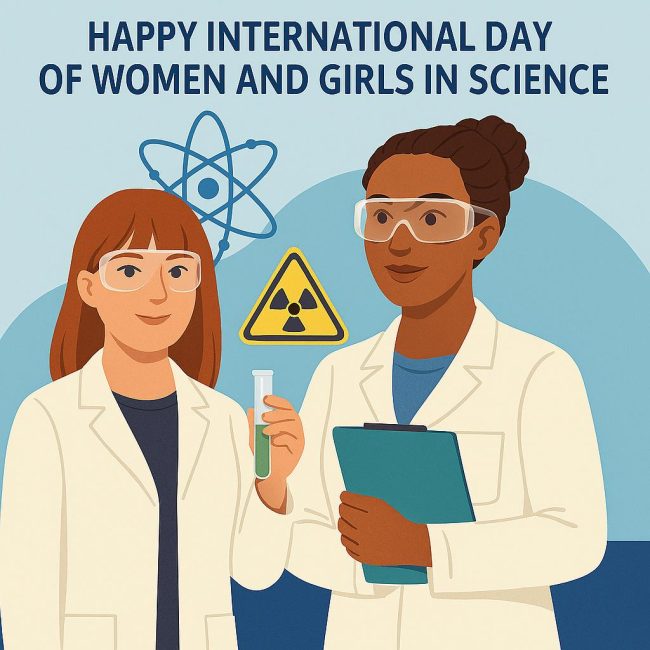
International Day of Women & Girls in Science

Why It Matters to the Nuclear Workforce

Observed every year on 11 February, the International Day of Women and Girls in Science (IDWGIS) was proclaimed by the UN General Assembly in December 2015 (Resolution A/RES/70/212) and first celebrated in 2016.

In 2026, this marks the 11th observance, with UNESCO’s theme “From vision to impact: Redefining STEM by closing the gender gap.”

Why this day exists

The Day recognises that science and gender equality must advance together to tackle global challenges, yet women remain under‑represented, about one in three researchers worldwide, and face persistent barriers from education through to leadership.

UNESCO’s latest snapshots also show women make up roughly 35% of STEM graduates globally, and only around one in ten STEM leaders is a woman, highlighting the long road from classroom to C‑suite.

The state of play: Key facts (global)

  • Share of women among researchers: ~31.7% (2021 global estimate); using the most recent comparable country set (2018–2021), ~33.7%.
  • STEM graduates: ~35% are women; progress has been slow over the last decade.

These figures matter for energy security, climate transition and health, areas where nuclear science and technology are pivotal.

Zooming in on nuclear: Representation & momentum

  • Workforce representation: Across OECD‑NEA countries, women constitute about a quarter of the nuclear workforce and are particularly under‑represented in STEM and upper management/executive roles.
  • Global headline: The IAEA reiterates that women account for “only a fifth” of the worldwide nuclear workforce and is scaling programmes to close the gap.

Talent pipeline initiatives are making a difference:

  • IAEA Marie Skłodowska‑Curie Fellowship Programme (MSCFP), launched in 2020, had 560 fellows by end‑2023, offering Master’s scholarships plus internships to help graduates move into nuclear roles.
  • By Sept 2025, cumulative support had grown to ~760 women from 129 countries, signalling accelerating uptake.
  • The IAEA Lise Meitner Programme (LMP), started in 2023, provides multi‑week visiting professional experiences to early‑ and mid‑career women at host laboratories and facilities worldwide.
  • The IAEA’s “Nuclear Needs Women” campaign consolidates these efforts and underscores the climate, health and food‑security case for inclusion. UK pipeline signals (relevant to employers and educators)
  • A‑level physics, a key gateway into nuclear, saw girls make up ~23.3% of entrants in 2024. Participation is rising, but parity remains distant.
  • The UK industry community has set bold targets; for example, Women in Nuclear UK continues to advocate actions aligned to the sector goal of 40% women in nuclear by 2030.

Why the observance matters for the nuclear sector

  1. Skills & capacity: Advanced reactor deployment, decommissioning, isotope supply chains and nuclear medicine all depend on a larger, more diverse skills base; under‑representation is a lost innovation opportunity.
  2. Safety & performance: Diverse teams improve decision‑making and risk awareness, core to nuclear safety, security and safeguards.
  3. Net zero & societal impact: Inclusion directly supports energy transition, cancer care and food security, where nuclear technologies deliver measurable benefits.

Practical actions for organisations (that work)

1) Build the early‑career pipeline intentionally

  • Partner with schools and colleges to demystify physics and nuclear pathways; amplify female role models and offer site visits, job‑shadowing and technical tasters.
  • Promote sponsored Master’s routes and internships (e.g., signpost candidates to the IAEA MSCFP and create matching in‑house placements).

2) Recruit for breadth, assess for potential

  • Use skills‑based hiring and structured interviews; audit job adverts for gender‑coded language; ensure mixed‑gender panels in technical assessments. Evidence from NEA’s international dataset links inclusive practices to better retention and leadership progression.

3) Retain and advance

  • Establish sponsorship (not just mentorship), transparent promotion criteria and rotational assignments that give women P&L and operations exposure, stepping stones to executive roles where gaps are widest.
  • Support flexible work and return‑to‑practice programmes to reduce mid‑career attrition.

4) Measure what matters

  • Track representation by function and level, pay equity, promotion velocity and attrition; publish progress. (UK public bodies such as the NDA group now disclose gender metrics across entities—useful templates for broader industry reporting.)

How long has the Day been celebrated?

  • Proclaimed: 22 December 2015 by UNGA (A/RES/70/212).
  • First observance: 11 February 2016; marked annually on 11 February ever since.
  • 2026 theme: “From vision to impact: Redefining STEM by closing the gender gap.”

For Nuclear‑Careers.com readers: how to engage this week

  • Host a spotlight webinar featuring women across reactor operations, decommissioning, fuel cycle, radiopharmacy and safeguards—tie to UNESCO’s 2026 theme with concrete case studies. [unesco.org]
  • Publish your metrics and a 12‑month action plan—intern to exec—aligned with the NEA’s evidence‑based recommendations. [oecd-nea.org]
  • Create an “MSCFP‑ready” employer pack (mentors, placements, visa support) to attract Fellows and LMP participants into your teams. [iaea.org]
  • Amplify UK pipeline partners (e.g., IOP, WISE, IET) and commit to sustained outreach where physics participation gaps are widest. [iop.org], [wisecampaign.org.uk], [theiet.org]

Further reading & resources

  • UN General Assembly Resolution A/RES/70/212 (2015)—establishing IDWGIS. [digitallib…ary.un.org]
  • UNESCO: International Day of Women and Girls in Science (2026 theme & context). [unesco.org]
  • UN list of International Days (confirms 11 February observance). [un.org]
  • UNESCO Institute for Statistics: Gender Gap in Science, Status & Trends (2024/2025 updates). [unesdoc.unesco.org], [zenodo.org]
  • OECD‑NEA: Gender Balance in the Nuclear Sector (international dataset & recommendations). [oecd-nea.org]
  • IAEA: Together for More Women in Nuclear (MSCFP and LMP). [iaea.org], [iaea.org]
  • Women in Nuclear UK (Strategy 2021–2026)—industry mobilisation towards 2030 goals. [winuk.org.uk]
  • Institute of Physics (A‑level physics participation data, 2024). [iop.org]

Bottom line

IDWGIS isn’t just a date on the calendar. For the nuclear community, it’s a checkpoint on workforce health; are we widening our talent pool, accelerating women’s progression into technical leadership, and showcasing the impact of diverse teams on nuclear safety, performance and innovation? The data, and the opportunity, say we can, and must, do more.

Open post

Nuclear Week in Parliament

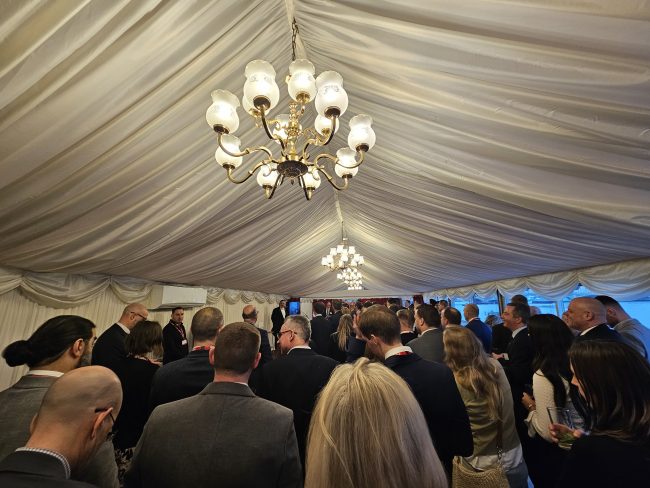
Nuclear Week in Parliament is an annual event taking place throughout the Palace of Westminster, hosted by the Nuclear Industry Association.

We spent time during the afternoon at the AECOM sponsored panel session which was supported by Baroness Bloomfield and Lord Iain McNicol.

Richard Whitehead, CEO of AECOM, gave an introduction that commented about having a focus on delivery, turning ambition and strategy into tangible actions.

Cameron Tompkin added that we have seen projects hampered by delays and cost overruns which in turn has affected local jobs, all while infrastructure has been getting bigger and more complex. The Prime Minister’s nuclear focus was mentioned as positive and the creation of groups such as NISTA is a positive move. Faster and better regulations with the ability to foster new technologies will put the UK in a powerful position.

Panellists included David Schofield, Chief Geologist, Nuclear Waste Services; Sarah MacGregor, Forests with Impact Programme Director and Head of Social Sustainability at Sunbelt Rentals UK & Ireland; Paul Roberts, Business Director for Decommissioning and Site Services, Nuvia; Eloise John, Energy Director, AECOM.

A few recurring topics surfaced during the talk such as the need to bring in new people to diversify the industry and the skills base. This is going to be crucial if we are going to meet the growing demand for talent and if we want to meet project obligations head on efficiently.

Embedding a culture of knowledge sharing, making the most of AI and digital transformations will all be critical aspects of project success. Shared goals must align up front and be smart all while understanding that technology/AI won’t be replacing experts but will; however, be utilised to support us to be more productive.

Collaboration with industry is fundamental to successful delivery and with a sharper eye on sustainability, strategies must be incorporated into project planning and ensuring there is a strong bids & tenders process.

All in all, we felt that people do want to move forward with a new sense of unison while also understanding that we need to tweak the way we bring talent into the industry. 2025 saw us build foundations and 2026 will be a make-or-break year for talent sourcing and retention.

Reach out to us today to find out how we can help support your recruitment and hiring strategies. Whether you need an in-house consultant or you require a retained talent search, we have the expertise to help you hire the right people today.

Open post

Milton Park Innovation Community

It had been a long time since we’d been down to Milton Park and what a fantastic community it has grown to be.

Based in South Oxfordshire, Milton Park is a hub of innovation with impressive buildings, labs, cafes, restaurants and the coming together of many industries.

Tokamak Energy, Nuvia, TE Magnetics, AECOM, Baker Hughes, ESR Technology, Endeavor Engineering, and Bouygues UK are just a few names in energy, engineering and construction located at the park.

With the Oxford-Cambridge corridor being developed, Milton Park is a key hub within this infrastructure due to its geographical location and its strong & varied community. Emerging technologies, talent, strong research capabilities, connectivity, R&D, and support from institutional investments are just a few reasons why Oxfordshire is a powerhouse for business.

If you are a business based on the park who would benefit from utilising experienced recruitment & hiring strategies and solutions, reach out to us today to find out more about our services.

Picture: miltonpark.co.uk

Open post
Nuclear Careers

Hiring for Tomorrow, Today: Nuclear & Energy Infrastructure

Our aim at Nuclear Careers is to work with a broad mix of clients such as engineering consultants, construction managers, civil contractors, defence organisations, and manufacturers. The common thread is that these businesses, whether SME or larger companies, all have links to nuclear & energy infrastructure.

Why is this our focus? We have a passion that major projects can succeed and in no point in time has infrastructure mattered more than it has today, with nuclear and energy – and success starts with skills & talent.

Britain is riding a wave of financing and funding right now, so while the times are good, recruitment tends to take a back seat. We know that hiring has and is going on; however, there have also been many layoffs, halted projects and companies pivoting focus. Unemployment is high, and the ever-growing skills gap has not been addressed.

2026 will see an increased demand for mid-career to executive level hires within engineering and project delivery roles, but if some businesses aren’t careful, the top talent will go elsewhere.

Gone are the days when you can solely rely on brand, “if you build it, they will come…”, and with global mobility being more of the norm nowadays, we aren’t just in competition nationally for good candidates.

Hiring top talent needs to start today, not yesterday, not last week, but now. Yes, there is an element of risk, the unknown, and uncertainty, but another thing is for sure, we must hire more candidates into the sector if we are going to achieve all our grand plans.

Having an idea is one thing, implementing it is another, and having the right people to support the delivery is crucial.

At Nuclear Careers we understand hiring and we have the talent network – we’ve been talking to business leaders throughout the UK and beyond, so we know what matters.

We’re excited to build the future with our clients, whether it’s a small local business or a larger national or even international organisation, powering nuclear and energy is the goal.

Scroll to top