Open post

Sweden’s Radioactive Waste Repository

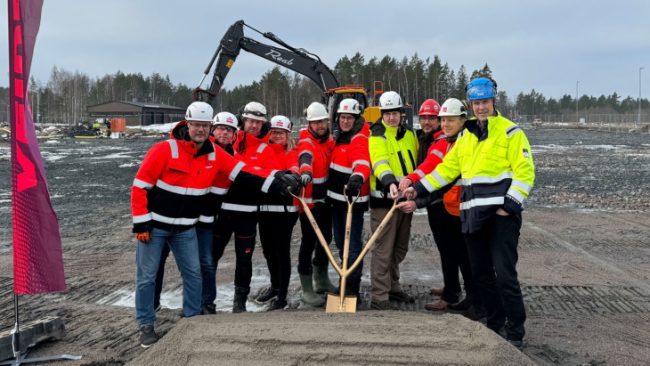
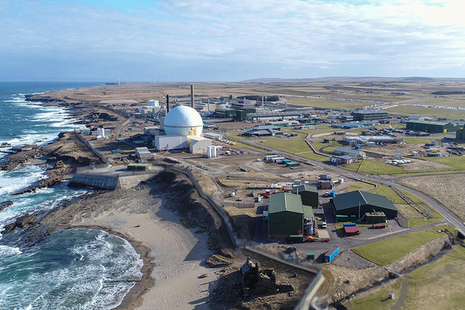
Forsmark is home to one of the world’s first repositories for spent nuclear fuel.

Sweden is one of the leading countries when it comes to nuclear waste management and SKB has developed a process for safely storing radioactive waste.

Machinery is on site digging gravel and groundwork has begun on site to prepare for bridge construction. The site is right next door to the Forsmark power plant which should mean logistics are more straight-forward.

The area is 24 hectares; however, the impressive part if what will be 500-metres deep underground; more than 400 hectares that will include 60km of tunnels.

Sweden has 12 commercial reactors in total with 6 still in operation and this will be home to all of their high-level waste.

Excavation work will be completed in stages up until the 2080’s and the first deposited waste will be within the 2030’s.

“While we have been waiting for a decision, we have continued to work on technology development and optimisation,” says SKB’s CEO Stefan Engdahl. We have been able to do what we have been doing for 40 years – research and develop the solutions needed to fulfil our mission: to manage and dispose of operational waste, demolition waste and spent nuclear fuel from our owners.”

Read more here; https://group.vattenfall.com/press-and-media/newsroom/2025/one-of-the-worlds-first-final-repositories-for-spent-nuclear-fuel-is-being-built-in-forsmark

Picture: SKB

Open post

Nuclear Institute & APM: An Audience with Adrian Bull

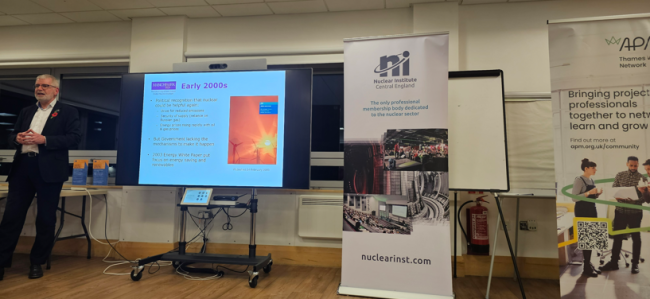
Last night we had the pleasure of joining ~30 other nuclear industry professionals hearing from Adrian Bull who is due to take over the NI Presidency position in January 2026.

Adrian’s background with the Dalton Nuclear Institute, Westinghouse, the BNFL and NNL, mean that Adrian was well-placed to take us on a journey through nuclear.

We were given an interesting insight to the nuclear sector through the ages beginning with the post-war resurgence and technical advancement, through to the present day focusing on nuclear new build, the GDF and SMRs.

A summary of topics:

The 1970’s was a time when the reputation of the nuclear industry was not great mainly due to the Windscale and Three-Mile Island disasters.

During the 1980’s Britain had an enlarged nuclear fleet and the nuclear baseload helped the nation; however, in April 1986 the Chernobyl accident happened. Plans for a fleet of 10 PWRs were thwarted and instead only one was built, Sizewell B.

In the 1990’s, “Dash for Gas” was the was the focus as the electricity supply sector was broken up and privatised. Several Magnox sites were closed while SZB came online in 1995.

Throughout the early 2000’s the government lacked the mechanisms to make nuclear happen and by 2008 there was policy support, but no direct funding route for the sector.

The industry was not without its bad press and, unfortunately, in 2011 the Fukushima disaster happened. While this happened there were different financing models which allowed Hinkley Point C to progress.

The fracking of gas was the main concern for the public and by the 2020’s Sizewell C and SMRs don’t have significant public opposition. Energy security and affordability have become the important topics compared to net zero. The Russian invasion of Ukraine caused high volatility and the GDF siting process sparked local concerns.

In conclusion, it was apparent that the nuclear industry needs to work harder and smarter in the way we communicate. What is the message? What voice do we need to speak in at a given time? What channel do we utilise to spread this message? Who are the audience we are talking to? And, perhaps a good starting point, what outcome are we trying to achieve?

Adrian gave us lots to think about and there were some thoughtful questions during the Q&A at the end of the presentation.

Open post

Sellafield £4.6 billion high hazard framework

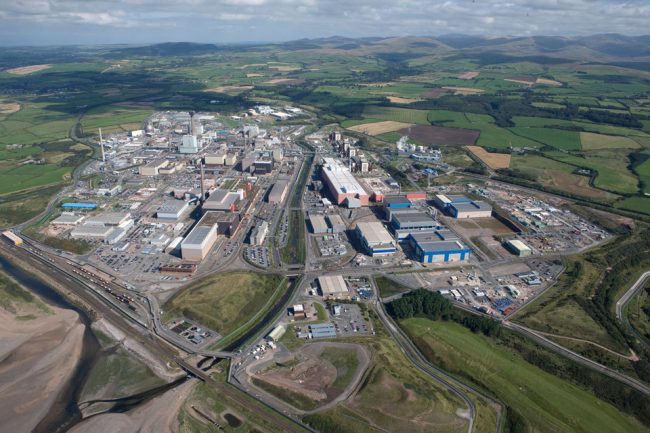
Sellafield has awarded a new £4.6 billion high hazard risk reduction framework contract to Amentum (remediation and hazardous waste retrieval), Atkins Realis and Altrad (decommissioning and nuclear waste management.), through the Decommissioning and Nuclear Waste Partnership (DNWP).

The Decommissioning Alliance (TDA) is joint venture involving Amentum, AtkinsRéalis & Westinghouse, handling pond retrievals.

The framework agreement will focus on the retrieval, storage and treatment of waste materials from the oldest facilities on the site and will be in place for 15-years.

All the companies involved with develop a sustainability plan to enhance collaboration with local priorities, ROI and delivering impact.

James Riddick, Sellafield Ltd chief supply chain officer, said:

“Cleaning up the legacy of historic operations on our site is at the heart of our mission. It is important that we achieve this safely, efficiently, and sustainably – our supply chain, and this partnership plays a key role in that.

We’re pleased to welcome our new partners. Their specialist capabilities and teams, working alongside our skilled Sellafield workforce, will help us deliver our mission and drive progress both on site and across our wider community.

Just as importantly, these partners share our values and our commitment to creating lasting social value for the communities we serve.”

Check out the original release; https://www.gov.uk/government/news/sellafield-ltd-awards-high-hazard-risk-reduction-framework-contract

Picture: gov.uk

Open post

Sellafield & RAICo facility simulator

Virtual Innovation Enhances Nuclear Waste Handling Safety at Sellafield

A cutting-edge simulation project is transforming how nuclear waste is managed at one of the UK’s most hazardous legacy facilities—Sellafield’s Pile Fuel Cladding Silo (PFCS). Originally built in the 1950s, the PFCS is now being decommissioned, with robotic systems playing a vital role in safely handling radioactive waste.

To reduce risk and downtime during upgrades to these robotic systems, RAICo and Sellafield Ltd developed a virtual replica of the facility using advanced 3D scanning, CAD modelling, and RAICo’s RHOVR simulation platform. This digital twin allows engineers to test software and hardware changes in a photorealistic environment before applying them in the real facility.

The result? Fewer human entries into hazardous zones, reduced downtime, and safer, more efficient upgrades to robotic systems. The simulator is already in use at Sellafield’s Engineering Centre of Excellence and could soon be adapted for other waste-handling operations across the site.

This project is a powerful example of how robotics, simulation, and cross-sector collaboration are accelerating innovation in nuclear decommissioning—while keeping people safe and building the digital skills needed for the future.

https://raico.org/a-simulation-of-a-nuclear-facility-makes-it-safer-to-upgrade-waste-handling-robots/

Picture from: RAICo

Scroll to top