Open post

Xudabao 4 Modular Construction

What’s Happening at Xudabao 4?

  • Xudabao Nuclear Power Plant in Liaoning Province is advancing with Unit 4, which is part of a series of large-scale reactors using VVER-1200 technology supplied by Russia’s Rosatom.
  • Recent announcements highlight:
    • Civil construction milestones: Reactor building and containment structures progressing rapidly.
    • International collaboration: Russian technology integrated with Chinese project management and supply chains.
    • Strategic energy goals: China is accelerating nuclear deployment to meet carbon neutrality targets by 2060.

Connecting to UK Modular Construction

While China is building gigawatt-scale reactors, the UK is pioneering modular construction through:

  • Hinkley Point C: Using modular assembly for major components to reduce on-site complexity.
  • Sizewell C: Expected to replicate modular efficiencies.
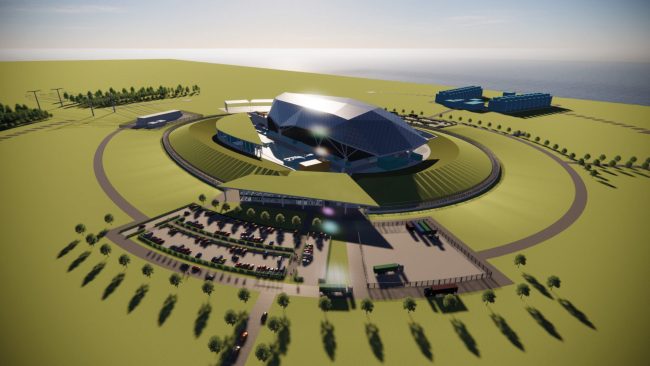
  • SMRs (Small Modular Reactors): Rolls-Royce-led program aiming for factory-built modules for faster deployment.

Why this matters for nuclear careers:

  • China’s approach shows the continued relevance of large-scale nuclear expertise globally.
  • UK’s modular trend creates demand for new skills: digital design, off-site fabrication, logistics, and advanced QA/QC processes.
  • Professionals who understand both traditional and modular methods will be highly sought after as the industry diversifies.

Global nuclear strategies are diverging, China is scaling up with mega-reactors, while the UK is innovating with modular builds. For professionals, this means opportunity: mastering modular construction techniques and digital workflows will be key to driving efficiency and sustainability in the next generation of nuclear projects.

Picture: Rosatom

Open post

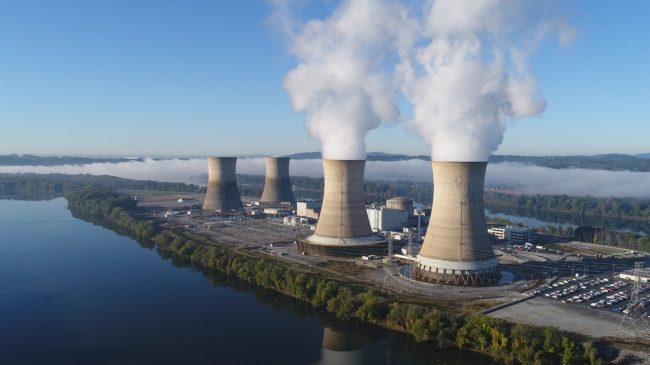
DOE Gives $1 billion loan to Three Mile Island

Constellation Energy is financing Crane Clean Energy Center, formerly known as Three Mile Island (TMI-1), via the Department of Energy (DOE).

It’s a big commitment from the DOE towards restarting the site as part of a 20-year power purchase agreement to power Microsoft’s data centres.

There is still a wait for state permitting, recommissioning work, and the Nuclear Regulatory Commission’s approval.

DOGE downsizing has threatened staff jobs at the Loan Programme Office (LPO) and despite these challenges, the Trump administration is leveraging the LPO to move along his May executive orders.

Due to other positive plant restarts such as Palisades led by Holtec and Duane Arnold led by NextEra Energy, we are remaining optimistic that Crane will also be able to push forward with work.

Source:https://www.ans.org/news/2025-11-20/article-7570/crane-restart-boosted-by-1b-lpo-loan/

Picture: Constellation

Open post

The Nuclear Space Race

The race to space is on!

The show case of power is for all to see as the U.S., Russia and China all flaunt their intentions to be the first to build a nuclear power plant on the moon.

NASA, Roscosmos and the CNSA are the names involved. The latter two are working in partnership to deploy a reactor to power their planned Lunar Research Station, and NASA’s plans would provide ~100kw of electrical power while heating a base camp for the crews of the lunar-landing Artemis missions.

There have been setbacks including NASA’s budget or lack thereof, which is of course a huge issue with a project of this size and complexity. Russia has old, but reliable technology, while China has new yet untested technology, so this pairing could be powerful.

As this race continues, there is also the large task of how we design and build new nuclear power plants on our home planet. There is also the focus on defence technology including the use of autonomous systems, quantum computing, and laser systems all while ensuring we are utilising sustainable practices.

Will this happen by the current 2030 timeline? We won’t hold our breath, but we look forward to seeing what’s next for human and nuclear space exploration.

“That’s one small step for [a] man, one giant leap for mankind” – Neil Armstrong

Sources: The American Nuclear Society, Space.com, Power Technology

Picture: Lockheed Martin

Open post

UK Government Nuclear Taskforce Findings

The UK’s nuclear regulatory regime is highly effective at ensuring safety and is regarded as world-leading in many respects, particularly its goal-based approach, regulatory expertise, transparency, stakeholder engagement, and active international collaboration.

However, primary challenges include the following areas: 1. unnecessary slowness, inefficiency, and cost, 2. risk management & proportionality, 3. complexity of regulatory & planning landscape, 4. enabling delivery in the planning regime, 5. capacity, capability & culture, 6. international harmonisation, 7. insufficient understanding of the cost of delays.

  1. Feedback highlights systemic delays, bureaucratic overlap, and escalating costs that rarely provide meaningful safety or environmental benefits
  2. Interpretation of the ALARP (“As Low as Reasonably Practicable”) principle fosters a risk-averse culture and excessive conservatism. Similar issues exist in environmental assessments
  3. The multiplicity of regulators and overlapping obligations create costly duplication, inconsistent interpretations, and unpredictable outcomes.
  4. The current NSIP planning regime and related regulations are outdated, particularly in their treatment of emerging technologies like SMRs and AMRs. They lack flexibility and fleet-mode efficiency.
  5. There is a shortfall of SQEP (Suitably Qualified and Experienced Personnel), along with ageing workforce, over-reliance on consultants, salary challenges, and risk-averse organisational cultures
  6. Lack of alignment with international regulatory frameworks causes unnecessary costs and duplicative approval processes. The Taskforce plans to explore opportunities for recognition of overseas approvals.
  7. Regulatory decisions often overlook the significant financial and opportunity costs of delayed projects, leading to an imbalance between safety measures and project viability.

Next Steps and Priorities.

Strategic Government Direction – Ministers should provide clear strategic guidance to regulators and operators to ensure delivery is safe, efficient, and cost effective.

Consultation & Evidence Gathering – The Taskforce is holding engagement sessions and workshops to gather input on potential policy adjustments.

International Benchmarking – A detailed comparison with overseas systems will help identify where harmonisation could yield benefits.

Economic Impact Analysis – The costs and benefits of changes will be quantified to support the case for reform.

The interim report acknowledges a strong foundation in the UK’s nuclear regulation but calls for a once-in-a-generation reset across six core reform areas aimed at delivering faster, more cost effective, and scalable nuclear projects without compromising safety.

To view the full report; https://www.gov.uk/government/publications/nuclear-regulatory-taskforce/nuclear-regulatory-taskforce-interim-report

24/11/25 release; https://www.gov.uk/government/news/taskforce-calls-for-radical-reset-of-nuclear-regulation-in-uk

Picture: gov.uk

Open post

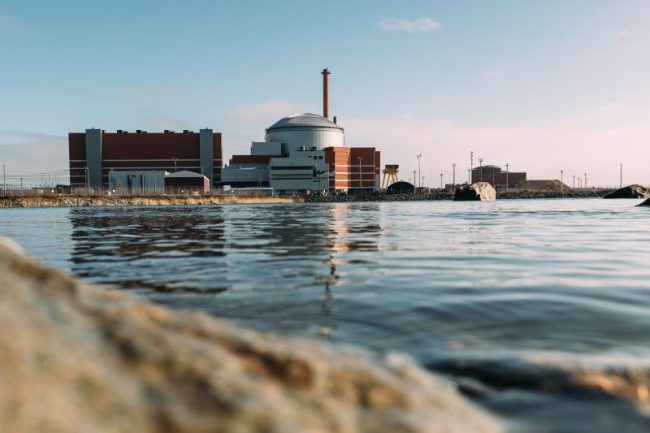
EIB Invests in Finland’s Olkiluoto Nuclear Power Plant

Two nuclear power plants will get an upgrade for reactor 1 & 2 with a €90 million backing from the European Investment Bank (EIB).

Finnish energy supplier Teollisuuden Voima Oyj (TVO) will receive the funding which they will implement into a multi-year timeline.

The upgrades are required under Finnish and EU safety legislation to ensure continued safe and efficient operation.

“By supporting safety upgrades at Olkiluoto, we are helping Finland strengthen its energy mix with reliable, low-carbon power,” said EIB Vice-President Karl Nehammer. “This investment supports Finland’s energy independence and contributes to the EU’s goals of ensuring secure and clean electricity for homes and businesses.”

Olkiluoto is the construction site for the world’s first final nuclear waste disposal facility, and it also produces 28% of Finland’s electricity needs.

Read more; https://www.eib.org/en/press/all/2025-420-eib-backs-upgrades-of-finland-s-olkiluoto-nuclear-power-plant-with-eur90-million-in-financing

Picture: TVO

Open post

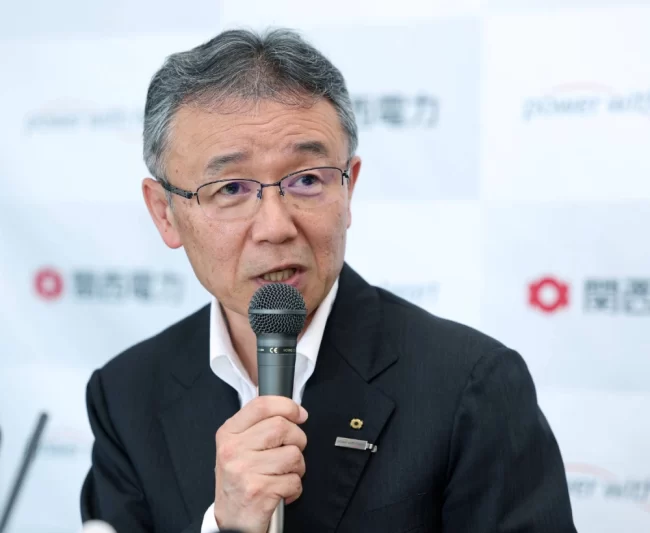
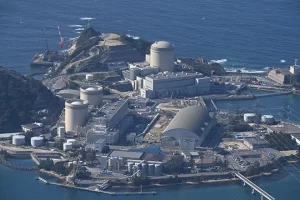
Kansai Electric to Restart 44-year-old Reactor

A next generation reactor plan is underway by Kansai Electric Power to restart the 44-year-old Mihama reactor based in Fukui Prefecture, 300-miles west of Tokyo.

The site survey has begun analysing geological conditions to determine the feasibility of constructing a new power plant. Materials and equipment have been transported to the areas.

The survey will continue until circa 2030 with several stages: a boring survey, field examinations, collecting rock samples, and excavating tunnels.

Pictures: Kansai Electrical Power/Mihama Power Plant

Open post

Nuclear Component Manufacturing MoU Signed

BWX Technologies and Rolls-Royce SMR announce MoU signing for the manufacture of key nuclear components.

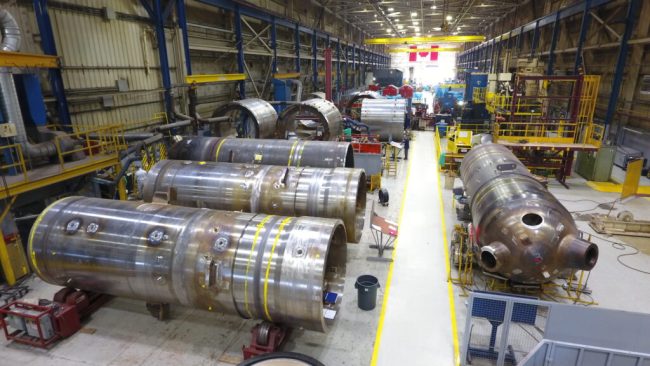
BWXT is in a powerful global position when it comes to enabling advanced nuclear developers to fulfil their growing demands. The Canadian subsidiary has been producing steam generators for over 60-years and has already supplied 315 steam generators around the world.

Each RR SMR reactor uses 3 steam generators to generate 470 MWe while utilising its pressurised water system. This MoU could include supporting the global roll out of Rolls-Royce’s SMR technology worldwide.

Collaboration is key when it comes to advanced technology and the nuclear industry. The power of a strong manufacturing partnership cannot be understated and with the increased focus on clean, reliable energy, this announcement could prove to be a pivotal move for both companies.

Official release; https://www.bwxt.com/bwxt-and-rolls-royce-smr-sign-agreements-advancing-key-nuclear-component-manufacturing/

Picture: BWXT

Open post

Tihange 3: Modernising for a Resilient Nuclear Future

Belgium’s energy strategy is evolving, and Tihange 3 is at the centre of this transformation. As part of a landmark 2023 agreement between Engie and the Belgian government, the 1,030 MWe pressurised water reactor (PWR) —commissioned in 1985—will undergo a major modernisation to extend its operational life by a decade.

Framatome has been entrusted with upgrading the reactor’s rod control system, a critical component for safe and precise power regulation. The project involves replacing legacy control cabinets with Framatome’s advanced Rodline technology, ensuring enhanced reliability and automatic failover capabilities. This upgrade is not just technical—it’s strategic. It reflects Belgium’s pivot from nuclear phase-out to long-term energy security, driven by geopolitical realities and the need for low-carbon baseload power.

The modernisation aligns with broader European trends: leveraging proven nuclear assets while integrating cutting-edge instrumentation and control systems. For professionals in the nuclear sector, this initiative underscores the growing demand for expertise in life extension programs, digital modernisation, and regulatory compliance.

As Laurent Thieffry of Framatome notes, this partnership is “part of a long-term vision,” signalling opportunities for engineers, project managers, and innovators committed to shaping a resilient, sustainable energy future.

Full press release: https://newsroom.engie.com/actualites/closing-de-laccord-entre-engie-et-le-gouvernement-belge-df4b7-ff316.html

Picture: enercore.global

Scroll to top