Open post

DOE Gives $1 billion loan to Three Mile Island

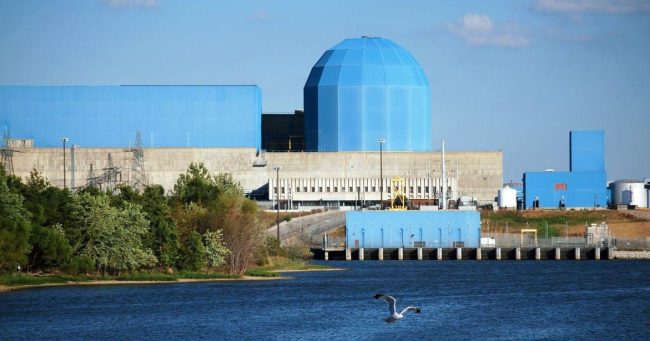
Constellation Energy is financing Crane Clean Energy Center, formerly known as Three Mile Island (TMI-1), via the Department of Energy (DOE).

It’s a big commitment from the DOE towards restarting the site as part of a 20-year power purchase agreement to power Microsoft’s data centres.

There is still a wait for state permitting, recommissioning work, and the Nuclear Regulatory Commission’s approval.

DOGE downsizing has threatened staff jobs at the Loan Programme Office (LPO) and despite these challenges, the Trump administration is leveraging the LPO to move along his May executive orders.

Due to other positive plant restarts such as Palisades led by Holtec and Duane Arnold led by NextEra Energy, we are remaining optimistic that Crane will also be able to push forward with work.

Source:https://www.ans.org/news/2025-11-20/article-7570/crane-restart-boosted-by-1b-lpo-loan/

Picture: Constellation

Open post

Microsoft is First tech Firm to Join WNA

Microsoft joins the World Nuclear Association (WNA), and this seems like a huge milestone for the nuclear sector. When it comes to carbon-free energy technology utilisation, this is exciting!

When you think of one of the world’s leading, most highly thought of and expert tech companies, you combine that with the nuclear sectors’ track-record of delivery, it’s a brilliant strategic moment.

To meet the demands and needs of the digital economy there really is only one energy source that will keep pace, nuclear. We have ambitious climate goals coupled with an increasing demand where technology usage is concerned, and not enough power for renewable alone to handle.

Nuclear energy will be the main, consistent and reliable source for us to rely on, and we will wait to see who else follows Microsoft’s lead.

Picture: World Nuclear Association

Open post

Philippines Uses Nuclear Tech to Fight Plastic Pollution

During the International Atomic Energy Agency (IAEA) International High-Level Forum, Filipino President, Ferdinand Marcos Jr., talked about his commitment to addressing plastic issues through nuclear technology.

“It affects biodiversity, public health, supply chains, and the lives of our coastal and urban communities. Addressing it requires going beyond regulation and advocacy. It requires technology that is credible, scalable, grounded in rigorous science,” he said.

The work is part of a global initiative by the IAEA called the Nutec Plastics Initiative, and the Philippines are transforming low-value plastic into reliable, commercially viable materials under the Post-Radiation Reactive Extrusion of Plastic Wastes Project (PREx).

Full story; https://www.manilatimes.net/2025/11/26/news/national/philippines-leverages-nuclear-technology-in-fight-against-plastic-pollution/2231044

Picture: Philippines Presidential Communications Office

Open post

Sizewell A Demolished Concrete Used at Sizewell C

Over 15,000 tones worth of concrete will be reused at Sizewell C after being demolished by Nuclear Restoration Services (NRS) at Sizewell A.

The crushed concrete from the former turbine hall will be reused at SZC. The recycled materials have been carefully tested and will be used as sub-bases for various foundation platforms.

This is a process that needs to replicated in other projects as it helps to reduce the carbon footprint, it allows cost to be shared, and it limits the need for newly mined aggregate.

Damian Leydon, Site Delivery Director, Sizewell C, said: “This is another example of how Sizewell C is working with local projects to maximise benefits, not just for us, but for the local community. By reusing this material, we’re reducing the number of trucks transporting aggregate through East Suffolk, while further reaffirming our commitment of minimising our environmental impact during construction. This is great news all round.”

Taken from gov.uk – This initiative has delivered multiple benefits:

  • Cost savings: Reduced procurement costs from using locally sourced aggregate.
  • Reduction: Reusing local material avoids the need to transport aggregates from other parts of the country, significantly cutting carbon emissions.
  • Resource conservation: The reuse of demolition material prevents the need to extract new primary aggregates, preserving natural resources.
  • Local impact: The material is locally sourced, supporting Sizewell C’s UK content and Suffolk spend targets.
  • Traffic reduction: Almost 800 vehicle movements will be confined to the vicinity of Sizewell A and Sizewell C, reducing construction traffic on local roads.

Full release; https://www.gov.uk/government/news/sizewell-a-concrete-reused-at-sizewell-c

Picture: gov.uk

Open post
Nuclear Careers

Hiring for Tomorrow, Today: Nuclear & Energy Infrastructure

Our aim at Nuclear Careers is to work with a broad mix of clients such as engineering consultants, construction managers, civil contractors, defence organisations, and manufacturers. The common thread is that these businesses, whether SME or larger companies, all have links to nuclear & energy infrastructure.

Why is this our focus? We have a passion that major projects can succeed and in no point in time has infrastructure mattered more than it has today, with nuclear and energy – and success starts with skills & talent.

Britain is riding a wave of financing and funding right now, so while the times are good, recruitment tends to take a back seat. We know that hiring has and is going on; however, there have also been many layoffs, halted projects and companies pivoting focus. Unemployment is high, and the ever-growing skills gap has not been addressed.

2026 will see an increased demand for mid-career to executive level hires within engineering and project delivery roles, but if some businesses aren’t careful, the top talent will go elsewhere.

Gone are the days when you can solely rely on brand, “if you build it, they will come…”, and with global mobility being more of the norm nowadays, we aren’t just in competition nationally for good candidates.

Hiring top talent needs to start today, not yesterday, not last week, but now. Yes, there is an element of risk, the unknown, and uncertainty, but another thing is for sure, we must hire more candidates into the sector if we are going to achieve all our grand plans.

Having an idea is one thing, implementing it is another, and having the right people to support the delivery is crucial.

At Nuclear Careers we understand hiring and we have the talent network – we’ve been talking to business leaders throughout the UK and beyond, so we know what matters.

We’re excited to build the future with our clients, whether it’s a small local business or a larger national or even international organisation, powering nuclear and energy is the goal.

Open post

ENEC-KEPCO to Advance Nuclear Energy & AI

An MoU has been signed between Emirates Nuclear Energy Company (ENEC) and Korea Electric Power Corporation (KEPCO).

This agreement will extend the cooperation between the two for the United Arab Emirates’ (UAE) and the Republic of Korea’s civil nuclear fleets.

After successfully delivering the Barakah Nuclear Energy Plant this new MoU will further their strategic relationship aiding towards joint assessment of Small Modular Reactors (SMRs), reactor systems, safety research, waste management, and fuel cycle transformation.

The AI and digital part of the agreement will include AI-driven maintenance, digital twins, machine learning, and plant optimisation.

Picture: ENEC

Open post

NDA Delivering Green Energy Hub at Chapelcross

The NDA Group is working with CX Power as the strategic developer for the Chapelcross green energy hub.

The programme is privately funded and set to transform the region; it will produce several hundred highly skilled job roles, attract skills & investments while driving local economy growth.

The long-term plan will include AI data centres, advanced manufacturing, and hydrogen production.

CX Power is an entity comprising of GA Consultants and Global Mutual Properties Limited whose expertise will enhance planning and financing.

  • The £350m investment in the Borderlands Inclusive Growth Deal, from the UK and Scottish Governments, is made up of £150 million for Scotland (£85m from the Scottish Government and £65 million from the UK Government) and up to £200m for England from the UK Government. This will be supported by over £100m of funding from local partners.
  • The Borderlands Inclusive Growth Deal was signed in March 2021 supporting over £450m worth of projects.

This is an exciting project for Scotland, and we look forward to following the developments. We have a strong network of talent who would be brilliant additions to this development.

Read more; https://www.gov.uk/government/news/nda-working-with-private-developer-to-accelerate-chapelcross-hub

Picture: Magnox

Open post

The Nuclear Space Race

The race to space is on!

The show case of power is for all to see as the U.S., Russia and China all flaunt their intentions to be the first to build a nuclear power plant on the moon.

NASA, Roscosmos and the CNSA are the names involved. The latter two are working in partnership to deploy a reactor to power their planned Lunar Research Station, and NASA’s plans would provide ~100kw of electrical power while heating a base camp for the crews of the lunar-landing Artemis missions.

There have been setbacks including NASA’s budget or lack thereof, which is of course a huge issue with a project of this size and complexity. Russia has old, but reliable technology, while China has new yet untested technology, so this pairing could be powerful.

As this race continues, there is also the large task of how we design and build new nuclear power plants on our home planet. There is also the focus on defence technology including the use of autonomous systems, quantum computing, and laser systems all while ensuring we are utilising sustainable practices.

Will this happen by the current 2030 timeline? We won’t hold our breath, but we look forward to seeing what’s next for human and nuclear space exploration.

“That’s one small step for [a] man, one giant leap for mankind” – Neil Armstrong

Sources: The American Nuclear Society, Space.com, Power Technology

Picture: Lockheed Martin

Open post

UK Government Nuclear Taskforce Findings

The UK’s nuclear regulatory regime is highly effective at ensuring safety and is regarded as world-leading in many respects, particularly its goal-based approach, regulatory expertise, transparency, stakeholder engagement, and active international collaboration.

However, primary challenges include the following areas: 1. unnecessary slowness, inefficiency, and cost, 2. risk management & proportionality, 3. complexity of regulatory & planning landscape, 4. enabling delivery in the planning regime, 5. capacity, capability & culture, 6. international harmonisation, 7. insufficient understanding of the cost of delays.

  1. Feedback highlights systemic delays, bureaucratic overlap, and escalating costs that rarely provide meaningful safety or environmental benefits
  2. Interpretation of the ALARP (“As Low as Reasonably Practicable”) principle fosters a risk-averse culture and excessive conservatism. Similar issues exist in environmental assessments
  3. The multiplicity of regulators and overlapping obligations create costly duplication, inconsistent interpretations, and unpredictable outcomes.
  4. The current NSIP planning regime and related regulations are outdated, particularly in their treatment of emerging technologies like SMRs and AMRs. They lack flexibility and fleet-mode efficiency.
  5. There is a shortfall of SQEP (Suitably Qualified and Experienced Personnel), along with ageing workforce, over-reliance on consultants, salary challenges, and risk-averse organisational cultures
  6. Lack of alignment with international regulatory frameworks causes unnecessary costs and duplicative approval processes. The Taskforce plans to explore opportunities for recognition of overseas approvals.
  7. Regulatory decisions often overlook the significant financial and opportunity costs of delayed projects, leading to an imbalance between safety measures and project viability.

Next Steps and Priorities.

Strategic Government Direction – Ministers should provide clear strategic guidance to regulators and operators to ensure delivery is safe, efficient, and cost effective.

Consultation & Evidence Gathering – The Taskforce is holding engagement sessions and workshops to gather input on potential policy adjustments.

International Benchmarking – A detailed comparison with overseas systems will help identify where harmonisation could yield benefits.

Economic Impact Analysis – The costs and benefits of changes will be quantified to support the case for reform.

The interim report acknowledges a strong foundation in the UK’s nuclear regulation but calls for a once-in-a-generation reset across six core reform areas aimed at delivering faster, more cost effective, and scalable nuclear projects without compromising safety.

To view the full report; https://www.gov.uk/government/publications/nuclear-regulatory-taskforce/nuclear-regulatory-taskforce-interim-report

24/11/25 release; https://www.gov.uk/government/news/taskforce-calls-for-radical-reset-of-nuclear-regulation-in-uk

Picture: gov.uk

Open post

Framatome’s Accident Tolerant Fuel Assembly

The first of its kind lead fuel assembly to operate in a commercial reactor has just completed four-years at Constellation Energy’s Calvert Cliffs nuclear power plant in Maryland.

“The performance of our technology continues to demonstrate the expertise of our people to develop safe, cost-effective solutions for our customers and our industry,” said Lionel Gaiffe, senior executive vice president, Fuel Business Unit at Framatome. “The Constellation team has been instrumental in helping us reach this milestone, leading the industry integrating accident tolerant fuel characteristics into their operations.”

“This public-private partnership is helping to drive the fulfilment of national power demands and executive orders issued by President Trump,” said Frank Goldner, the federal program manager for the Accident Tolerant Fuel Program. “This fuel assembly will continue operating under commercial conditions, providing crucial data to support the nation’s energy objectives.”

These fuel tests are aimed at leading towards more economical and performance improvements with the aim being widespread commercial use by 2030.

Sources: https://www.energy.gov/ne/articles/framatome-advanced-fuel-assembly-completes-second-fuel-cycle

Picture: Framatome

Posts navigation

1 2 3 4
Scroll to top