Open post

Last Energy Secures $100M Series C

Last Energy Secures Oversubscribed $100M Series C to Accelerate Microreactor Commercialisation.

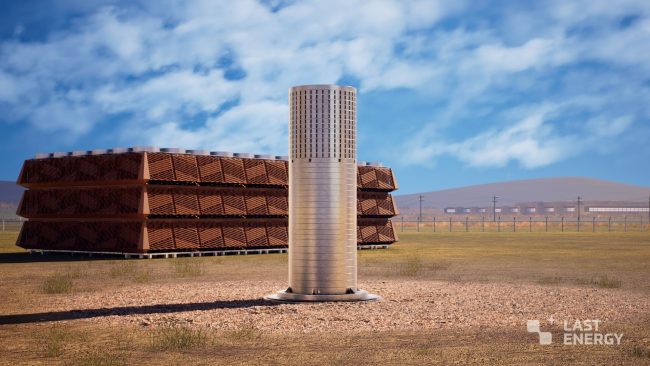
Last Energy, a fast‑growing developer of modular micro‑nuclear reactors, closed an oversubscribed Series C round in December 2025 exceeding $100 million, marking one of the most significant recent investments in next‑generation nuclear deployment. The round was led by the Astera Institute with participation from JAM Fund, Gigafund, The Haskell Company, AE Ventures, Ultranative, Galaxy Interactive, and Woori Technology Co., Ltd.

This new capital positions the company to fully fund its U.S. DOE pilot reactor, accelerate commercialisation of its PWR‑20 microreactor, and expand its U.S. manufacturing footprint, demonstrating growing investor confidence in factory‑built nuclear solutions. A Major Milestone for the Microreactor Market

Last Energy describes this raise as transformative for its transition from demonstration to commercial power plant deployment. According to CEO Bret Kugelmass, the funding will support their DOE pilot and help prove out “how factory fabrication will unlock the scalability that the energy market demands.”

For an industry increasingly focused on energy security, electrification of heavy industry, and clean baseload power, Last Energy’s modular approach, centred on 5–20 MWe reactors, offers a scalable nuclear product designed for real‑world, near‑term deployment.

Advancing the PWR‑5 Pilot and Commercial PWR‑20 Reactor

Following the Series C round, Last Energy is prioritizing three major initiatives:

1. Completing the PWR‑5 Pilot Reactor: The PWR‑5, a 5 MWe demonstration reactor physically identical to the commercial PWR‑20 but scaled down, will serve as the proving ground for Last Energy’s factory‑fabricated approach.

2. Accelerating PWR‑20 Commercialisation: The PWR‑20 is the company’s flagship 20 MWe microreactor designed for industrial off takers such as data centres, manufacturing facilities, and ports.

3. Expanding Manufacturing Capacity in Texas: The new funding allows Last Energy to strengthen its Texas manufacturing footprint and deepen local partnerships to support serial production.

Regulatory Progress in the U.S. and UK

United States: DOE Pilot and First‑of‑its‑Kind Agreements

In August 2025, Last Energy was selected for the U.S. DOE’s Reactor Pilot Program, secured a long‑term lease at the Texas A&M–RELLIS campus, and signed the first known Other Transaction Agreement (OTA) between DOE and a reactor developer. This positions the company for an anticipated 2026 criticality demonstration.

United Kingdom: Leading the Race for Microreactor Licensing

Last Energy is also the only company with a regulator‑confirmed pathway toward a potential 2027 UK site license decision, having completed its Preliminary Design Review (PDR) with the ONR, Environment Agency, and NRW.

Its recognition by the Atlantic Partnership for Advanced Nuclear Energy further underscores the UK’s support for U.S.–UK collaboration on small reactor deployment.

Investor Confidence in Next‑Gen Nuclear

Investors highlighted the transformative nature of Last Energy’s productised, modular approach:

  • Astera Institute emphasised the company’s “ambitious” product mindset and transformative potential for power generation.
  • Galaxy Interactive pointed to the essential role of clean, reliable power for enabling industrial and economic growth, calling Last Energy’s model one of the “most capital‑efficient” approaches in the nuclear space.

Key Insights for the Nuclear Sector

Microreactor investment momentum continues to accelerate as private capital seeks scalable clean‑energy solutions.

Last Energy’s factory‑built PWR‑20 microreactor is positioned as a leading candidate for rapid industrial deployment.

Strong progress along both U.S. and UK regulatory pathways makes Last Energy one of the most advanced microreactor developers globally.

The company’s expansion into Texas manufacturing highlights growing demand for domestic nuclear supply chain capacity.

A Defining Moment for Microreactor Commercialisation

Last Energy’s oversubscribed $100M Series C underscores the growing confidence in modular nuclear reactors as essential infrastructure for the next generation of clean energy systems. With regulatory traction, industrial partnerships, and new capital in hand, the company is now positioned to deliver commercial microreactors in the second half of the decade, an inflection point for the global nuclear workforce and supply chain.

Picture: Last Energy

Open post

Rolls‑Royce and Amentum Propel Europe’s SMR Revolution

Amentum and Rolls‑Royce SMR Forge a Defining Partnership for Europe’s Nuclear Future

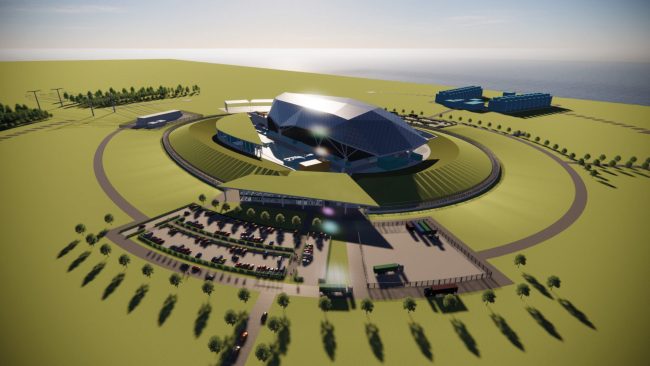
A major step toward a revitalised nuclear landscape in Europe is taking shape as Rolls‑Royce SMR and Amentum formalise a partnership designed to deliver the first wave of Small Modular Reactors (SMRs) in the UK and the Czech Republic.

This collaboration marks a pivotal moment for the sector, uniting Rolls‑Royce SMR’s advanced engineering and manufacturing capabilities with Amentum’s global expertise in programme delivery and complex nuclear infrastructure. Together, the companies are positioning SMRs as a cornerstone of future clean‑energy systems across Europe.

Rolls‑Royce SMR’s appointment of Amentum as its programme delivery partner places Amentum at the heart of Europe’s first SMR deployments. The company will play a central role in integrating and overseeing all major elements of delivery, governance, construction management, and multi‑disciplinary programme execution.

With a well‑established footprint in the UK and deep technical expertise across the full nuclear life cycle, Amentum is set to guide these projects from inception to grid integration, ensuring they remain on schedule and on budget. The UK stands to benefit enormously from this union.

Rolls‑Royce SMR expects to provide up to 1.5 GW of low‑carbon power to the national grid while supporting national net‑zero ambitions. Beyond energy contributions, the programme is expected to generate more than 8,000 skilled long‑term jobs, creating significant opportunities across engineering, construction, and the wider nuclear supply chain.

Czechia will also see major investment through the deployment of up to 3 GW of new SMR‑based capacity, reinforcing the region’s commitment to clean, reliable nuclear energy.

Both organisations emphasise the strategic value of the partnership. Rolls‑Royce SMR underscores that combining its advanced manufacturing leadership with Amentum’s proven delivery capabilities will allow multiple international projects to be executed with confidence and consistency.

Amentum, meanwhile, highlights the collaboration as a catalyst for strengthening European energy security and accelerating the transition to resilient, low‑carbon infrastructure. The shared commitment reflects a vision not only to deploy early SMR projects but to lay the groundwork for a fleet‑based approach that can scale rapidly across global markets.

This next generation of nuclear technology is designed around factory‑built precision and modular construction, an approach that dramatically reduces on‑site work, minimises cost risk, and avoids the lengthy timelines that have historically challenged large nuclear builds.

Approximately 90% of each Rolls‑Royce SMR unit will be manufactured in factory conditions before being transported for assembly, enabling repeatable, standardised deployment in diverse environments.

Retaining a 470 MWe output and a service life of at least 60 years, each reactor provides reliable baseload power while benefiting from modern engineering enhancements, including innovative seismic protection systems under development in partnership with engineering specialists such as Skanska.

For the nuclear workforce, supply chain partners, and future entrants into the sector, this collaboration signals the emergence of a new industrial era. The programme will expand opportunities in advanced manufacturing, civil engineering, regulatory oversight, systems integration, digital design, and project management, fields that will underpin SMR deployment for decades to come.

As the UK and Czech Republic begin to realise their first SMR projects, the Rolls‑Royce SMR–Amentum partnership is not only reshaping the energy landscape but also redefining the scale of opportunity available to the nuclear profession.

This alliance demonstrates the powerful role that SMRs can play in strengthening energy resilience, supporting decarbonisation, and revitalising nuclear capability across Europe.

With delivery partners now aligned and early development milestones underway, the stage is firmly set for a new chapter in nuclear innovation, one driven by collaboration, standardisation, and a shared commitment to a clean‑energy future.

Picture: Rolls Royce SMR

Open post

Bulgaria Bets Big on SMRs for a Clean Energy Future

Bulgaria is charting a bold course in its nuclear landscape by embracing Small Modular Reactors (SMRs) not just as power plants, but as catalysts for energy security, decarbonisation, and high-tech growth. The spotlight is on the BWRX‑300 design from GE Vernova Hitachi, and several recent developments make this an especially exciting moment for the sector.

A Strategic Joint Venture to Launch SMRs

New JV is linked to Poland’s Synthos Green Energy (SGE) and Bulgaria’s Blue Bird Energy (BBE), a consortium anchored by Glavbolgarstroy and Asarel‑Medet, have signed a letter of intent to create a joint venture targeting up to six BWRX‑300 units in Bulgaria.

These 300 MWe reactors, harnessing passive safety and natural circulation, leverage the proven design lineage of the conventional ESBWR, offering a compact yet robust addition to Bulgaria’s nuclear fleet.

The JV’s mandate is extensive and incorporates site selection and licensing to construction, funding, and operation, designed to jumpstart a domestic SMR ecosystem.

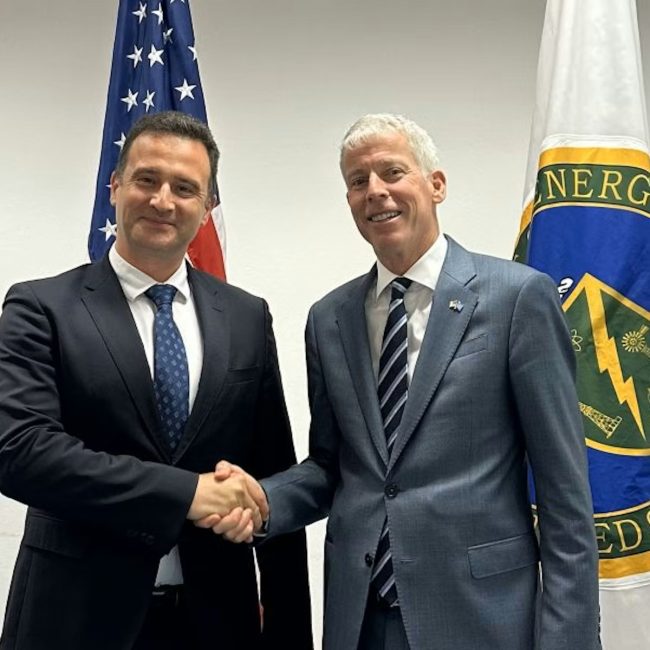
There’s high-level momentum & global backing for Bulgaria as well as diplomatic synergy from Prime Minister Rosen Zhelyazkov and Energy Minister Zhecho Stankov engaged with GE Vernova’s Roger Martella, first in New York and later in Sofia, to explore partnerships.

These discussions followed an MoU from August 2024 between Bulgarian Energy Holding and GE Hitachi, laying a groundwork for BWRX‑300 development

With cross-border cooperation with a U.S.–Bulgaria intergovernmental agreement, signed during an IAEA conference, includes provisions for civil nuclear support, U.S. lab participation in feasibility studies, and potential funding via the U.S. Trade and Development Agency.

And why does Bulgaria’s Embracing of SMR’s Matter?

Energy stability with low emissions, economic & industrial uplift, and supply chain integration will all see a productive impact.

Bulgaria already generates ~⅓ of its electricity with two VVER‑1000 units and is building two AP1000 reactors at Kozloduy. SMRs will deliver reliable, clean baseload power while supporting grid flexibility.

These reactor platforms can energise new data centres, AI hubs, gigafactories, and hydrogen facilities, turning Bulgaria into a regional innovation powerhouse.

With local industry players in the JV, Bulgarian firms are poised to join the global SMR value chain, boosting domestic jobs and capabilities.

GE Vernova’s BWRX‑300 is already under construction in Canada, and the technology is attracting interest in Poland, Hungary, the Czech Republic, Lithuania, and Romania, underscoring its momentum across Europe.

Bulgaria’s approach is both balanced and strategic, maintaining large-core reactors at Kozloduy while advancing agile, low-carbon SMRs to complement and diversify its nuclear capacity.

With active engagement from U.S.-based U.S. national labs and financial channels, Bulgaria is aligning global nuclear expertise with local readiness, ensuring a well-rounded deployment pathway.

In conclusion

Bulgaria’s nuclear vision is crystal clear – harmonising legacy nuclear strengths with cutting edge SMR innovation to forge a resilient, clean, and future-ready energy system. With its cross-border partnerships, industrial leadership, and technology-forward mindset, Bulgaria is positioning itself to become a beacon of nuclear excellence in Southeastern Europe and a potential model for global SMR deployment.

If you want a deeper dive into BWRX‑300 safety features, licensing trajectories, or how SMRs integrate with national energy frameworks, we’d love to hear from you.

Sources: nucnet.org, bta.bg, gbs-bg.com, neimagazine.com, economic.bg, world-nuclear-news.org

Picture: Bulgarian Energy Ministry

Open post

NDA Delivering Green Energy Hub at Chapelcross

The NDA Group is working with CX Power as the strategic developer for the Chapelcross green energy hub.

The programme is privately funded and set to transform the region; it will produce several hundred highly skilled job roles, attract skills & investments while driving local economy growth.

The long-term plan will include AI data centres, advanced manufacturing, and hydrogen production.

CX Power is an entity comprising of GA Consultants and Global Mutual Properties Limited whose expertise will enhance planning and financing.

  • The £350m investment in the Borderlands Inclusive Growth Deal, from the UK and Scottish Governments, is made up of £150 million for Scotland (£85m from the Scottish Government and £65 million from the UK Government) and up to £200m for England from the UK Government. This will be supported by over £100m of funding from local partners.
  • The Borderlands Inclusive Growth Deal was signed in March 2021 supporting over £450m worth of projects.

This is an exciting project for Scotland, and we look forward to following the developments. We have a strong network of talent who would be brilliant additions to this development.

Read more; https://www.gov.uk/government/news/nda-working-with-private-developer-to-accelerate-chapelcross-hub

Picture: Magnox

Open post

Rolls-Royce SMR lands in North Wales

Fantastic news today for British nuclear and the immediate region in Anglesey. We recently had a trip to the area and the boost this will have on local skills, and the economy is going to be life changing.

Supporting ~3000 jobs and billions of pounds of investment over the coming decade; this is set to support a generation of young people.

Touted as the golden age of nuclear, North Wales is on the map for many different reasons and the first of its kind nuclear is the newest.

Critical rail upgrades and manufacturing are just two of the areas that will feel the £2.5 billion investment, and this will further enhance British nuclear security, sustainability, and is a vital part of our modern industrial strategy.

Simon Bowen, Chair of Great British Energy-Nuclear, added:

“This is a historic moment for the UK and is another momentous step in realising Britain’s potential in leading the way on nuclear energy.

“These first SMRs at Wylfa will lay the groundwork for a fleet-based approach to nuclear development, strengthening the UK’s energy independence and bringing long-term investment to the local economy.

“Wylfa has a proud history of nuclear excellence, and we’re excited to build on that foundation to deliver jobs, training, and low-carbon energy for generations to come.”

Chris Cholerton, Chief Executive of Rolls-Royce SMR, said:

“We are honoured to have the opportunity to establish our UK fleet programme with an initial three units at the Wylfa site. Today’s announcement marks the first step in what will be a 100-year commitment to clean energy, innovation, and community partnership at Wylfa.

“This is a tremendous opportunity not just for North Wales but for the whole country, as we establish an enduring supply chain that will enable our fleet deployment in the UK and a large export programme, starting in Czechia.

“We will deliver nuclear power very differently by utilising modularisation and a high level of factory build, therefore minimising the impact on local people from infrastructure delivery. We are excited to be working with the local community to create jobs and growth.”

The Prime Minister said:

“Britain was once a world-leader in nuclear power, but years of neglect and inertia has meant places like Anglesey have been let down and left behind.

“Today, that changes. We’re using all the tools in our armoury – cutting red tape, changing planning laws, and backing growth – to deliver the country’s first SMR in North Wales.

“This government isn’t just reversing decline, it’s delivering thousands of future-proofed jobs, driving billions in investment, and providing cheaper energy bills in the long term.

“That’s national renewal in action: powered by British talent, powered by nuclear, and powered by a government that’s delivering for working people.”

Read more; https://www.gov.uk/government/news/north-wales-to-pioneer-uks-first-small-modular-reactors

Picture: gov.uk

Open post

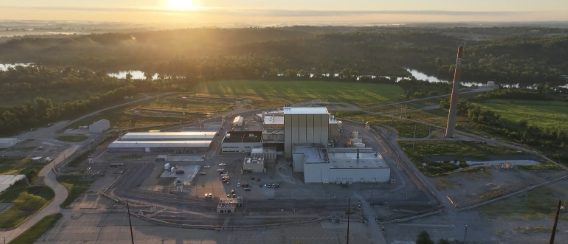
Iowa’s Nuclear Power Plant Facility

There is a planned restart of Iowa’s only nuclear plant, the Duane Arnold Energy Center (Duane Arnold), with operations resuming sometime in 2029.

Google have signed a new agreement with NextEra Energy to meet the growing demand for AI infrastructure.

This is an exciting move for U.S. nuclear leadership and security while achieving clean, reliable energy via nuclear.

The restarting of the plant will encourage improved growth in the American economy (more than $9 billion) by increasing job opportunities (over 2000 direct/indirect/highly skilled), allowing scientific advancements, improving health & education prospects, and enhancing security.

NextEra Energy will take a 100% ownership in the plant as they are acquiring Central Iowa Power Cooperative (CIPCO) and Corn Belt Power Cooperative’s 30% commitment, in an agreement that matches Google’s.

Due to this agreement Google and NextEra Energy are also exploring developing new generation nuclear across the U.S.

NextEra Energy is one of the leading electricity providers to homes and businesses and is one of the largest electric power and energy infrastructure companies in North America.

Read the full story; https://newsroom.nexteraenergy.com/NextEra-Energy-and-Google-Announce-New-Collaboration-to-Accelerate-Nuclear-Energy-Deployment-in-the-U-S?l=12

Picture: NextEra Energy (Duane Arnold)

Open post

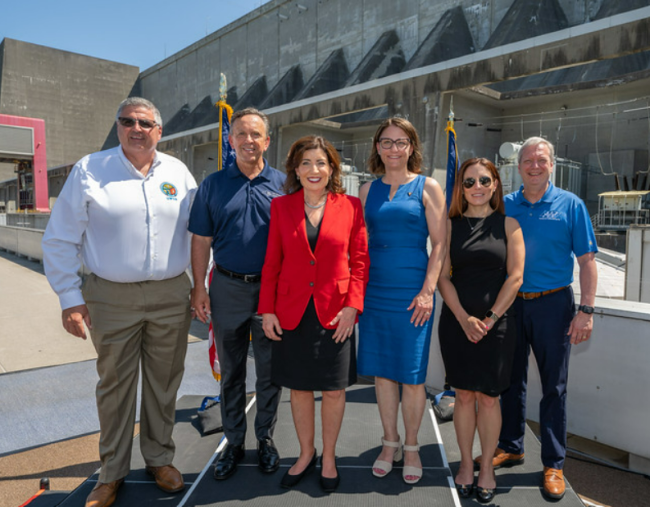
New York’s New Nuclear Construction Plans

Upstate New York is to gain its first new nuclear plant in a generation.

It’s clear that New York will benefit from utilising advanced nuclear technology; generating thousands of union jobs, enhancing security, lowering emissions, and ensuring reliability to the growing grid.

Governor Kathy Hochul directed the New York Power Authority (NYPA) to start developing and constructing an advanced new nuclear power plant to support a reliable & affordable electric grid.

“As New York State electrifies its economy, deactivates aging fossil fuel power generation and continues to attract large manufacturers that create good-paying jobs, we must embrace an energy policy of abundance that centers on energy independence and supply chain security to ensure New York controls its energy future,” Governor Hochul said. “This is the second time during my administration that I am calling on the New York Power Authority to lead a critical energy initiative, and just as it is doing with the expedited buildout of renewable energy and transmission, it will now safely and rapidly deploy clean, reliable nuclear power for the benefit of all New Yorkers.”

Full article; https://www.governor.ny.gov/news/governor-hochul-directs-new-york-power-authority-develop-zero-emission-advanced-nuclear-energy

Picture: https://www.governor.ny.gov

Open post

Nuclear Futures for a Better Tomorrow

London Youth Foresight Workshop took place on Monday 03/11 and was focused on the nuclear future by exploring 4 different scenarios.

The event was hosted by the Swiss Embassy in London and organised by the School of International Futures (SOIF) and the Next Generation Foresight Practitioners (NGFP).

SOIF is a global non-profit transforming futures for current and next generations and NGFP is a network of over 900 people from all over the world who are using futures and foresight to create positive impact and systemic transformation globally.

The 4 scenarios were Growth: Nuclear Renaissance 2050, Collapse: Nuclear Chaos 2050, Discipline: Nuclear Control 2050, Transformation: Beyond the Nuclear – Regenerative Futures 2050. All thought provoking topics and future scenarios that enabled the ~24 participants to consider & discuss what the nuclear future could look like.

The drivers and trends to consider included, but were not limited to private sector involvement, international collaboration, public education & awareness, intergenerational partnerships, economic interests, technical advancements and the environment.

We were focused within the growth scenario where we explored a future in which nuclear energy gains renewed importance due to increasing energy demands, technological progress and private investments.

Nuclear infrastructure is massively expanded, modular reactors are rapidly developed, and artificial intelligence manages monitoring, safety, and efficiency. National interests and fragmented international cooperation lead to regulatory gaps, while geopolitical tensions and an arms race shape global order.

Public concern about risks and the environmental impacts coexists with the acceptance of nuclear energy; the shortage of skilled workers is addressed through education and knowledge management.

Energy supply, technological innovation, and safety are closely interconnected, yet the system remains vulnerable. A world that grows and renews itself technologically but stays fragile.

We are left contemplating the future we will end up in and found this a really thought-provoking, and interesting workshop to be involved with.

Front Page – School of International Futures
Home – NGFP

Open post

Westinghouse, Brookfield & Cameco Partnership

Westinghouse, Brookfield & Cameco Announce $80 Billion Strategic Partnership with U.S. Government

Westinghouse Electric Company, Brookfield Asset Management, and Cameco have entered a landmark strategic partnership with the U.S. Government to deploy $80 billion worth of new nuclear reactors across the United States. This initiative, aligned with the May 2025 Executive Orders, positions nuclear energy as a cornerstone of America’s energy sovereignty, AI infrastructure, and national security.

At the heart of this deployment is Westinghouse’s AP1000® reactor technology, known for its passive safety systems, modular construction, and minimal land footprint per MWe. Each two-unit AP1000 project is expected to create or sustain 45,000 engineering and manufacturing jobs across 43 states, with national deployment projected to generate over 100,000 construction jobs.

Technical & Strategic Highlights

  • AI Integration: The reactors will power data centers and compute infrastructure, supporting America’s leadership in artificial intelligence.
  • Supply Chain Revitalization: The partnership aims to reinvigorate the U.S. nuclear industrial base and expand global exports of Westinghouse technology.
  • Global Reach: AP1000 reactors are already operational or under construction in Poland, Ukraine, and Bulgaria, reinforcing Westinghouse’s global footprint.

Recruitment & Thought Leadership Implications

This partnership signals a nuclear renaissance, creating unprecedented opportunities for engineers, project managers, AI specialists, and supply chain professionals. It also reaffirms the importance of cross-sector collaboration—between energy, technology, and government—to meet future energy demands.

For professionals and graduates considering careers in nuclear, this is a pivotal moment. The scale and ambition of this initiative will require next-generation talent across disciplines—from reactor design and AI integration to regulatory affairs and infrastructure development.

For original release visit; https://westinghousenuclear.com/strategic-partnership/

Picture: Westinghouse

Scroll to top