
Open post

Nuclear Funding: Private vs Public

The Importance of Private Investment in the UK Nuclear Industry vs Public Money

The UK’s nuclear sector is entering a transformational period: ageing stations nearing retirement, major new projects like Sizewell C, and ambitious targets for up to 24 GWe of new nuclear by 2050. Public funding has been vital in kick‑starting this new build era, but private capital will determine whether the UK actually delivers at scale.

Below is an evidence‑backed breakdown of why both are needed and why private investment is increasingly indispensable.

1. Public Funding Sets Direction but Cannot Shoulder Nuclear’s Full Capital Burden

Large‑scale nuclear relies on enormous upfront spending. The UK Government has committed £14.2 billion to Sizewell C, alongside £2.5 billion for SMRs and £2.5 billion for fusion R&D, signalling strong political commitment to nuclear as a strategic national asset.

However, even with this support:

  • Nuclear projects take a decade or more to build.
  • Capital requirements run into tens of billions.
  • Public budgets face competing pressures, from health to defence.

This reality makes private investment a structural necessity, not a preference.

2. Private Capital Accelerates Delivery and Reduces Reliance on Government Borrowing

The UK’s electricity market is liberalised, making major nuclear investment “problematic” without private capital.

Private finance:

  • Spreads risk across investors rather than government balance sheets.
  • Enables multiple large projects to proceed simultaneously.
  • Attracts global expertise, particularly from established operators and infrastructure funds.

Government green‑lighting land availability, such as at Sellafield to “attract private investment,” reflects the shift toward unlocking institutional capital for nuclear projects.

3. Contractual Models (CFDs, RAB) Help Unlock Private Money

The government increasingly relies on market mechanisms such as Contracts for Difference (CfDs) to stabilise investor returns. CfDs are seen as essential to de‑risking nuclear investment and reducing commercial uncertainty, especially for projects like Sizewell B’s and C’s long‑term operational frameworks.

This creates a blended model:

  • Public money reduces early‑stage risk.
  • Private money funds construction and long‑term operations.
  • Stable policy frameworks unlock institutional investment at scale.

4. Private Investment Drives Economic Growth and Regional Regeneration

The nuclear industry’s economic footprint is expanding rapidly, far beyond what public funding alone could drive.

A 2025 Oxford Economics study shows:

  • The sector grew 25% to £20 billion in economic value vs three years prior.
  • Jobs increased 35% to 87,000, with 256,000 supported across the wider economy.
  • Significant regional uplift in the Southwest, East of England, and Northwest, often in deprived areas.
  • These numbers underscore a core truth: private investment multiplies the impact of public funding, creating large‑scale, long‑term economic benefits.

5. Meeting Net Zero and Security Goals Requires Private Participation

The UK aims for nuclear to supply 25% of electricity by 2050, but most current capacity will retire within a decade.

Meeting future needs requires:

  • Continuous investment in new gigawatt‑scale reactors.
  • Rapid deployment of SMRs.
  • Workforce and supply‑chain expansion.

Imperial College’s Energy Futures Lab emphasises that bridging the nuclear capacity gap will require “substantial investment,” including diversified private funding sources.

Without private investment, timelines will slip and the UK risks deeper reliance on volatile gas imports.

6. Public Funding Provides Stability—Private Funding Provides Scale

Public funding ensures:

  • Strategic national priorities (e.g., energy security).
  • Early‑stage R&D and regulatory evolution.
  • Support for unproven technologies (fusion, SMRs).

Private funding ensures:

  • Construction at pace.
  • Cost discipline and long‑term efficiency.
  • Market‑driven innovation and commercial accountability.

Together, they form a dual engine: public sector sets the roadmap, private sector delivers the mileage.

Conclusion: A Hybrid Funding Model is the Only Path to a Nuclear Resurgence

The UK’s nuclear revival, Sizewell C, SMRs, fleet extensions, cannot succeed through public spending alone. Government leadership provides vision, credibility and early‑stage capital. But private investment delivers the scale, speed, and economic multiplier effect required to build a resilient, low‑carbon nuclear backbone for the 2030s, 2040s and beyond.

A strong nuclear future for the UK depends on both sectors working in tandem. The challenge now is ensuring regulatory clarity, revenue certainty, and policy continuity so investors have the confidence to step in at scale.

Sources: world-nuclear.org, imperial.ac.uk, niauk.org, indexbox.io, orrick.com
Open post

Last Energy Secures $100M Series C

Last Energy Secures Oversubscribed $100M Series C to Accelerate Microreactor Commercialisation.

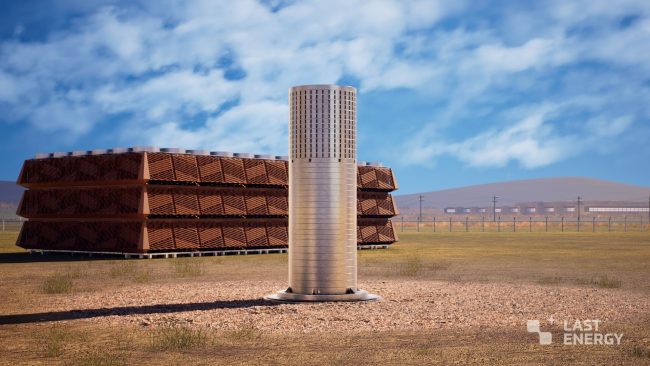
Last Energy, a fast‑growing developer of modular micro‑nuclear reactors, closed an oversubscribed Series C round in December 2025 exceeding $100 million, marking one of the most significant recent investments in next‑generation nuclear deployment. The round was led by the Astera Institute with participation from JAM Fund, Gigafund, The Haskell Company, AE Ventures, Ultranative, Galaxy Interactive, and Woori Technology Co., Ltd.

This new capital positions the company to fully fund its U.S. DOE pilot reactor, accelerate commercialisation of its PWR‑20 microreactor, and expand its U.S. manufacturing footprint, demonstrating growing investor confidence in factory‑built nuclear solutions. A Major Milestone for the Microreactor Market

Last Energy describes this raise as transformative for its transition from demonstration to commercial power plant deployment. According to CEO Bret Kugelmass, the funding will support their DOE pilot and help prove out “how factory fabrication will unlock the scalability that the energy market demands.”

For an industry increasingly focused on energy security, electrification of heavy industry, and clean baseload power, Last Energy’s modular approach, centred on 5–20 MWe reactors, offers a scalable nuclear product designed for real‑world, near‑term deployment.

Advancing the PWR‑5 Pilot and Commercial PWR‑20 Reactor

Following the Series C round, Last Energy is prioritizing three major initiatives:

1. Completing the PWR‑5 Pilot Reactor: The PWR‑5, a 5 MWe demonstration reactor physically identical to the commercial PWR‑20 but scaled down, will serve as the proving ground for Last Energy’s factory‑fabricated approach.

2. Accelerating PWR‑20 Commercialisation: The PWR‑20 is the company’s flagship 20 MWe microreactor designed for industrial off takers such as data centres, manufacturing facilities, and ports.

3. Expanding Manufacturing Capacity in Texas: The new funding allows Last Energy to strengthen its Texas manufacturing footprint and deepen local partnerships to support serial production.

Regulatory Progress in the U.S. and UK

United States: DOE Pilot and First‑of‑its‑Kind Agreements

In August 2025, Last Energy was selected for the U.S. DOE’s Reactor Pilot Program, secured a long‑term lease at the Texas A&M–RELLIS campus, and signed the first known Other Transaction Agreement (OTA) between DOE and a reactor developer. This positions the company for an anticipated 2026 criticality demonstration.

United Kingdom: Leading the Race for Microreactor Licensing

Last Energy is also the only company with a regulator‑confirmed pathway toward a potential 2027 UK site license decision, having completed its Preliminary Design Review (PDR) with the ONR, Environment Agency, and NRW.

Its recognition by the Atlantic Partnership for Advanced Nuclear Energy further underscores the UK’s support for U.S.–UK collaboration on small reactor deployment.

Investor Confidence in Next‑Gen Nuclear

Investors highlighted the transformative nature of Last Energy’s productised, modular approach:

  • Astera Institute emphasised the company’s “ambitious” product mindset and transformative potential for power generation.
  • Galaxy Interactive pointed to the essential role of clean, reliable power for enabling industrial and economic growth, calling Last Energy’s model one of the “most capital‑efficient” approaches in the nuclear space.

Key Insights for the Nuclear Sector

Microreactor investment momentum continues to accelerate as private capital seeks scalable clean‑energy solutions.

Last Energy’s factory‑built PWR‑20 microreactor is positioned as a leading candidate for rapid industrial deployment.

Strong progress along both U.S. and UK regulatory pathways makes Last Energy one of the most advanced microreactor developers globally.

The company’s expansion into Texas manufacturing highlights growing demand for domestic nuclear supply chain capacity.

A Defining Moment for Microreactor Commercialisation

Last Energy’s oversubscribed $100M Series C underscores the growing confidence in modular nuclear reactors as essential infrastructure for the next generation of clean energy systems. With regulatory traction, industrial partnerships, and new capital in hand, the company is now positioned to deliver commercial microreactors in the second half of the decade, an inflection point for the global nuclear workforce and supply chain.

Picture: Last Energy

Open post

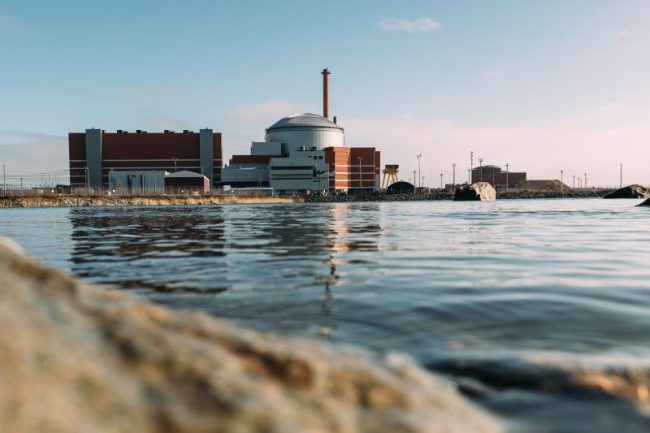
EIB Invests in Finland’s Olkiluoto Nuclear Power Plant

Two nuclear power plants will get an upgrade for reactor 1 & 2 with a €90 million backing from the European Investment Bank (EIB).

Finnish energy supplier Teollisuuden Voima Oyj (TVO) will receive the funding which they will implement into a multi-year timeline.

The upgrades are required under Finnish and EU safety legislation to ensure continued safe and efficient operation.

“By supporting safety upgrades at Olkiluoto, we are helping Finland strengthen its energy mix with reliable, low-carbon power,” said EIB Vice-President Karl Nehammer. “This investment supports Finland’s energy independence and contributes to the EU’s goals of ensuring secure and clean electricity for homes and businesses.”

Olkiluoto is the construction site for the world’s first final nuclear waste disposal facility, and it also produces 28% of Finland’s electricity needs.

Read more; https://www.eib.org/en/press/all/2025-420-eib-backs-upgrades-of-finland-s-olkiluoto-nuclear-power-plant-with-eur90-million-in-financing

Picture: TVO

Scroll to top