Open post

AI, Nuclear, and the Next Decade of Infrastructure

Why Delivery Discipline Will Decide the Winners

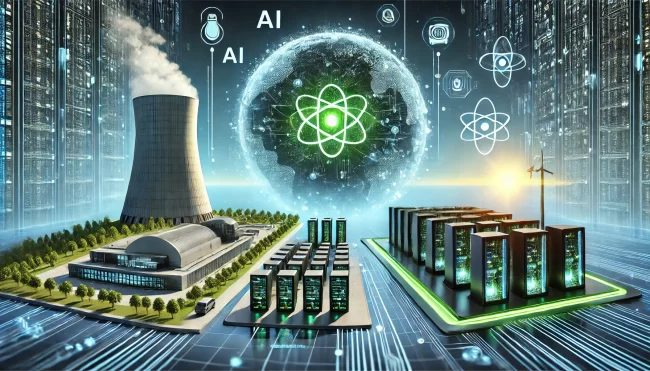
Artificial intelligence has accelerated energy demand faster than any previous technology cycle, shifting the bottleneck for digital growth from chips to clean, round‑the‑clock electricity. The tech sector’s pivot toward nuclear power is not a passing headline; it is the logical response to AI’s need for firm, carbon‑free baseload that can be sited near data centres and scaled reliably.

What matters now is execution: turning promising agreements, restarts, and advanced designs into electrons on the grid—on schedule and within budget.

Across the nuclear lifecycle, AI is already reshaping how plants are planned, operated, and decommissioned. The industry has struggled with delays and overruns on first‑of‑a‑kind megaprojects; AI‑driven optimisation tools are starting to change that, allowing developers to simulate thousands of build sequences, stress‑test labour and supply constraints, and re‑plan in real time when conditions shift. This is not abstract theory, it’s being applied to address workforce scarcities, sequencing of safety windows during decommissioning, and dynamic site logistics, with measurable impacts on schedule risk.

The most consequential near‑term trend is the “restart revolution.” Rather than waiting a decade for new capacity, hyperscalers and utilities are reviving retired reactors, combining digital refurbishment strategies with long‑term power purchase agreements to bring firm, zero‑carbon capacity back to the grid.

Google and NextEra’s plan to return Iowa’s 615‑MW Duane Arnold Energy Center to service under a 25‑year agreement is emblematic: existing steel, skilled operators, and proven regulatory pathways reduce risk and compress timelines, while private offtake capital underwrites the restart economics. Similar moves are underway in Pennsylvania and Michigan, signalling a pragmatic, delivery‑first mindset from energy buyers.

Big Tech’s interest goes beyond revivals. Companies are aligning with advanced reactor developers to secure clean, reliable power through the 2030s. Deals to purchase output from small modular reactors reflect a strategic hedge: SMRs promise factory‑built repeatability, smaller site footprints, and potential co‑location near data centres, if licensing and first‑unit delivery stay on track.

The timing mismatch remains real, many AI loads are arriving in the next three to five years, while new nuclear typically needs longer, but the combination of restarts now and advanced builds later offers a credible portfolio approach for hyperscale electricity demand.

Inside operating fleets, AI is raising performance by moving plants from periodic, reactive maintenance to continuous, predictive optimisation. Algorithms trained on sensor streams are catching failure modes earlier, trimming forced outages, and fine‑tuning reactor conditions for efficiency gains measured in fuel savings and megawatt‑hours delivered. Case studies from U.S. reactors show seven‑figure annual benefits per unit from machine‑learning tools that cut analysis time and improve outage planning, practical enhancements that compound across a fleet. These advances are complemented by AI‑enhanced operator training and digital twins that improve response readiness and standardise best practice.

Regulators and policymakers are beginning to treat digital capabilities as core to nuclear competitiveness. Cloud‑native licensing workflows, AI‑assisted design verification, and automated supply‑chain assurance are moving from pilot projects to strategy, but policy frameworks must catch up. Restart pathways, advanced reactor approvals, cyber resilience rules, and export controls were built for an analogue era; adapting them to software‑defined systems will be decisive for national and sectoral competitiveness. The fastest‑moving jurisdictions will not only deploy capacity more quickly; they will also attract talent and capital in the nuclear‑digital nexus.

At the macro level, AI’s electricity appetite is transforming nuclear from a climate‑led aspiration into an economic imperative. Data‑centre load growth is outpacing historic grid planning cycles, and the combination of security, reliability, and decarbonisation has narrowed the list of viable solutions. Leaders in industry and international institutions are now explicit: the scale and speed of AI all but compel a partnership with nuclear if economies want clean, 24/7 power at density and durability sufficient for hyperscale computing. That alignment of incentives; climate, competitiveness, and grid stability, has moved nuclear to the centre of the energy strategy for the AI age.

Still, credibility hinges on delivery. Even with restarts and SMRs, the sector must demonstrate that lessons from past cost escalation have been internalised. This is where AI‑native project controls, digital twins for construction, and integrated workforce planning can become the difference between an on‑time unit and a cautionary tale. AI‑optimised scheduling can surface critical paths and resource clashes early; predictive analytics can manage welding, rebar, and concrete skill bottlenecks; and real‑time dashboards can tie safety windows and security requirements to executable work plans. When applied consistently, these tools don’t just shave weeks—they change the risk posture of nuclear delivery.

For nuclear‑careers.com readers, the career implications are profound. The most valuable profiles will be bilingual across atoms and algorithms—engineers and project managers who can translate between reactor physics, regulatory constraints, and AI‑enabled decision systems. Operators with experience in data‑driven maintenance will lead reliability programmes; licensing professionals versed in digital workflows will unlock permitting speed; cybersecurity experts will harden increasingly software‑centric control systems; and construction leaders comfortable with AI‑guided logistics will own the critical path. This convergence is not a niche; it is the operating model for the next generation of nuclear deployment.

The opportunities extend beyond electricity. As nations explore nuclear‑enabled hydrogen, industrial heat, and desalination, AI will optimise multi‑product operations and dispatch across markets. For utilities, coupling nuclear with AI‑enhanced forecasting and demand flexibility adds further value to firm generation. For communities, restarts offer near‑term job creation and long‑term economic stability; in Iowa, for example, projected benefits from bringing Duane Arnold back online include hundreds of high‑quality jobs and billions in state‑level economic impact, anchored by a technology that aligns with net‑zero commitments.

The bottom line is simple. AI is forcing an honest conversation about energy systems, and nuclear has emerged as the credible backbone for clean, reliable, high‑density power. The next decade won’t be won by press releases; it will be won by delivery discipline, teams that fuse nuclear expertise with AI‑driven planning, regulators that modernise rules for digital realities, and businesses that commit to the long view. Those who execute will set the pace for the intelligence economy. Those who hesitate will be managing shortages. The future of AI will be decided not by microchips, but by megawatts and nuclear is ready to provide them, if we choose to build with precision.

Author’s Note — Laura, Director at Nuclear Careers

We are entering a phase where project delivery expertise will be the defining competitive advantage for countries and companies alike. The talent market is already signalling what comes next; hybrid roles that blend engineering with data science, licensing with digital workflows, and construction leadership with AI‑guided logistics.

If you’re building a career in this field, invest in that bilingual skillset of atoms and algorithms.

If you’re hiring, prioritise teams that can execute at speed without compromising safety.

The AI era will reward those who can turn credible plans into grid‑connected reality.

Sources: neimagazine.com, nuclearbusiness-platform.com, aimagazine.com, www.technologyreview.com, www.cnbc.com

Picture: unite.ai
An Audience With Change-Makers: Navigating Careers Through Transferable Skills

The event will focus on professionals who have utilised their experience and skills to transfer from other industries into the nuclear sector. Transferable skills are crucial in all areas of the nuclear industry including construction, defence, engineering, waste management and project delivery.

A joint event with the Nuclear Institute & Women in Nuclear Central England Branches.

The link to register will be here soon!

For now, mark this date in your diary and check back early February to register your attendance.

Open post

Happy New Year 2026!

As we enter the new year, we see this as the perfect time to plan, foster ideas and relationships while leaning into creativity.

Winter is also a time for reflection and ensuring we can all build on work that has already been undertaken.

2025 was, on the whole, a strong year for the nuclear sector. Public opinion was up, nuclear energy infrastructure was visible on a global scale, and there seems to be renewed interest and support for the future of nuclear power in the UK and beyond.

Below we’ve given brief insight to different areas of the nuclear sector in the UK and globally including defence, engineering, construction and waste management. Please reach out to take these conversations further, to continue networking, and to share your expertise.

Defence

The UK Nuclear Defence sector has seen the modernisation of Trident by continuing its investment in the Dreadnought-class submarines, which will replace the Vanguard fleet as part of the Trident nuclear deterrent program. Construction milestones were met, keeping the program on track for the early 2030s.

AUKUS and Strategic Partnerships saw a deepened collaboration, focusing on nuclear-powered submarine technology and advanced defence capabilities.

Where Policies were concerned the UK reaffirmed its commitment to maintaining a “minimum credible deterrent,” while supporting NATO’s nuclear posture amid heightened global tensions.

On the global stage nuclear defence trends included U.S. and NATO advancing the modernisation of its nuclear triad, including new ICBMs (Sentinel program) and B-21 bombers. NATO emphasised nuclear deterrence as part of its strategic concept.

Russia: Continued development of novel nuclear delivery systems (e.g., hypersonic weapons, Poseidon underwater drones) amid geopolitical strains.

China: Expanded its nuclear arsenal significantly, moving toward a larger and more diversified deterrent, including silo-based ICBMs and submarine-launched systems.

Arms Control Challenges: The collapse of major treaties like New START renewal talks and growing concerns over arms race dynamics marked 2025 as a year of uncertainty for global nuclear governance.

Engineering & Construction

Last year wasn’t just about policy or energy targets; it was a year defined by engineering ambition and construction milestones that will shape the industry for decades to come.

Hinkley Point C continued to dominate headlines as one of the most complex civil engineering projects in Europe. The site saw major progress, from reactor building completion to the installation of critical components. These achievements weren’t without challenges such as cost pressures and supply chain constraints testing resilience, but the project remains central to Britain’s low-carbon energy future.

Meanwhile, Sizewell C moved from planning into tangible action. Preparatory works accelerated, and engineering contracts expanded to support modular construction techniques, signalling a shift toward efficiency and innovation.

But infrastructure isn’t just about concrete and steel, it’s about people. 2025 highlighted the growing need for skilled engineers, project managers, and technical specialists. Apprenticeships and nuclear-specific training programs gained momentum, ensuring the next generation is ready to deliver on these ambitious projects, yet mid-career to executive level we certainly have an important skills gap to address.

Globally, the story was just as compelling. In the United States, Vogtle Units 3 and 4 marked a historic milestone as the first new reactors in decades entered operation. These projects showcased advanced modular assembly techniques, setting a precedent for future builds.

Across Asia, China continued its rapid expansion, leveraging standardised designs to deploy multiple reactors simultaneously, a feat that underscores the importance of engineering precision and scalability.

India and South Korea also pushed forward with new projects, reinforcing nuclear’s role in energy security.

Innovation was another defining theme. Small Modular Reactors (SMRs) moved from concept to reality, with pilot projects in Canada, the US, and the UK edging closer to licensing and early-stage construction. These designs promise flexibility, faster deployment, and a new era of nuclear engineering that could transform how we think about energy infrastructure.

Waste Management

When we talk about nuclear energy, the conversation often gravitates toward power generation, innovation, and carbon reduction. But behind every reactor and infrastructure project lies a critical responsibility, managing nuclear waste safely and sustainably. In 2025, this area saw significant progress and some pressing challenges that will define the future of the industry.

Across the UK, the focus remained on advancing the Geological Disposal Facility (GDF) program, a cornerstone of long-term waste strategy. Community engagement deepened, with several regions actively participating in site evaluations. This wasn’t just about engineering; it was about building trust and transparency. The year highlighted how technical excellence and social responsibility must go hand in hand when dealing with high-level waste.

Operationally, the UK continued to make strides in interim storage solutions, ensuring that spent fuel and radioactive materials are managed securely while permanent disposal options evolve. Engineering innovation played a key role here, with improved containment systems and digital monitoring technologies enhancing safety standards.

Globally, the narrative was equally dynamic. Finland’s Onkalo repository moved closer to becoming the world’s first operational deep geological facility, a milestone that sets a precedent for others. Sweden and France advanced their own disposal programs, while the United States renewed efforts to resolve long-standing challenges around permanent storage. Meanwhile, countries like Canada and Japan invested heavily in research on advanced waste treatment and recycling technologies, aiming to reduce volumes and recover valuable materials.

One of the most exciting developments was the growing interest in partitioning and transmutation techniques that could dramatically reduce the long-term radiotoxicity of waste. While still in the research phase, these innovations signal a future where waste management is not just about containment but transformation.

For professionals in the nuclear sector, these trends underscore a vital truth, waste management is no longer a back-office function. It’s a front-line discipline requiring expertise in engineering, environmental science, policy, and stakeholder engagement. Careers in this space are expanding, offering opportunities to shape solutions that will safeguard generations to come.

In Conclusion

As we move into 2026, the challenge is clear, how do we accelerate progress while maintaining public confidence and technical rigor? The answer lies in collaboration between governments, industry, and communities, and in the talent that drives innovation forward. If 2025 was a year of groundwork, 2026 must be a year of action.

Remember to contact us to expand on these topics and to discuss how Nuclear Careers can help with your hiring needs in 2026.

Open post

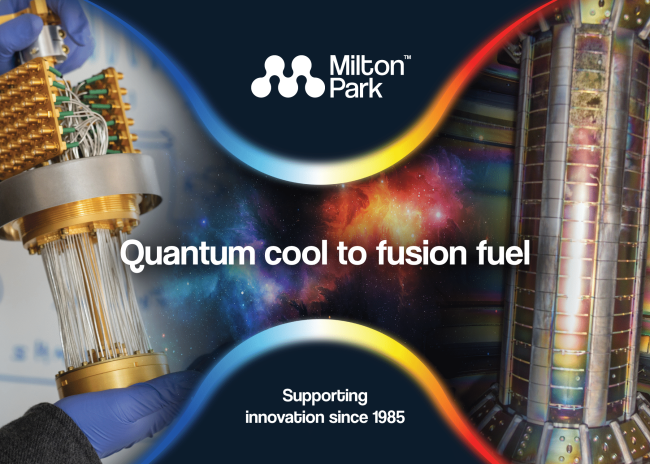
Milton Park Innovation Community

It had been a long time since we’d been down to Milton Park and what a fantastic community it has grown to be.

Based in South Oxfordshire, Milton Park is a hub of innovation with impressive buildings, labs, cafes, restaurants and the coming together of many industries.

Tokamak Energy, Nuvia, TE Magnetics, AECOM, Baker Hughes, ESR Technology, Endeavor Engineering, and Bouygues UK are just a few names in energy, engineering and construction located at the park.

With the Oxford-Cambridge corridor being developed, Milton Park is a key hub within this infrastructure due to its geographical location and its strong & varied community. Emerging technologies, talent, strong research capabilities, connectivity, R&D, and support from institutional investments are just a few reasons why Oxfordshire is a powerhouse for business.

If you are a business based on the park who would benefit from utilising experienced recruitment & hiring strategies and solutions, reach out to us today to find out more about our services.

Picture: miltonpark.co.uk

Open post
Nuclear Careers

Hiring for Tomorrow, Today: Nuclear & Energy Infrastructure

Our aim at Nuclear Careers is to work with a broad mix of clients such as engineering consultants, construction managers, civil contractors, defence organisations, and manufacturers. The common thread is that these businesses, whether SME or larger companies, all have links to nuclear & energy infrastructure.

Why is this our focus? We have a passion that major projects can succeed and in no point in time has infrastructure mattered more than it has today, with nuclear and energy – and success starts with skills & talent.

Britain is riding a wave of financing and funding right now, so while the times are good, recruitment tends to take a back seat. We know that hiring has and is going on; however, there have also been many layoffs, halted projects and companies pivoting focus. Unemployment is high, and the ever-growing skills gap has not been addressed.

2026 will see an increased demand for mid-career to executive level hires within engineering and project delivery roles, but if some businesses aren’t careful, the top talent will go elsewhere.

Gone are the days when you can solely rely on brand, “if you build it, they will come…”, and with global mobility being more of the norm nowadays, we aren’t just in competition nationally for good candidates.

Hiring top talent needs to start today, not yesterday, not last week, but now. Yes, there is an element of risk, the unknown, and uncertainty, but another thing is for sure, we must hire more candidates into the sector if we are going to achieve all our grand plans.

Having an idea is one thing, implementing it is another, and having the right people to support the delivery is crucial.

At Nuclear Careers we understand hiring and we have the talent network – we’ve been talking to business leaders throughout the UK and beyond, so we know what matters.

We’re excited to build the future with our clients, whether it’s a small local business or a larger national or even international organisation, powering nuclear and energy is the goal.

Open post

Future Talent: Women in Construction

Unlocking an Overlooked Talent Pool: Women in Construction & What Nuclear Can Learn 💡

As the construction sector accelerates efforts to diversify its workforce, the nuclear industry stands to benefit from similar strategies. Two recent initiatives highlight ways to systematically empower women in traditionally male-dominated fields—and their lessons are directly transferable to nuclear careers.

1. Women in Construction: The Power Within Training

Founded by Michaela Wain, Enas Fleming, and James Fleming, this UK initiative offers leadership and mindset development tailored for women entering and advancing in construction.

  • Leadership training through Motivational Intelligence (MQ): The program equips women with communication, resilience, and self-belief skills—key for navigating workplace biases.
  • Holistic development community: A supportive space combining free webinars, eBooks, and workshops creates a network of peers and mentors.
  • Proven impact: Participants are rising into leadership roles, leading cultural initiatives, and being promoted faster than industry averages.

2. Industry Push to Retain Women Apprentices

Data from the Construction & Industry Training Board reveals a 65% surge in women starting apprenticeships over five years; completion rates have more than doubled, from ~340 to 930 annually.

  • Despite this progress, women still occupy just 1% of site-based roles—underscoring the need for retention strategies.
  • Major drivers of early exits include lack of support, poor workplace culture, and few visible role models.
  • Programs blending technical skills with emotional resilience training, and creating mentorship structures, have shown measurable success: more women complete apprenticeships and take leadership roles.

Sources: [women-in-c…tion.co.uk], [waterpower…gazine.com]

What Nuclear Can Learn & Implement

🛠️ 1. Combine Technical Training with Mindset Development

  • Like construction, early-career nuclear roles (e.g., apprenticeships, engineering cadets) benefit when enriched with MQ-style workshops on communication and confidence.

👥 2. Build Supportive Communities

  • Create mentorship networks and peer groups, promoting belonging and shared guidance. Nuclear apprentices or junior staff mentoring each other and collaborating with senior women builds long-term retention.

🚀 3. Champion and Showcase Leadership Role Models

  • Promote successful women in nuclear operations, engineering, regulation, and leadership, amplifying diverse voices to inspire incoming talent—especially at site or operational levels.

⚖️ 4. Embed Equity in Culture

  • Tackle structural barriers: ensure equitable pay, flexible working, inclusive culture training, and safe grievance channels. This makes commitment to diversity more than just a tick box.

📈 5. Track Impact through Data

  • Monitor hires, retention, progression, and workplace satisfaction by gender. Use results to refine programs and demonstrate ROI—mirroring the proof-backed benefits construction is seeing.
Open post

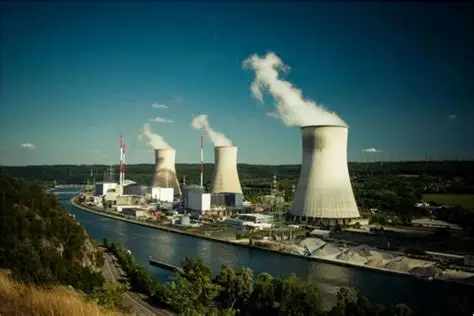
Tihange 3: Modernising for a Resilient Nuclear Future

Belgium’s energy strategy is evolving, and Tihange 3 is at the centre of this transformation. As part of a landmark 2023 agreement between Engie and the Belgian government, the 1,030 MWe pressurised water reactor (PWR) —commissioned in 1985—will undergo a major modernisation to extend its operational life by a decade.

Framatome has been entrusted with upgrading the reactor’s rod control system, a critical component for safe and precise power regulation. The project involves replacing legacy control cabinets with Framatome’s advanced Rodline technology, ensuring enhanced reliability and automatic failover capabilities. This upgrade is not just technical—it’s strategic. It reflects Belgium’s pivot from nuclear phase-out to long-term energy security, driven by geopolitical realities and the need for low-carbon baseload power.

The modernisation aligns with broader European trends: leveraging proven nuclear assets while integrating cutting-edge instrumentation and control systems. For professionals in the nuclear sector, this initiative underscores the growing demand for expertise in life extension programs, digital modernisation, and regulatory compliance.

As Laurent Thieffry of Framatome notes, this partnership is “part of a long-term vision,” signalling opportunities for engineers, project managers, and innovators committed to shaping a resilient, sustainable energy future.

Full press release: https://newsroom.engie.com/actualites/closing-de-laccord-entre-engie-et-le-gouvernement-belge-df4b7-ff316.html

Picture: enercore.global

Open post

Cotswold School Career Fair

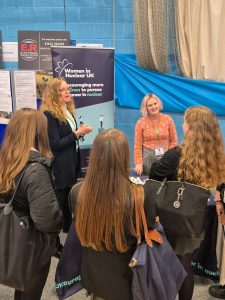
We were in attendance 22.10.25 for the Cotswold School Career Fair with Women in Nuclear (WiN) Central England branch to talk about nuclear careers.

The day offered us the chance to talk with secondary school students in order to spark their interest in careers in STEM.

Many of the students we spoke to were interested to know what they could do with a science, maths or engineering education and what the future career possibilities looked like.

A big focus for us is a broad engineering background as this enables the learner to have a diverse perspective, a transferable skill set and strong foundations to move into a multitude of job functions.

Something to bear in mind for the nuclear sector is the unknown job roles of tomorrow as there are many opportunities ahead of us that are still developing.

So, whether you’re interested in the environment & sustainability, business management, engineering, science, or community engagement, there are a plethora of job functions, careers and opportunities that will suit all individuals.

Open post

Rolls-Royce Submarines

Rolls-Royce Submarines and global technology company, Siemens, have signed a memorandum of understanding (MOU) to collaborate on digital optimisation and boost efficiency across engineering.

Signed by both parties at the Defence & Security Equipment International event in London in September, the MOU encourages shared and mutual collaboration, with the ultimate aim to minimise time to production for new Rolls-Royce technology, while reducing cost and risk within an increasingly complex engineering, manufacturing and operational environment.

Rolls-Royce Submarines currently employs more than 5,000 people and designs, manufactures and provides in-service support to the pressurised water reactors that power every boat in the Royal Navy’s submarine fleet.

Siemens’ trusted software and hardware from the Siemens Xcelerator open business innovation platform helps companies transform processes – accelerating innovation, improving productivity and enhancing efficiency.

This collaboration with Siemens will support Rolls-Royce Submarines in delivering UK sovereign defence requirements more effectively, enabling a more knowledgeable, productive, secure and agile operation.

The collaboration will benefit from the sharing of best practice across the digital landscape, with the ultimate aim being to enhance skills across engineering, manufacturing, research & development, training and reactor operation and maintenance, using digital technology as an enabler.

http://Rolls-Royce Submarines signs strategic agreement with Siemens to boost digital engineering | Rolls-Royce

Picture: Rolls-Royce

Oxford STEM Network October Meet up

The peer network for established leaders and service providers in science, technology, engineering, mathematics and manufacturing.

The friendly meet-up for STEM sector leaders.

If you are a founder, CEO or MD of an established science, technology, engineering, mathematics or manufacturing organisation, you are warmly invited to join us at our open meet up.

If you are a service provider actively supporting and working with clients in one or more of the STEM sectors, you are warmly invited too.

You do not need to be based in Oxford.

No agenda. Just a chance for leaders to network with peers.

Come along to connect with and be inspired by STEM sector leaders.

https://oxfordstem.network/events/networking-october-2024

Scroll to top