Open post

Doel 2 in Belgium to Close

The End of an Era: Doel 2 Retires After 50 Years.

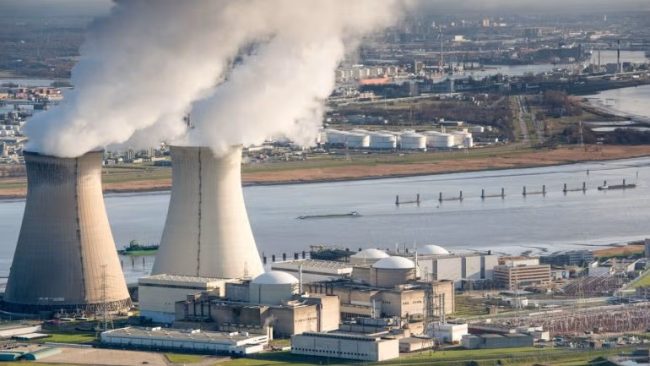
This month marks a historic moment in Europe’s energy landscape: Belgium has officially shut down the Doel 2 nuclear reactor after five decades of operation. Commissioned in 1975, Doel 2 has been a cornerstone of Belgium’s electricity supply, contributing to energy security and carbon reduction for half a century.

The closure is part of Belgium’s nuclear phase-out policy, which aims to gradually replace nuclear power with renewables. While this decision reflects political and environmental priorities, it also raises critical questions about energy resilience, skills transition, and the future of nuclear expertise in Europe.

  • Legacy and Lessons: Doel 2’s retirement underscores the durability and reliability of nuclear technology. Few energy assets operate effectively for 50 years.
  • Skills Challenge: As reactors close, experienced professionals face career crossroads. Their expertise in operations, safety, and maintenance is invaluable—but where will it go?
  • Global Contrast: While Belgium phases out, other nations are scaling up. China’s Xudabao 4 and the UK’s modular construction projects show nuclear innovation is thriving elsewhere.

The skills honed in traditional plants like Doel 2 remain relevant—but they must evolve to meet the demands of modular innovation. For professionals, this shift means new roles in design, off-site fabrication, logistics, and digital engineering.

The nuclear sector is at a crossroads. As some countries retire reactors, others invest in next-generation technologies. For talent, this is not the end—it’s a transformation. Those who adapt will lead the clean energy revolution.

As the industry pivots from legacy plants to modular builds and fusion breakthroughs, how will you position your career to stay ahead?

Picture: Electrabel
Open post

First Light Fusion Diagnostics for UKAEA Programme

Fusion Diagnostics: A Leap Forward for the UK’s Clean Energy Future

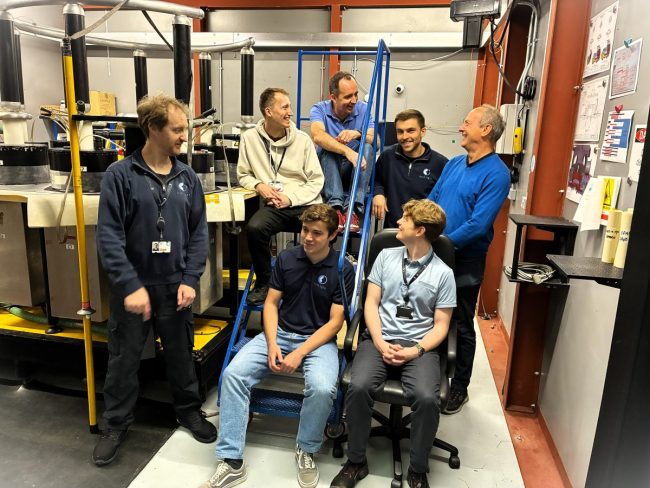
First Light Fusion has successfully completed a reactor diagnostic feasibility study as part of the UK Atomic Energy Authority’s £55M Fusion Industry Programme. This milestone is more than a technical achievement, it signals the UK’s commitment to advancing fusion energy, a technology that promises limitless, carbon-free power.

The study focused on developing advanced diagnostic systems to monitor and optimise fusion reactions. These tools are critical for scaling fusion from experimental setups to commercial reactors, ensuring safety, efficiency, and reliability.

Why does this matter for nuclear careers?
Fusion is no longer a distant dream; it’s becoming a career-defining frontier. Engineers, physicists, data scientists, and project managers will all play pivotal roles in transforming these breakthroughs into operational power plants. The UK’s investment in fusion innovation creates opportunities for professionals to shape the future of energy security and sustainability.

Key Takeaways for Industry Leaders and Job Seekers:

  • Diagnostics are the backbone of fusion progress, enabling precise control and performance optimisation.
  • The UK’s £55M programme demonstrates strong governmental and industrial support for fusion technology.
  • Careers in fusion will demand cross-disciplinary expertise, from nuclear engineering to AI-driven analytics.

Fusion is not just about science; it’s about building an ecosystem of talent ready to tackle the world’s most pressing energy challenges. Those who invest in skills today will lead the clean energy revolution tomorrow.

Picture: First Light Fusion

Open post

Great British Energy 5-year Strategic Plan

A revitalising in oil & gas regions will help to revolutionise the energy sector while investing billions to shift to green energy.

A sustainable future and supporting over 10,000 jobs which will enable a transition away from fossil fuels and more focus on communities who have relied on oil & gas historically.

There are concerns when it comes to the pace of job creation. Roughly 1000 jobs per month are being lost in the oil & gas sector therefore, there’s a large disparity with GBE’s numbers and the realities people are facing.

Not all the workforce plans have been finalised; however, Aberdeen remains a focus and was key on the 2024 election campaign.

Aberdeen is emphasised as the corporate backbone with most employees being based here. There is a strong focus on the energy sector in this area hence it needing to be a driving factor in decision making.

Community ownership in projects, reinvesting profits and creating more jobs while empowering our energy future are vital for success.

Public funds to be invested with the aim to attract private finance over the long term. Using public land for wind and solar projects in order to produce profit for the community.

The energy transition needs to be strategic, sustainable, economic and environmental; the aim is a balanced energy transition.

For more visit; https://www.gbe.gov.uk/

Picture: Great British Energy

Open post

Ocean-based energy storage raises $8 million

Sizable Energy Secures $8M to Launch Ocean-Based Energy Storage

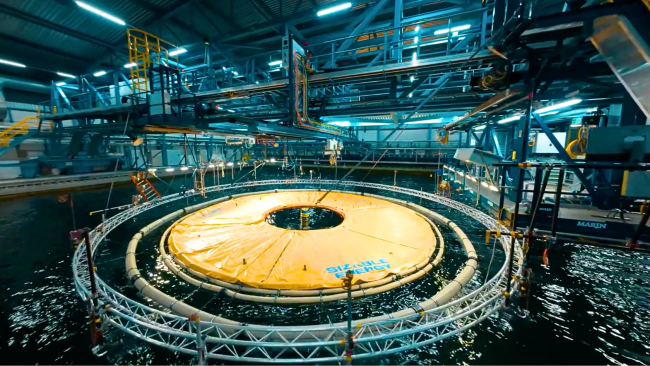
Sizable Energy, a startup founded by engineers from nuclear, mechanical, and maritime backgrounds, has raised $8 million to accelerate the commercial rollout of its offshore pumped hydro energy storage system—a gravity-based solution designed to store gigawatt-scale power beneath the ocean’s surface.

The funding round, led by Playground Global, follows successful testing at the Maritime Research Institute Netherlands (MARIN) and the launch of new sea trials off the coast of Reggio Calabria, Italy. The company’s patented system pumps dense salt brine from the seabed to a surface reservoir, using ocean depth as a natural energy storage medium.

Unlike traditional onshore pumped hydro, which is limited by geography and environmental constraints, Sizable’s modular, scalable, and invisible-from-shore design offers a faster, more flexible path to long-duration energy storage (LDES)—a critical need as global demand is expected to reach 120 TWh by 2040.

With a megawatt-scale pilot in the Mediterranean on the horizon and commercial projects planned for 2026, Sizable Energy is positioning itself as a key player in the clean energy transition.

Why It Matters for Nuclear Careers

This project highlights how nuclear-trained engineers and systems thinkers are driving innovation beyond traditional boundaries. As the energy sector evolves, cross-disciplinary expertise—from nuclear safety to marine engineering—is becoming essential to solving complex infrastructure challenges.

If you’re passionate about energy resilience, systems design, or sustainable innovation, this is the kind of frontier where your skills can make a global impact.

https://www.sizableenergy.com/news/2l26pidy71-sizable-energy-raises-8-million-to-launc

Picture from: Sizable Energy

Open post

The nuclear industry is powering up — and new opportunities are emerging across every stage of the fuel supply chain!

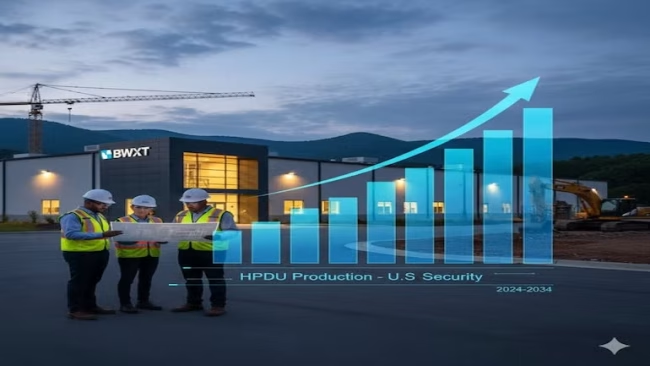
BWXT has been awarded a new contract to supply depleted hashtaguranium components — a move that reinforces the strategic importance of strengthening the nuclear fuel supply chain. This award highlights growing investment in advanced fuel cycle capabilities, ensuring the materials and technologies needed to power the next generation of nuclear reactors.

As the industry expands, opportunities are emerging across every part of the value chain — from engineering and manufacturing to logistics, safety, and operations. At Nuclear Careers, we’re helping connect skilled professionals with the organisations leading this transformation.

👉 If you’re ready to plan your talent & skills strategy, we can help.

👉 For candidates interested to play a role in shaping the future of clean, secure energy, now is the time to get involved.

Image credit from above article: https://www.neimagazine.com/
Scroll to top