Open post

U.S. Control Over Nuclear Fuel Supply Chain

As it stands, U.S. nuclear generators import almost all of their uranium from other countries. Locations include Canada, Australia, Russia, Uzbekistan, and Kazakhstan.

With uranium usage above 32 million pounds, there is a significant opportunity for the U.S. to take a look at their domestic supply chain.

States such as Colorado, Utah, Arizona, Wyoming and New Mexico already have uranium mined areas. Parts of Wyoming, Idaho and Montana have large areas that are not currently being mined, hence the opportunity at hand.

By July 4th, 2026, President Trump wanted to have 3 research & development sites for advanced nuclear reactors identified outside of national laboratories. The president is focused on his ambitions to reform nuclear reactor testing and to deploy nuclear reactor technologies for national security.

The Department of Energy (DOE) also has the high-assay low-enriched uranium allocation program where there have been 5 companies selected for the first-round criteria. The second round supports the testing of advanced reactor designs and the establishment of domestic fuel lines.

More info at the following links; https://www.energy.gov/articles/energy-department-announces-first-pilot-project-advanced-nuclear-fuel-lineshttps://www.eia.gov/todayinenergy/detail.php?id=64444https://www.neimagazine.com/analysis/fuelling-the-future/

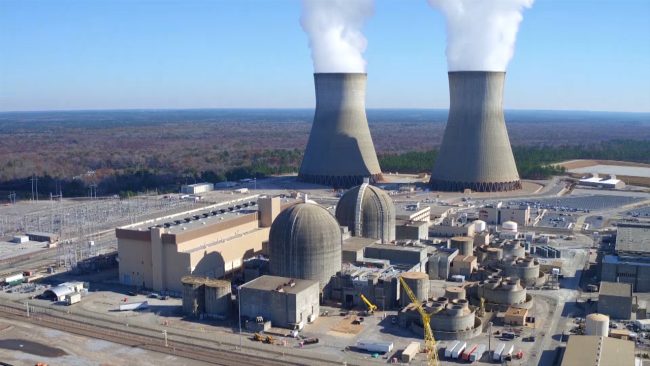
Picture: Georgia Power

Open post

ENEC-KEPCO to Advance Nuclear Energy & AI

An MoU has been signed between Emirates Nuclear Energy Company (ENEC) and Korea Electric Power Corporation (KEPCO).

This agreement will extend the cooperation between the two for the United Arab Emirates’ (UAE) and the Republic of Korea’s civil nuclear fleets.

After successfully delivering the Barakah Nuclear Energy Plant this new MoU will further their strategic relationship aiding towards joint assessment of Small Modular Reactors (SMRs), reactor systems, safety research, waste management, and fuel cycle transformation.

The AI and digital part of the agreement will include AI-driven maintenance, digital twins, machine learning, and plant optimisation.

Picture: ENEC

Open post

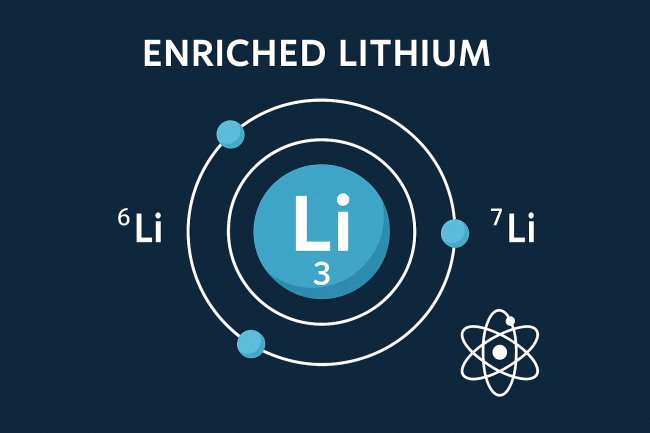
Enriched Lithium: Advanced Nuclear & Fusion Energy

The Hidden Key.

Enriched lithium is a fundamental element for next-generation nuclear energy—integral to both fusion fuel cycles and advanced reactor cooling. Advancing lithium isotope separation technologies and building secure supply chains are critical to unlocking the full potential of fusion and modern fission infrastructures.

The Enrichment Challenge

Historically, lithium isotope separation relied on COLEX (column exchange), a mercury-based process now banned for environmental reasons. Today, the industry is pivoting to cleaner, scalable methods:

  • AVLIS (Atomic Vapor Laser Isotope Separation): Laser-based enrichment with high precision.
  • Electrochemical Separation: Mercury-free, using advanced materials like zeta-V₂O₅ for isotope selectivity.

Companies like Hexium are investing in these technologies to secure supply chains for future nuclear and fusion projects.

Why Lithium Matters in Next-Generation Energy

As the world accelerates toward clean energy solutions, enriched lithium is emerging as a critical enabler for both advanced nuclear reactors and fusion power plants. Its unique isotopes—Lithium-6 (Li-6) and Lithium-7 (Li-7)—play distinct roles in fuelling innovation and ensuring operational safety.

Lithium-6: Powering Fusion Through Tritium Breeding

Fusion energy promises limitless, carbon-free power, but it hinges on one scarce resource: tritium. Tritium doesn’t occur naturally in significant quantities, so fusion reactors must breed it internally. This is where Li-6 steps in:

  • Tritium Production: Li-6 reacts with high-energy neutrons inside breeder blankets to produce tritium and helium.
  • Essential for Self-Sufficiency: Without Li-6, fusion plants cannot sustain their fuel cycle.
  • Scale of Demand: A single demonstration fusion plant may require 10–100 tonnes of enriched Li-6, while commercial-scale reactors could need hundreds of tonnes.

Lithium-7: Supporting Advanced Fission Reactors

Li-7 is equally vital for advanced fission technologies, particularly Molten Salt Reactors (MSRs) and Pressurized Water Reactors (PWRs):

  • Coolant Chemistry: Li-7 maintains stable pH in reactor coolants, preventing corrosion and ensuring safety.
  • Molten Salt Reactors: Li-7-enriched salts act as heat transfer media and neutron moderators, enabling high-efficiency designs.

New career pathways are opening up in the nuclear industry. We are passionate that industry and educational institutions collaborate more to ensure people know about emerging careers while we are also working towards meeting future demands.

Scroll to top