From uranium mining to high-tech fuel assembly and reactor projects, the nation is positioning itself as a global leader in nuclear technology and innovation.
Kazakhstan is rapidly transforming its role in the global nuclear industry, moving beyond uranium mining to develop a full high-tech fuel cycle.
At the heart of this shift is the Ulba Metallurgical Plant in East Kazakhstan, which has recently undergone major modernisation. A new automated inspection line now checks uranium fuel pellets with micrometre precision at a rate of three pellets per second, ensuring exceptional quality and consistency.
Alongside this, fuel assembly production has expanded to 300 tonnes annually, while the Ulba-TVS facility has reached its design capacity of 200 tonnes of uranium per year. These upgrades position Kazakhstan as a reliable supplier of nuclear fuel for both domestic and international markets.
This progress aligns with the country’s long-term energy ambitions. Despite being the world’s leading uranium producer, Kazakhstan has historically lacked nuclear power generation. That is changing.
Plans are underway for several nuclear power plants, including a major project with Russia’s Rosatom featuring two Generation III+ reactors with a combined capacity of 2.4 GW, expected to launch around 2035. Additional projects with Chinese partners are also in development.
Safety remains a priority, with site selection in the Almaty region emphasising robust passive and active safety systems informed by lessons from Fukushima and Chernobyl. Efforts to minimise radioactive waste are integral to these plans.
Beyond power generation, Kazakhstan is building an innovation ecosystem. Two nuclear-focused science cities are planned in Almaty and Kurchatov, leveraging the expertise of the Institute of Nuclear Physics and the National Nuclear Centre.
The country is also expanding into nuclear medicine, exporting technetium-99 radiopharmaceuticals, and exploring fuel conversion and enrichment technologies. This strategy reflects a shift from volume to value, aiming to create a comprehensive nuclear hub that supports energy security and global decarbonisation goals.
For professionals in the nuclear sector, these developments signal a surge in opportunities, from fuel fabrication and reactor construction to research, regulatory compliance, and medical applications. Kazakhstan’s vision to 2050 is clear: to evolve from a uranium supplier into a global leader in nuclear technology and innovation.
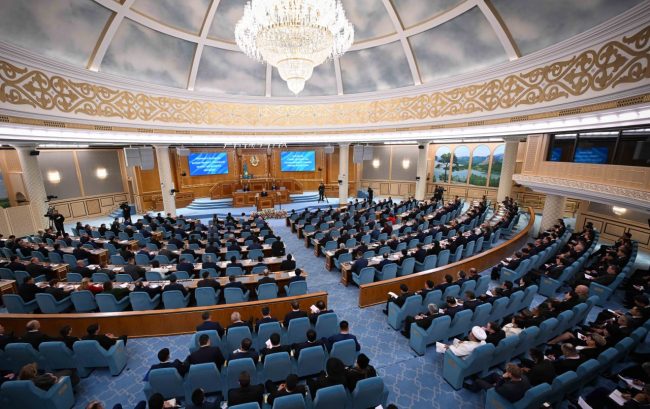
Picture: Akorda