Tokyo Electric Power Company (TEPCO) sits at the centre of two of the most consequential nuclear workforce stories of our era; the multi‑decade decommissioning of Fukushima Daiichi and the restart of Japan’s largest nuclear station, Kashiwazaki–Kariwa (KK). TEPCO’s own “Nuclear Power Generation” hub lays out the company’s fleet, its BWR technology base, and the post‑accident safety reform agenda, context that is vital for anyone building a career or team in nuclear today.
At Fukushima Daiichi, the company continues a complex, multi‑pillar decommissioning program that includes contaminated‑water management, spent‑fuel removal, fuel‑debris retrieval, and waste handling, all under an evolving Mid‑and‑Long‑Term Roadmap led with government oversight. The official progress dashboard details this structure while showing unit‑by‑unit status and risk‑reduction priorities.
At Fukushima Daini, separate from Daiichi but equally significant from a workforce perspective, TEPCO formally decided in 2019 to decommission all four units, a move taken to align with community expectations and to coordinate human resources alongside the Daiichi program; follow‑on filings with METI codified the change in business operations.
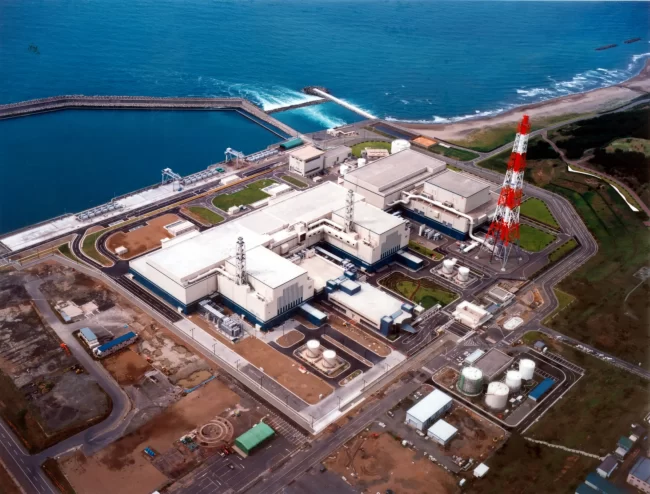
Meanwhile, in Niigata Prefecture, Kashiwazaki–Kariwa has entered the restart phase following years of safety and security upgrades and local consultations, with Unit 6 starting up on January 21, 2026, then pausing after an alarm in the control‑rod operation monitoring system, and subsequently rescheduling restart activities for February with commercial operation targeted for mid‑March subject to inspections. TEPCO’s long‑paused Higashidori ABWR project, for its part, remains on the map in company materials as an essential future source even as the utility publicly emphasises restarts over new builds in the near term.
The Fukushima Daiichi story is, above all, a demonstration of decommissioning at industrial scale. TEPCO describes a program that advances along multiple fronts, contaminated‑water measures, spent‑fuel pool activities, debris retrieval, waste management, and continuous safety improvements, with the risk‑mitigation plan and schedule adjusted as new technical findings arise. Within that program, the first trial retrievals of fuel debris at Unit 2 were conducted in November 2024 and again from April 15 to 23, 2025, using a telescopic device to grasp and containerize small debris samples, historic milestones that validate tooling concepts, handling methods, and remote operations needed to scale future retrievals. The Fuel Debris Portal centralises these updates and lays out data and timelines as TEPCO moves from trials toward larger‑volume retrievals across units.
Another pillar of the Fukushima effort, ALPS‑treated water management, has proceeded with international oversight. Since August 2023, treated and diluted water has been released in batches with the International Atomic Energy Agency (IAEA) conducting independent sampling, on‑site measurements, and multi‑country laboratory corroboration; a sequence of 2025 reports reaffirmed consistency with relevant international safety standards, and an IAEA‑led mission in February 2026 carried out additional seawater and fishery product sampling with laboratories from several countries to support ongoing transparency.
For professionals, this phase underscores demand not only for engineering and operations but also for radiochemistry, environmental monitoring, and public communication disciplines that can withstand international peer review.
Kashiwazaki–Kariwa’s return to operation is equally instructive for careers and teams.
As one of the largest nuclear sites in the world, seven reactors and more than 8 GW of capacity, the station’s upgraded systems and defences reflect years of investment to meet stringent post‑Fukushima standards. The recent Unit 6 timeline captures the reality of complex restarts; after the January 21, 2026 reactor startup, an alarm the following day in the control‑rod operation monitoring system triggered a pause and root‑cause analysis that traced the behaviour to a new inverter detection function; TEPCO adjusted settings and staged a resumption on February 9, with power generation and grid synchronisation planned for mid‑February and a temporary shutdown for checks before the final inspection toward mid‑March commercial operation, all subject to regulatory confirmation.
The political pathway has also moved in tandem, with Niigata Prefecture signalling acceptance of restarts for Units 6 and 7 in late 2025, coverage that reflects the culmination of technical, regulatory, and community engagement processes converging on a restart decision. For practitioners, that convergence translates into immediate demand for operations readiness, probabilistic risk assessment, equipment reliability, severe‑accident and security upgrades, human factors and training, and supply‑chain QA/QC, especially for ABWR‑specific systems.
Fukushima Daini, while quieter in headlines than Daiichi, is an equally durable employer of decommissioning skills. TEPCO’s 2019 decision and subsequent “Basic Decommissioning Policies” place workforce planning at the centre, explicitly acknowledging the need to sequence resources across both Fukushima sites and to involve local companies in dismantling and materials management to support regional revitalisation. That, in turn, builds multi‑decade opportunities in industrial safety, spent‑fuel logistics and dry storage, waste characterisation and packaging, contracting and procurement, and sustained community liaison – capabilities that will find markets far beyond Fukushima as the global D&D pipeline grows.
Higashidori provides a useful reminder that Japan’s future options still include new ABWR capacity even if TEPCO’s near‑term strategy emphasises restarts. The company’s site description frames Higashidori as an essential future source for stability, environmental performance, and economics, while industry reporting in 2025 conveyed TEPCO’s focus on bringing idled reactors like Kashiwazaki–Kariwa back online before undertaking new‑build commitments. For career planning, that means individuals who can navigate both restart regimes and long‑lead development processes will be particularly valuable when the investment window reopens.
Across these programs, the skills mix that the moment rewards are shifting from narrow specialisation toward integrated proficiency at the interface of technology, regulation, and public trust. Decommissioning success increasingly depends on tele‑operated tooling, remote characterisation, cutting and segmentation, dose modelling, and graded QA in unique waste streams, combined with the kind of environmental science and data transparency required for IAEA‑grade corroboration and inter‑laboratory comparisons.
On the operations side, restart readiness favours engineers who can update PRA models, execute EOP/SAMG drills, integrate cybersecurity with physical protection, sustain configuration management, and tune human performance programs to BWR/ABWR specifics, a capability set made vivid by the Unit 6 inverter‑detection episode and TEPCO’s methodical diagnostic and governance response.
Regulatory and stakeholder fluency is no longer optional, either, as prefectural assemblies and local governments weigh consent; the Niigata pathway shows that consistent engagement and clear safety cases are part of the technical work.
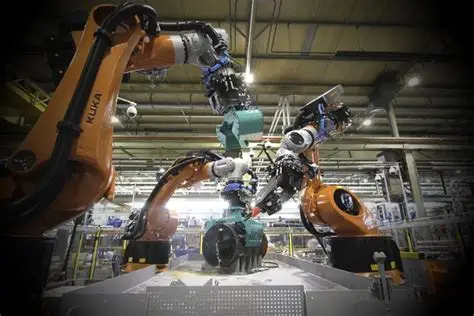
Roles emerging as high‑impact in the 2026–2030 horizon reflect that blend. Decommissioning systems engineers who can integrate manipulators and crawlers, design mock‑ups, and drive ALARA outcomes in constrained, high‑radiation spaces are already pivotal at Daiichi.
Radiation protection specialists and environmental scientists who can manage dose fields while implementing marine sampling and ALMERA‑aligned chains of custody are in demand as international missions expand.
Waste strategy leaders who can characterise, condition, and route novel streams with meticulous QA are building templates that other sites will adopt.
On the restart side, BWR/ABWR‑savvy start‑up test engineers capable of running cold and hot functionals, diagnosing anomalies under schedule pressure, and documenting to regulator‑ready standards are essential at KK.
Finally, regulatory affairs and community engagement specialists who can sustain consent through precise safety communication and coordination with emergency‑planning stakeholders are now as core to program success as any technical discipline.
All of this sits within a global market that is tightening for experienced nuclear talent. The World Nuclear Association’s 2025 performance reporting shows nuclear generation reaching a new record of roughly 2,667 TWh in 2024, with more than 70 reactors under construction, momentum that amplifies competition for people who have lived restart or decommissioning cycles.
For candidates, the most persuasive currency is documented problem‑solving under oversight; the ability to point to a safety or quality gap you closed, with an evidence trail and artifacts that would satisfy a regulator or IAEA reviewer.
For employers, the investment case is clear: establish training pipelines that pair junior professionals with veterans of Fukushima D&D and KK restart preparations, because the window to transfer that institutional knowledge is open but not forever.
If you want to go deeper into the source material, TEPCO’s Nuclear Power Generation overview and it’s Our Business, Nuclear safety reform pages provide the corporate baseline, while the Fukushima Daiichi decommissioning dashboards and Fuel Debris Portal give program‑level granularity. For the restart picture, TEPCO’s Kashiwazaki–Kariwa updates and industry coverage from late 2025 through early 2026 trace the technical and local‑consent sequencing, and the IAEA’s ongoing updates and missions offer independent context on treated‑water monitoring and environmental safety. And for Fukushima Daini’s long‑horizon decommissioning market, the 2019 decisions and policy documents remain the foundation for workforce and supply‑chain planning.
The final takeaway is straightforward. For individuals, cultivate experience that shows you can deliver under high scrutiny, and learn to communicate your technical work in the language of verification and stakeholder trust. For organisations, build teams that marry restart readiness with decommissioning discipline, and formalise mentorship before today’s practitioners retire and the learning curve steepens again. TEPCO’s evolving story is more than news; it is a talent blueprint for the next decade of nuclear.
Picture: TEPCO