
Bulgaria is charting a bold course in its nuclear landscape by embracing Small Modular Reactors (SMRs) not just as power plants, but as catalysts for energy security, decarbonisation, and high-tech growth. The spotlight is on the BWRX‑300 design from GE Vernova Hitachi, and several recent developments make this an especially exciting moment for the sector.
A Strategic Joint Venture to Launch SMRs
New JV is linked to Poland’s Synthos Green Energy (SGE) and Bulgaria’s Blue Bird Energy (BBE), a consortium anchored by Glavbolgarstroy and Asarel‑Medet, have signed a letter of intent to create a joint venture targeting up to six BWRX‑300 units in Bulgaria.
These 300 MWe reactors, harnessing passive safety and natural circulation, leverage the proven design lineage of the conventional ESBWR, offering a compact yet robust addition to Bulgaria’s nuclear fleet.
The JV’s mandate is extensive and incorporates site selection and licensing to construction, funding, and operation, designed to jumpstart a domestic SMR ecosystem.
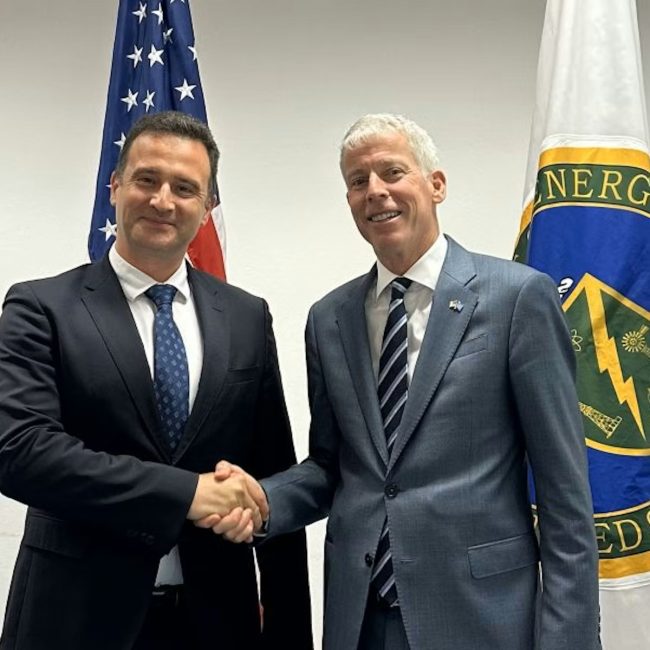
There’s high-level momentum & global backing for Bulgaria as well as diplomatic synergy from Prime Minister Rosen Zhelyazkov and Energy Minister Zhecho Stankov engaged with GE Vernova’s Roger Martella, first in New York and later in Sofia, to explore partnerships.
These discussions followed an MoU from August 2024 between Bulgarian Energy Holding and GE Hitachi, laying a groundwork for BWRX‑300 development
With cross-border cooperation with a U.S.–Bulgaria intergovernmental agreement, signed during an IAEA conference, includes provisions for civil nuclear support, U.S. lab participation in feasibility studies, and potential funding via the U.S. Trade and Development Agency.
And why does Bulgaria’s Embracing of SMR’s Matter?
Energy stability with low emissions, economic & industrial uplift, and supply chain integration will all see a productive impact.
Bulgaria already generates ~⅓ of its electricity with two VVER‑1000 units and is building two AP1000 reactors at Kozloduy. SMRs will deliver reliable, clean baseload power while supporting grid flexibility.
These reactor platforms can energise new data centres, AI hubs, gigafactories, and hydrogen facilities, turning Bulgaria into a regional innovation powerhouse.
With local industry players in the JV, Bulgarian firms are poised to join the global SMR value chain, boosting domestic jobs and capabilities.
GE Vernova’s BWRX‑300 is already under construction in Canada, and the technology is attracting interest in Poland, Hungary, the Czech Republic, Lithuania, and Romania, underscoring its momentum across Europe.
Bulgaria’s approach is both balanced and strategic, maintaining large-core reactors at Kozloduy while advancing agile, low-carbon SMRs to complement and diversify its nuclear capacity.
With active engagement from U.S.-based U.S. national labs and financial channels, Bulgaria is aligning global nuclear expertise with local readiness, ensuring a well-rounded deployment pathway.
In conclusion
Bulgaria’s nuclear vision is crystal clear – harmonising legacy nuclear strengths with cutting edge SMR innovation to forge a resilient, clean, and future-ready energy system. With its cross-border partnerships, industrial leadership, and technology-forward mindset, Bulgaria is positioning itself to become a beacon of nuclear excellence in Southeastern Europe and a potential model for global SMR deployment.
If you want a deeper dive into BWRX‑300 safety features, licensing trajectories, or how SMRs integrate with national energy frameworks, we’d love to hear from you.
Sources: nucnet.org, bta.bg, gbs-bg.com, neimagazine.com, economic.bg, world-nuclear-news.org
Picture: Bulgarian Energy Ministry