
Open post
Nuclear Careers

Hiring for Tomorrow, Today: Nuclear & Energy Infrastructure

Our aim at Nuclear Careers is to work with a broad mix of clients such as engineering consultants, construction managers, civil contractors, defence organisations, and manufacturers. The common thread is that these businesses, whether SME or larger companies, all have links to nuclear & energy infrastructure.

Why is this our focus? We have a passion that major projects can succeed and in no point in time has infrastructure mattered more than it has today, with nuclear and energy – and success starts with skills & talent.

Britain is riding a wave of financing and funding right now, so while the times are good, recruitment tends to take a back seat. We know that hiring has and is going on; however, there have also been many layoffs, halted projects and companies pivoting focus. Unemployment is high, and the ever-growing skills gap has not been addressed.

2026 will see an increased demand for mid-career to executive level hires within engineering and project delivery roles, but if some businesses aren’t careful, the top talent will go elsewhere.

Gone are the days when you can solely rely on brand, “if you build it, they will come…”, and with global mobility being more of the norm nowadays, we aren’t just in competition nationally for good candidates.

Hiring top talent needs to start today, not yesterday, not last week, but now. Yes, there is an element of risk, the unknown, and uncertainty, but another thing is for sure, we must hire more candidates into the sector if we are going to achieve all our grand plans.

Having an idea is one thing, implementing it is another, and having the right people to support the delivery is crucial.

At Nuclear Careers we understand hiring and we have the talent network – we’ve been talking to business leaders throughout the UK and beyond, so we know what matters.

We’re excited to build the future with our clients, whether it’s a small local business or a larger national or even international organisation, powering nuclear and energy is the goal.

Open post

ENEC-KEPCO to Advance Nuclear Energy & AI

An MoU has been signed between Emirates Nuclear Energy Company (ENEC) and Korea Electric Power Corporation (KEPCO).

This agreement will extend the cooperation between the two for the United Arab Emirates’ (UAE) and the Republic of Korea’s civil nuclear fleets.

After successfully delivering the Barakah Nuclear Energy Plant this new MoU will further their strategic relationship aiding towards joint assessment of Small Modular Reactors (SMRs), reactor systems, safety research, waste management, and fuel cycle transformation.

The AI and digital part of the agreement will include AI-driven maintenance, digital twins, machine learning, and plant optimisation.

Picture: ENEC

Open post

GE Vernova Operations at Jafurah Cogeneration ISPP

GE Vernova together with ADIPEC announced that commercial operations have started at Jafurah ISPP (Independent Steam and Power Plan).

The new facility is set to be among the most productive power plants in Saudi Arabia. The plant is expected to deliver up to 314 tons/hour of steam, as well as up to 320 megawatts (MW).

“Significantly increasing gas production capacity over the next decade will positively contribute to the Kingdom’s energy mix and support self-sufficiency in gas supply as demand for power continues to grow in residential and industrial sectors,” said a representative of Doosan Enerbility.

Due to the project direct and indirect job roles have boosted the local economy and domestic manufacturing capabilities have been expanded.

GE Vernova have been working in the Kingdom for circa 90-years, working on projects such as a centre for excellence, a monitoring & diagnostics centre, a service & repairs facility for gas turbines, and is a Gold Sponsor at ADIPEC 2025, taking place November 3–6.

Original post; https://www.gevernova.com/news/press-releases/ge-vernova-start-operations-jafurah-plant-saudi-arabia-adipec

Picture: GE Vernova

Open post

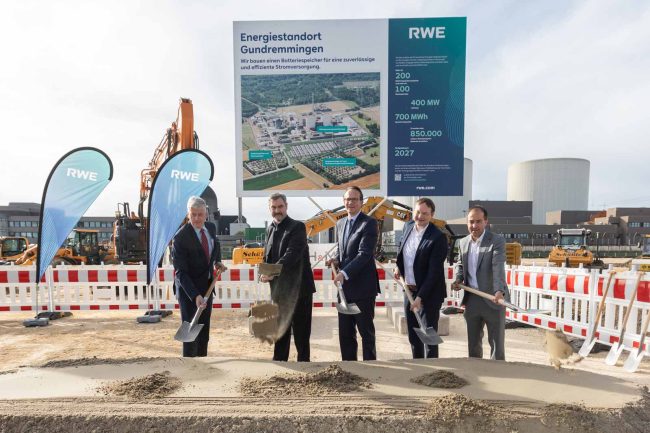
RWE & Germany’s Largest Battery Storage

Gundremmingen energy site will be a 400-megawatt plant with the capacity of 700 megawatt hours, and it will be connected to the nuclear power plants existing grid.

~230 million is the amount that RWE will be investing into the construction of the new facility and the ceremony was attended by Dr Markus Söder, Bavarian Minister-President and Dr Markus Krebber, CEO of RWE AG.

RWE develops, builds and operates battery storage as a driver in the energy transition – systems are based in the USA, Europe and Australia.

Visit here for more info; https://www.rwe.com/en/press/rwe-generation/2025-10-29-rwe-is-constructing-germanys-largest-battery-storage-facility-in-gundremmingen/

Picture: RWE

Open post

NDA Delivering Green Energy Hub at Chapelcross

The NDA Group is working with CX Power as the strategic developer for the Chapelcross green energy hub.

The programme is privately funded and set to transform the region; it will produce several hundred highly skilled job roles, attract skills & investments while driving local economy growth.

The long-term plan will include AI data centres, advanced manufacturing, and hydrogen production.

CX Power is an entity comprising of GA Consultants and Global Mutual Properties Limited whose expertise will enhance planning and financing.

  • The £350m investment in the Borderlands Inclusive Growth Deal, from the UK and Scottish Governments, is made up of £150 million for Scotland (£85m from the Scottish Government and £65 million from the UK Government) and up to £200m for England from the UK Government. This will be supported by over £100m of funding from local partners.
  • The Borderlands Inclusive Growth Deal was signed in March 2021 supporting over £450m worth of projects.

This is an exciting project for Scotland, and we look forward to following the developments. We have a strong network of talent who would be brilliant additions to this development.

Read more; https://www.gov.uk/government/news/nda-working-with-private-developer-to-accelerate-chapelcross-hub

Picture: Magnox

Open post

The Nuclear Space Race

The race to space is on!

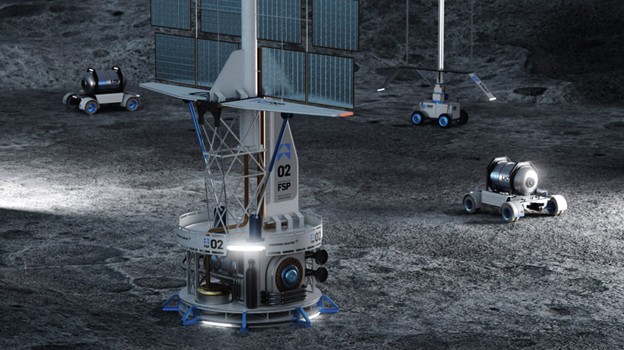
The show case of power is for all to see as the U.S., Russia and China all flaunt their intentions to be the first to build a nuclear power plant on the moon.

NASA, Roscosmos and the CNSA are the names involved. The latter two are working in partnership to deploy a reactor to power their planned Lunar Research Station, and NASA’s plans would provide ~100kw of electrical power while heating a base camp for the crews of the lunar-landing Artemis missions.

There have been setbacks including NASA’s budget or lack thereof, which is of course a huge issue with a project of this size and complexity. Russia has old, but reliable technology, while China has new yet untested technology, so this pairing could be powerful.

As this race continues, there is also the large task of how we design and build new nuclear power plants on our home planet. There is also the focus on defence technology including the use of autonomous systems, quantum computing, and laser systems all while ensuring we are utilising sustainable practices.

Will this happen by the current 2030 timeline? We won’t hold our breath, but we look forward to seeing what’s next for human and nuclear space exploration.

“That’s one small step for [a] man, one giant leap for mankind” – Neil Armstrong

Sources: The American Nuclear Society, Space.com, Power Technology

Picture: Lockheed Martin

Open post

UK Government Nuclear Taskforce Findings

The UK’s nuclear regulatory regime is highly effective at ensuring safety and is regarded as world-leading in many respects, particularly its goal-based approach, regulatory expertise, transparency, stakeholder engagement, and active international collaboration.

However, primary challenges include the following areas: 1. unnecessary slowness, inefficiency, and cost, 2. risk management & proportionality, 3. complexity of regulatory & planning landscape, 4. enabling delivery in the planning regime, 5. capacity, capability & culture, 6. international harmonisation, 7. insufficient understanding of the cost of delays.

  1. Feedback highlights systemic delays, bureaucratic overlap, and escalating costs that rarely provide meaningful safety or environmental benefits
  2. Interpretation of the ALARP (“As Low as Reasonably Practicable”) principle fosters a risk-averse culture and excessive conservatism. Similar issues exist in environmental assessments
  3. The multiplicity of regulators and overlapping obligations create costly duplication, inconsistent interpretations, and unpredictable outcomes.
  4. The current NSIP planning regime and related regulations are outdated, particularly in their treatment of emerging technologies like SMRs and AMRs. They lack flexibility and fleet-mode efficiency.
  5. There is a shortfall of SQEP (Suitably Qualified and Experienced Personnel), along with ageing workforce, over-reliance on consultants, salary challenges, and risk-averse organisational cultures
  6. Lack of alignment with international regulatory frameworks causes unnecessary costs and duplicative approval processes. The Taskforce plans to explore opportunities for recognition of overseas approvals.
  7. Regulatory decisions often overlook the significant financial and opportunity costs of delayed projects, leading to an imbalance between safety measures and project viability.

Next Steps and Priorities.

Strategic Government Direction – Ministers should provide clear strategic guidance to regulators and operators to ensure delivery is safe, efficient, and cost effective.

Consultation & Evidence Gathering – The Taskforce is holding engagement sessions and workshops to gather input on potential policy adjustments.

International Benchmarking – A detailed comparison with overseas systems will help identify where harmonisation could yield benefits.

Economic Impact Analysis – The costs and benefits of changes will be quantified to support the case for reform.

The interim report acknowledges a strong foundation in the UK’s nuclear regulation but calls for a once-in-a-generation reset across six core reform areas aimed at delivering faster, more cost effective, and scalable nuclear projects without compromising safety.

To view the full report; https://www.gov.uk/government/publications/nuclear-regulatory-taskforce/nuclear-regulatory-taskforce-interim-report

24/11/25 release; https://www.gov.uk/government/news/taskforce-calls-for-radical-reset-of-nuclear-regulation-in-uk

Picture: gov.uk

Open post

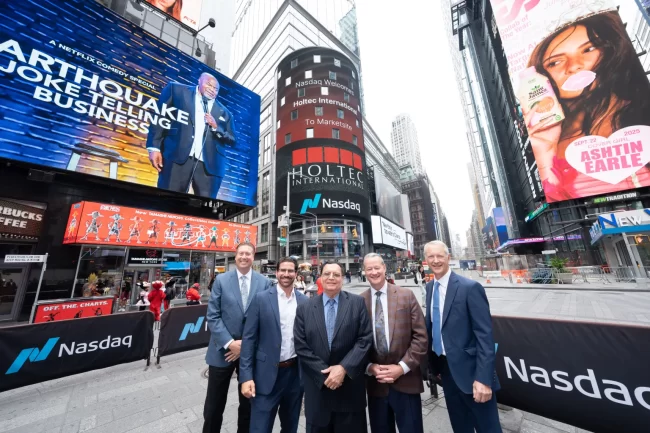
Holtec at Times Square

“Mega-billion” nuclear construction programme needs private investment and the public markets to support Holtec’s SMR-300 reactors.

Set to be repowered by the end of 2025, the Palisades Energy plant in Michigan will officially return to operational status.

This is a significant milestone in global nuclear energy news and is making strong progress towards achieving this goal.

The executive team were in New York City to celebrate Climate Week back in September this year with the Holtec team highlighted for its dedication to clean energy.

Visit this link; https://holtecinternational.com/2025/09/29/hh-40-21/

Picture: Holtec

Open post

Urenco-EDF Fuel Deal Signed

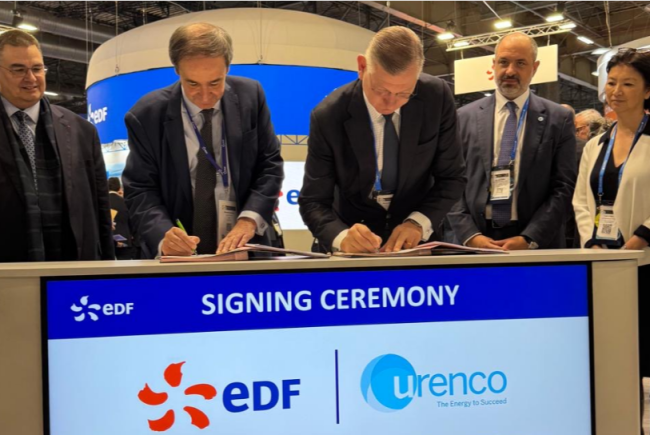
The supply of uranium enrichment services to the UK and France has been agreed between Urenco and EDF during the World Nuclear Exhibition in Paris.

This will support EDF’s fleet into the 2040’s and is a multi-billion-euro agreement. Urenco are a trusted global partner for fuel supply.

Urenco CEO, Boris Schucht said, “This deal represents an enormous step forward for energy security in Europe at a time when it has never been so important in the geopolitical landscape… I am grateful to our long-term partner EDF for once again placing their trust in Urenco.”

What does this mean for the UK?

  1. Long-term security of fuel supply; into the 2040’s over a sustained period which is vital for reliability and resilience.
  2. Minimising reliance on imports; the UK can reduce its dependence on overseas sources, and again, aligning with national energy and supply chain security goals.
  3. A boost for UK enrichment capacity and jobs; enhanced support for Capenhurst with ~1,000 skilled jobs at Urenco’s site, plus strengthening UK domestic infrastructure by reinforcing the nations capabilities.
  4. Continued commitment to low-carbon and green policies; ensuring nuclear remains the backbone of the UK’s clean energy strategy and underpinning the UK’s efforts to decarbonise its nuclear fuel cycle.
  5. Integration with nuclear new builds; Sizewell C will follow a coordinated contract strategy to use the same enriched uranium for its initial years while also deepening industrial links between Urenco, EDF, and DfT.
  6. Economic and strategic independence; a promotion of domestic fabrication (via Framatome UK) for local content and growth, raising value-capture to around 90% (as sited from SZC). Securing uranium enrichment as a pillar of UK energy autonomy and lessening the nations exposure to geopolitical risks.
  7. Lastly, this deal reinforces a Europe-wide focus on shared energy security amid global uncertainty.

Original release; https://www.urenco.com/news/global/2025/urenco-and-edf-sign-fuel-deal-at-world-nuclear-exhibition

Picture: Urenco

Open post

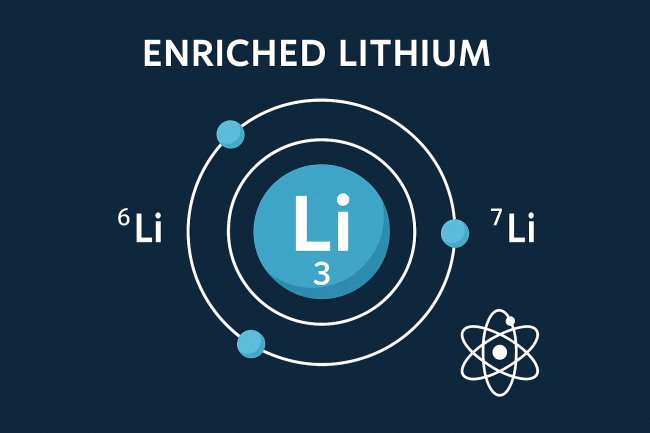
Enriched Lithium: Advanced Nuclear & Fusion Energy

The Hidden Key.

Enriched lithium is a fundamental element for next-generation nuclear energy—integral to both fusion fuel cycles and advanced reactor cooling. Advancing lithium isotope separation technologies and building secure supply chains are critical to unlocking the full potential of fusion and modern fission infrastructures.

The Enrichment Challenge

Historically, lithium isotope separation relied on COLEX (column exchange), a mercury-based process now banned for environmental reasons. Today, the industry is pivoting to cleaner, scalable methods:

  • AVLIS (Atomic Vapor Laser Isotope Separation): Laser-based enrichment with high precision.
  • Electrochemical Separation: Mercury-free, using advanced materials like zeta-V₂O₅ for isotope selectivity.

Companies like Hexium are investing in these technologies to secure supply chains for future nuclear and fusion projects.

Why Lithium Matters in Next-Generation Energy

As the world accelerates toward clean energy solutions, enriched lithium is emerging as a critical enabler for both advanced nuclear reactors and fusion power plants. Its unique isotopes—Lithium-6 (Li-6) and Lithium-7 (Li-7)—play distinct roles in fuelling innovation and ensuring operational safety.

Lithium-6: Powering Fusion Through Tritium Breeding

Fusion energy promises limitless, carbon-free power, but it hinges on one scarce resource: tritium. Tritium doesn’t occur naturally in significant quantities, so fusion reactors must breed it internally. This is where Li-6 steps in:

  • Tritium Production: Li-6 reacts with high-energy neutrons inside breeder blankets to produce tritium and helium.
  • Essential for Self-Sufficiency: Without Li-6, fusion plants cannot sustain their fuel cycle.
  • Scale of Demand: A single demonstration fusion plant may require 10–100 tonnes of enriched Li-6, while commercial-scale reactors could need hundreds of tonnes.

Lithium-7: Supporting Advanced Fission Reactors

Li-7 is equally vital for advanced fission technologies, particularly Molten Salt Reactors (MSRs) and Pressurized Water Reactors (PWRs):

  • Coolant Chemistry: Li-7 maintains stable pH in reactor coolants, preventing corrosion and ensuring safety.
  • Molten Salt Reactors: Li-7-enriched salts act as heat transfer media and neutron moderators, enabling high-efficiency designs.

New career pathways are opening up in the nuclear industry. We are passionate that industry and educational institutions collaborate more to ensure people know about emerging careers while we are also working towards meeting future demands.

Posts navigation

1 2 3 4 5 6 7 8
Scroll to top